
Sudan authorities resume exhumation of war victims in South Khartoum
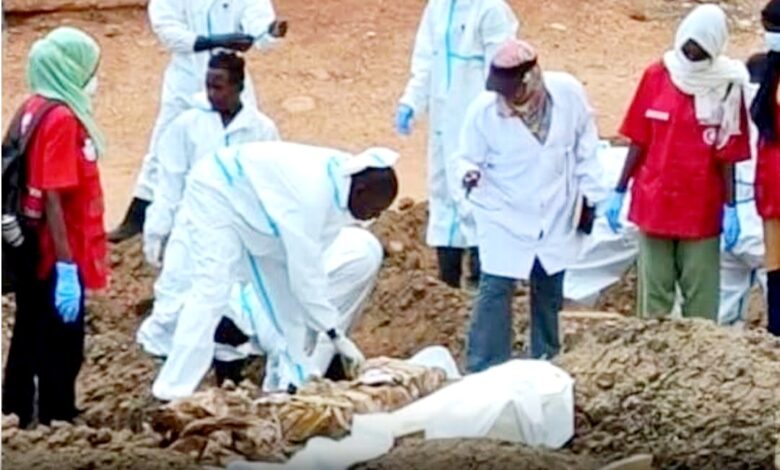
April 26, 2026 (KHARTOUM) – Khartoum locality on Sunday announced it has resumed the exhumation and transfer of remains of conflict victims from neighbourhoods and sites in the south of the capital, following the filing of legal claims and notification of the deceased’s families.
Authorities have transferred more than 15,000 bodies from homes and public squares in residential areas since April 2025. The Forensic Medicine Authority aims to complete the transfer of all bodies buried outside official cemeteries by the middle of this year.
Abdel Moneim Al-Bashir, executive director of Khartoum locality, said in a statement that the committee for the transfer of remains, in coordination with forensic experts, resumed operations at the Land Port and the Jabra area.
He reported that 93 sets of remains were moved to main cemeteries, including 87 exhumed from Jabra Block 18 and six from within the Land Port bus terminal.
Al-Bashir explained that the committee is coordinating the relocation of remains from makeshift burial sites—used by citizens in residential areas, markets, and public spaces during the height of the war—to authorized cemeteries. This follows directives from the Higher Committee for the Return of Displaced Persons to Khartoum.
The Higher Committee, which recently moved from the jurisdiction of the Sovereign Council to the Council of Ministers, is currently working to restore health, education, water, and electricity services alongside reconstruction efforts.
Al-Bashir stated that all legal procedures were followed, including the registration of cases and informing relatives of the exhumation schedule. Unidentified bodies are also being reburied in official graveyards.
The official noted that exhumations will continue across all administrative units until all targeted areas are cleared before the start of the rainy season, based on surveys conducted by specialized committees and neighbourhood service groups.
Priority is being given to residential areas, schools, public squares, mosques, markets, and main streets for the transfers.
During the conflict in Khartoum, residents were often forced to bury loved ones—whether they died of natural causes or were killed in shelling and crossfire—inside private homes and local squares because of the breakdown of funeral services and the danger of reaching official cemeteries.