
RSF’s Abdelrahim Daglo blames Islamists for collapse of Manama talks, reveals El Fasher deal
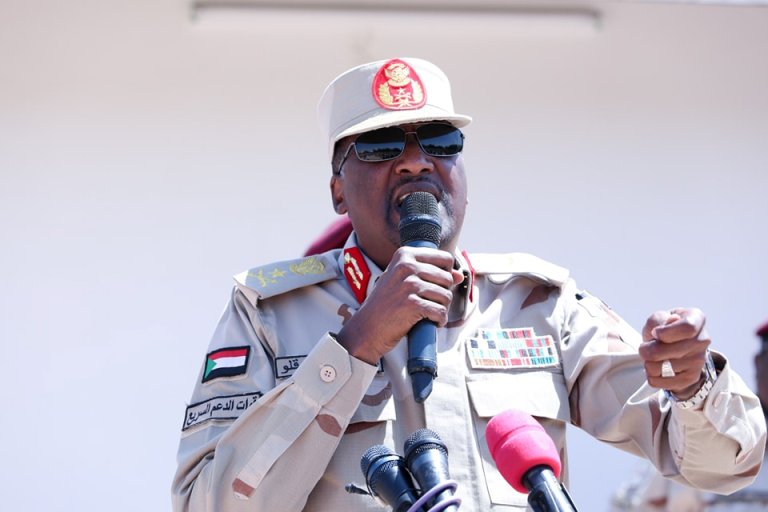
June 1, Khartoum — RSF deputy commander Abdelrahim Hamdan Daglo has accused Sudan’s Islamist movement of sabotaging the Manama negotiations by pressuring army deputy commander General Shams al-Din Kabbashi into walking back an agreement the two sides had reached in January 2024.
In a television interview with the RSF-affiliated Sudan Mix platform, Daglo said Kabbashi had agreed during the undisclosed Bahrain talks — held in the presence of international and regional mediators — that the current military institution lacked a national character and that the Islamist movement and its militias, not the army command, were in effective control of decision-making. “After he returned to the interior, pressure was brought to bear on him and the Manama understandings turned to dust,” Daglo said.
The Manama talks produced a 22-point document titled “Principles and Foundations of a Comprehensive Solution to the Sudanese Crisis,” signed by both Daglo and Kabbashi. The document contained understandings on forming a national army that incorporates the RSF, the arrest of individuals wanted by the International Criminal Court, and the dismantling of the Islamist network.
Daglo said the RSF remains open to all peace initiatives aimed at ending the armed conflict, but accused the army, the Islamist movement, and allied armed movements of rejecting dialogue at every stage — from Manama to Geneva to the United States talks. He described the Islamist movement as the ultimate decision-maker, with all other parties — including armed movement leaders fighting alongside the army — implementing its directives.
On El Fasher, Daglo revealed that the RSF had offered three options to Darfur armed movement leaders to spare the North Darfur capital from war after the RSF seized Nyala, Zalingei, Al-Daein, and Al-Geneina. He said RSF forces met movement leaders in the Shingil Tobaya area and reached an agreement on non-participation in the war.
The three options, he said, were: convincing the army to withdraw from El Fasher and allowing the movements to appoint a divisional commander in full coordination with RSF leadership in North Darfur; jointly storming the city if the army refused to withdraw; or the movements remaining neutral while the RSF confronted the armed forces and then handed command of the division to the movements.
Daglo said the third option was agreed upon and joint statements were issued affirming the absence of war between the two sides. He said movement leaders subsequently came under intense pressure from the army in Port Sudan, which led SLA leader Minnawi Arko Minnawi and JEM chief Jibril Ibrahim to publicly abandon their neutrality and attempt to launch a surprise attack on RSF forces in El Fasher — triggering the battle.
Daglo denied that RSF forces committed violations against civilians inside El Fasher during or after the fighting, claiming instead that his forces had arrested army and military intelligence elements responsible for abuses. He acknowledged, however, that some RSF members had committed violations and had been imprisoned as a result.