
Sudan Somoud coalition rejects Islamist role as Minawi opposes exclusion
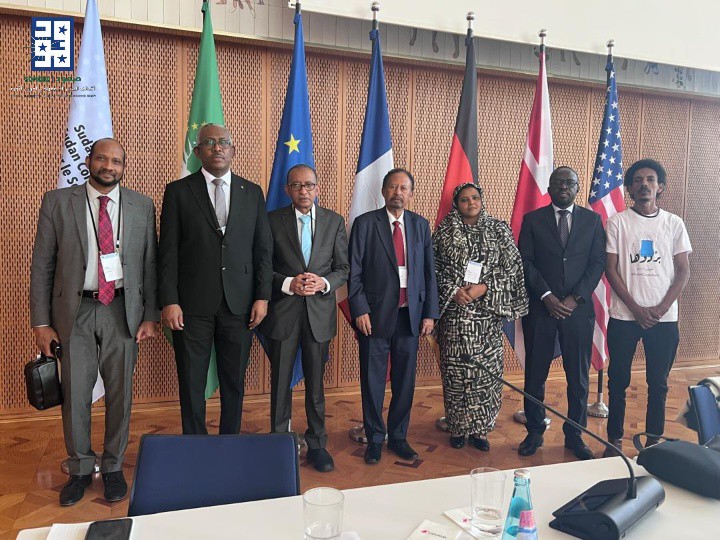
June 9, 2026 (NAIROBI) – The Civil Democratic Coalition of Revolutionary Forces (Somoud) on Tuesday renewed its absolute rejection of allowing the dissolved National Congress Party (NCP) to participate in any future political process, while Sudan Liberation Movement leader Minni Minawi voiced opposition to political exclusion.
The coalition concluded a three-day in-person meeting of its executive office in Nairobi, the Kenyan capital. Chaired by Abdalla Hamdok, the final communique emphasized the necessity of excluding the Islamic Movement, the dissolved NCP, and their front organizations, while dismantling their influence in military, security, and civil service institutions.
The Somoud coalition has consistently blocked the involvement of the Islamic Movement and its political wing, the NCP, in political talks. Meanwhile, the rival Democratic Bloc coalition has conversely demanded the exclusion of political groups aligned with the Rapid Support Forces (RSF).
The stance follows recent talks in Addis Ababa, where Somoud, the Democratic Bloc, and other factions agreed to form a joint preparatory committee to organize a national dialogue. The breakthrough drew praise from the United States, Western nations, and regional bodies, and it covertly agreed to sideline both the Islamists and the “Taasis” coalition, which is considered the political wing of the RSF.
Mubarak Ardol, deputy head of the Democratic Bloc, previously stated that the parties signing the preparatory committee document agreed to bar both Taasis and the NCP from the process, without explicitly naming them in the text.
In its statement, Somoud described the sidelining of the former ruling party as an essential prerequisite for strengthening the chances of stopping the war, building sustainable peace, and restoring democratic civilian rule. The conflict in Sudan entered its fourth year in April.
However, the push to exclude the NCP faces resistance from some political factions and armed movements. Minni Minawi, leader of a Sudan Liberation Movement faction and governor of Darfur, stated on Tuesday that he rejects the exclusion of any political force from the Sudanese dialogue.
Minawi stressed that the political process must include all actors across the spectrum, specifically mentioning both the NCP and factions of the Forces for Freedom and Change (FFC).
Call for Humanitarian Truce
Somoud urged the Sudanese Armed Forces and the RSF to accept a humanitarian truce proposal presented by the Quartet mechanism. The coalition called for the unrestricted delivery of aid to pave the way for a political process that re-establishes civilian rule and unifies the country’s multiple factions into a single, professional national army.
The executive office expressed deep concern over the deteriorating living and health conditions of Sudanese citizens both internally and in asylum countries, urging the international community to intervene and appealing to host countries to halt forced deportations.
The coalition welcomed ongoing efforts to build a broad civilian front against the war, endorsing recent declarations signed in Nairobi, Cairo, and Addis Ababa. It also welcomed a U.S. decision to designate the Islamic Movement and the Al-Baraa bin Malik militia as terrorist entities.
Separately, the Sudan Liberation Movement faction led by Abdel Wahid al-Nur refused to sign the joint vision with the Democratic Bloc during the recent Addis Ababa consultations, citing disagreements over the explicit exclusion of the NCP, the Islamic Movement, and their affiliates.