
Sudan launches $57 million expansion at Al-Khair oil port to host giant tankers
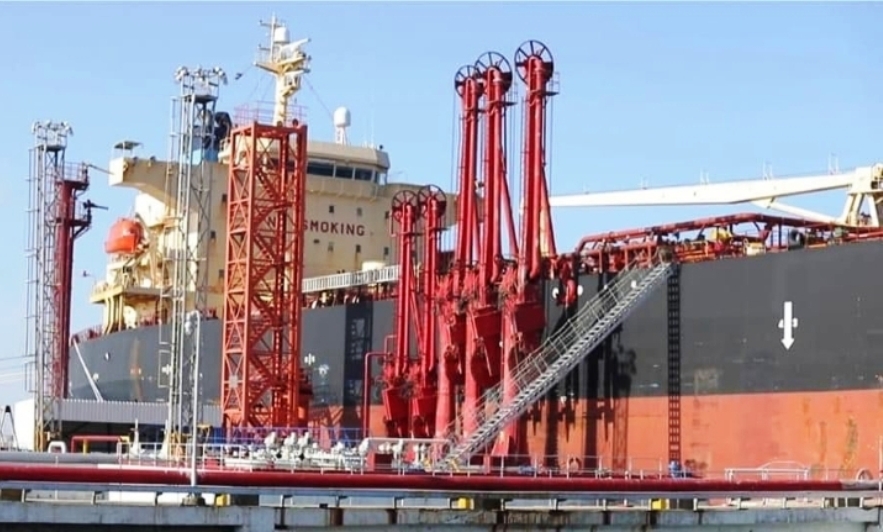
June 15, 2026 (PORT SUDAN) – Sudan’s Sea Ports Corporation announced on Monday the launch of a $57 million second-phase expansion at the Al-Khair petroleum port, preparing the vital facility to receive ultra-large crude carriers.
Al-Khair port, located in Port Sudan on the Red Sea coast, is the country’s primary specialized terminal for handling and discharging imported petroleum products and serves as a critical energy lifeline for the nation.
Sea Ports Corporation Director Geilani Mohamed Geilani laid the foundation stone for the Al-Khair (2) berth project, according to a corporate statement. The expansion is being carried out by Tridel Technologies as part of broader state efforts to upgrade port infrastructure and boost operational capacity.
Geilani said the project represents a strategic move that will support the national economy by enhancing handling capabilities, lowering logistics costs, and saving significant foreign currency reserves.
Data from the London Stock Exchange Group (LSEG) show that Sudan requires roughly 45,000 barrels of diesel per day, equivalent to about 6,000 tonnes, to meet local demand. Government figures indicate Sudan imports between 60,000 and 70,000 metric tonnes of diesel monthly, primarily from Saudi Arabia and other Gulf nations.
Mohamed Alalallah Mohamed, acting deputy director for planning and development at the corporation, said the upgrade aims to enable the terminal to accommodate giant oil tankers with a deadweight tonnage (DWT) of up to 150,000 tonnes.
The scope of the marine works includes building an entirely new oil berth with a 150,000 DWT capacity alongside an 80-meter berth dedicated to marine tugboats.
The infrastructure will also feature a marine access bridge linking the shore to the operating platform, an advanced discharge platform equipped with modern marine loading and unloading arms, and an integrated firefighting network. Additional installations include a fire-water pump station, a central control room, and early-warning systems for gas leaks, fires, and oil spills.
Limited storage capacity at Al-Khair port has long caused logistical bottlenecks for Sudan, which relies entirely on the facility for fuel imports. Space shortages often delay the offloading of arriving vessels.
Pressure on the port’s storage tanks has intensified significantly since the Khartoum refinery was knocked offline by the ongoing war, which has periodically caused storage capacities to fill before incoming tankers can discharge their cargo.