
Sudan halves unvaccinated child burden in two years despite war, minister says
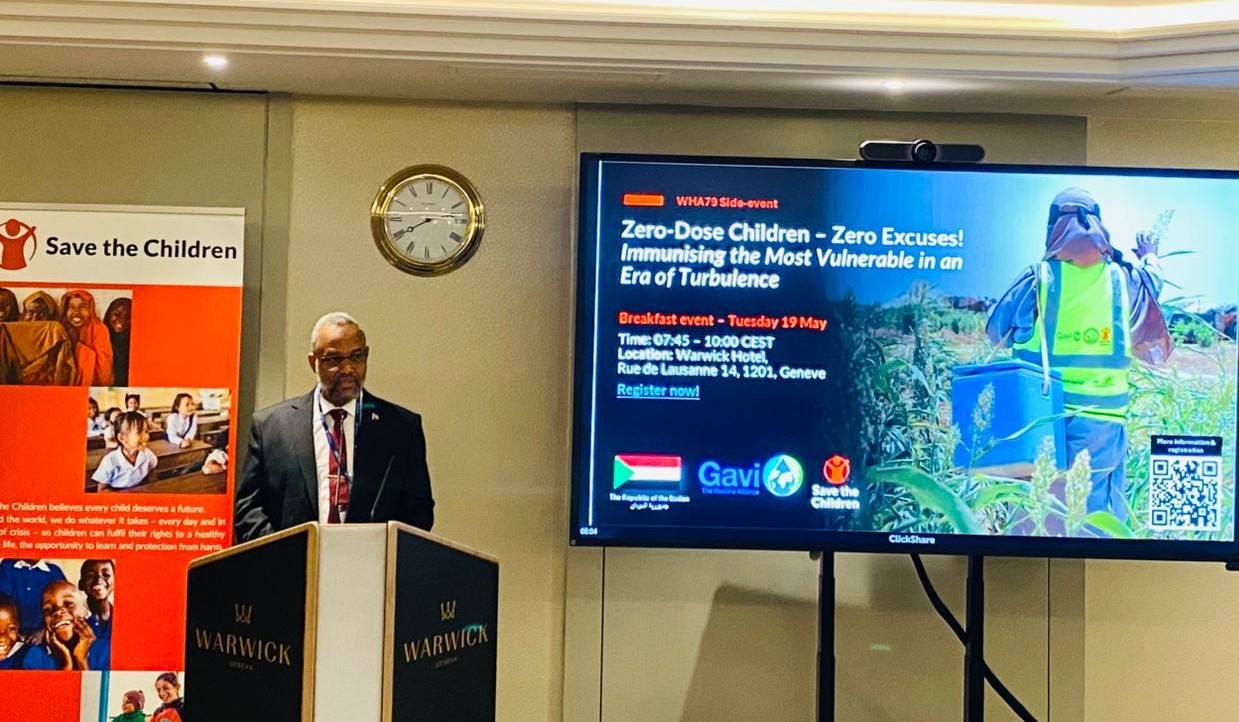
May 19 GENEVA — Sudan’s Minister of Health Haitham Ibrahim announced on Tuesday that the country has managed to cut by nearly half the number of children who had received no vaccinations at all, achieving the gains within two years despite the devastating impact of the ongoing war on the health sector.
Ibrahim made the announcement during a side event at the 79th World Health Assembly in Geneva, organised by Save the Children with the participation of Sudan and Gavi, the Vaccine Alliance. The event focused on the challenge of reaching zero-dose children under the theme: “No Excuses: Immunising the Most Vulnerable Children in an Age of Disruption.”
The minister said Sudan had been among the countries with the highest rates of unvaccinated children globally, with more than 1.2 million children having missed all vaccinations, concentrated in the states of Darfur, Kordofan, Khartoum, and Gezira — areas hardest hit by the destruction of health facilities, mass displacement, and the collapse of medical supply chains since the war broke out in April 2023.
In 2024, the Ministry of Health launched a catch-up immunisation initiative in partnership with the World Health Organization, UNICEF, Save the Children, and Gavi. By May 2026, the campaign had vaccinated approximately 450,000 children, achieving coverage exceeding 90% in nine of the 17 states targeted.
Ibrahim said the progress was made possible by integrating vaccination services into the broader humanitarian response, engaging local communities and their leaders, and deploying mobile field teams to reach children in displacement sites and crisis-affected areas.
The minister warned, however, that declining international funding could jeopardise the gains made, and called on the international community to adopt flexible and sustainable financing mechanisms that support both the humanitarian response and long-term health system strengthening.
“Reaching zero-dose children is not only about vaccines,” Ibrahim said. “It is about dignity, equity, and protecting the future of children.”