
UN rights chief urges Security Council action to prevent Sudan atrocities
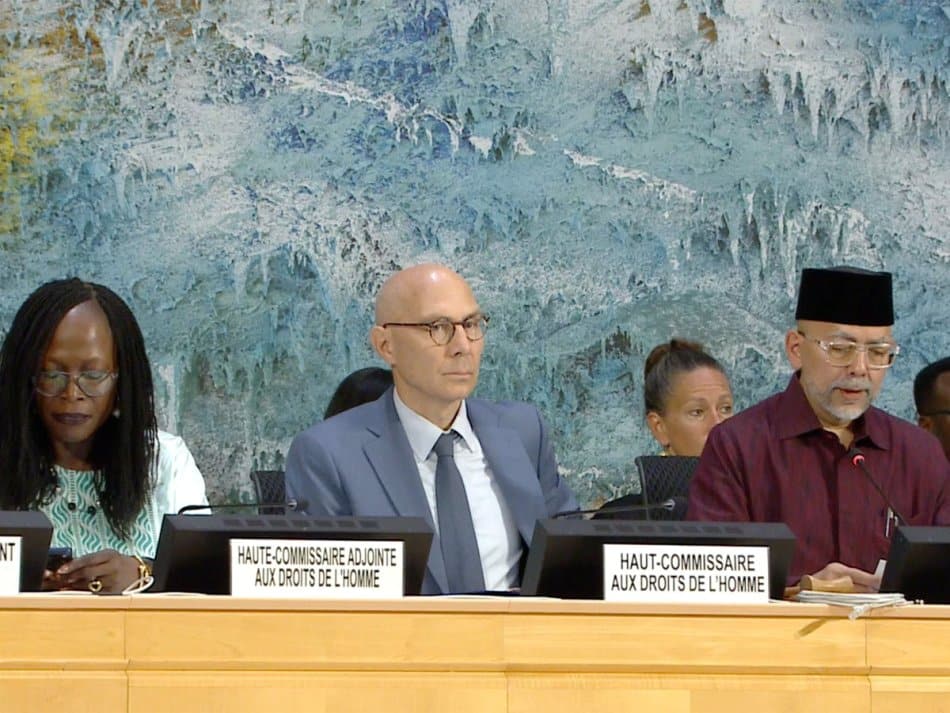
July 3, 2026 (GENEVA) – United Nations High Commissioner for Human Rights Volker Turk called on the U.N. Security Council on Friday to fulfil its obligations and block an impending massacre in the besieged Sudanese city of El Obeid, suggesting the crisis highlights the need to strip permanent members of their veto powers during mass atrocities.
Speaking at an urgent debate before the U.N. Human Rights Council, Turk warned that the capital of Sudan’s strategic North Kordofan state is on the precipice of a full-scale human rights catastrophe after 18 months of siege-like conditions.
The U.N. rights chief sharply criticized international inaction, drawing comparisons to a massacre in El Fasher last year where the paramilitary Rapid Support Forces (RSF) and allied militias killed at least 6,000 people in three days. Turk noted that those past crimes were explicitly forecast by his office but went unprevented by global powers.
“The U.N. Security Council needs to fulfil its responsibilities to prevent atrocity crimes,” Turk said in his address. “El Obeid is a classic case that shows why the use of the veto should be limited, as proposed by France and Mexico more than ten years ago.”
The proposal referenced by Turk, first introduced in 2015, asks the five permanent members of the Security Council to voluntarily suspend their veto brackets when responding to instances of genocide, war crimes, and crimes against humanity.
The situation in El Obeid has worsened amid relentless drone strikes launched by both the regular Sudanese Armed Forces and the rival RSF. The U.N. rights office confirmed at least 15 drone strikes between June 6 and June 28 alone, killing 45 civilians and wounding dozens more in numbers that investigators believe are heavily undercounted.
Turk described the escalation as a “red alert” that must immediately reach the desks of heads of state worldwide, pressuring them to force a halt to the RSF offensive, stop weapons pipeline deliveries from foreign players, and mandate a humanitarian pause.
To choke off the economic drivers prolonging the three-year war, Turk also repeated his appeal to international authorities to expand the existing Darfur arms embargo across the entire territory of Sudan.
Turk warned that shortages of clean water are reaching a critical point as the rainy season begins, exposing the population to waterborne diseases such as cholera, while resources are further strained by tens of thousands of displaced people fleeing violence elsewhere in Kordofan.
Drones launched by both sides have repeatedly struck critical civilian infrastructure across the Kordofan region, including markets, schools, fuel stations, water networks, and civilian vehicles, according to the U.N. official.
The attacks and resulting fuel shortages have severely restricted civilian access to food, clean water, transport, and healthcare, while also severing communication with the outside world.