
Almirghani’s death: The burial of the last pillar
Faisal Mohamed Salih
Sudanese Journalist and writer
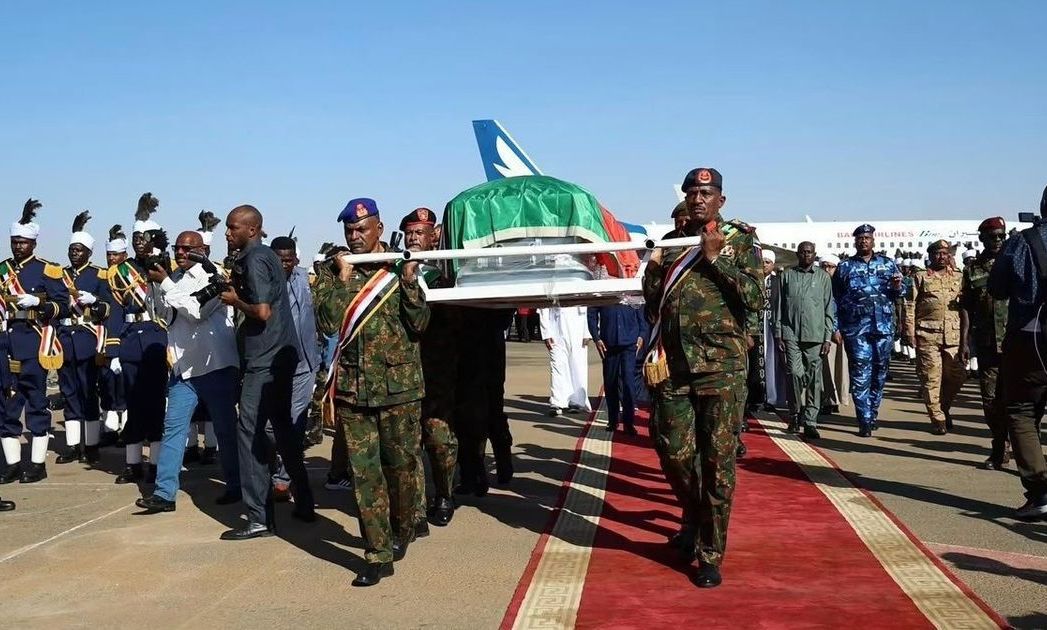
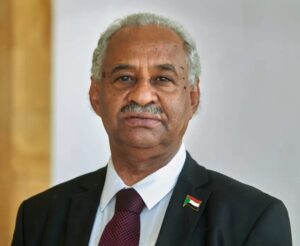 Like his fellow Sudanese who scattered across Arab and foreign countries, Alsayed Mohamed Osman Al Mirghani chose Cairo as his place of exile. There, he passed away on 13 November 2026 and was buried near his father, the late Alsayed Ali Al Mirghani, in Khartoum North. Al Mirghani’s death marked the end of a long chapter in Sudanese traditional politics, as he became its last pillar.
Sudanese politics was shaped in the fifties and sixties of the last century by the split and competition between the two religious sects and their political wings: the Mahdist sect and its political party, the Umma Party, led by Alsayed Alsadig Almahadi (1935–2020) for more than 60 years; and the Khatmiyya sect and its political wing, the Democratic Unionist Party, led by Al Mirghani (1930-2026) for the same period. When new forces emerged, namely the left-wing Sudanese Communist Party and the right-wing Islamic Movement, which changed its name several times, their leadership patterns were no different from those of the two traditional parties. Dr Hassan Alturabi (1932–2016) led the Islamic Movement for more than 50 years, while Mohamed Ibrahim Nugud (1930–2012) led the Communist Party for more than 40 years.
These four political figures shaped the political scene until recently, when they passed away one by one. Nugud was the first to pass away in 2012, followed by Alturabi in 2016, Alsadig Almahadi in 2020, and finally Al Mirghani, whose departure closes a chapter of long-standing political leadership.
During the era of their founding fathers, the two families, Almahadi and Al Mirghani, used to play politics behind the scenes, placing other political leaders at the helm of their parties while retaining their positions as the spiritual leaders of the religious sects. However, with the emergence of Alsadig Almahadi and Mohamed Osman Al Mirghani in the sixties, they took political leadership into their own hands and established themselves as both spiritual and political leaders.
Al Mirghani’s most notable legacy was his relationship with the late Dr John Garang, the leader of the Sudan People’s Liberation Movement (SPLM). This relationship led to the signing of the Sudanese Peace Initiative in 1988, which could have set Sudan on a different course, one that might have spared it the fate of splitting into two countries, had it not been for Prime Minister Sadiq al-Mahdi’s hesitation and delays, and the Islamist movement’s conspiracy that led to the June 1989 coup.
The two leaders’ good relationship led them to work together within the National Democratic Alliance (NDA), established in 1995 as the main opposition front against Al-Bashir’s Islamist regime. Those years were the golden years of Al Mirghani’s leadership, when he enjoyed his greatest popularity, which gradually began to decline afterwards.
Al Mirghani’s political leadership faced many challenges, particularly because of his lack of experience, partly due to his upbringing, which kept him largely removed from public life, as was the case with his entire family. Under his leadership, the party split into several factions, especially after the deaths of his strong advisers and aides. The split eventually reached his own family, when disagreements between his sons, Alhasan and Jafar, led to yet another division.
Sudan’s political scene has changed rapidly. The old political forces are losing ground, while new forces are taking their place. The new scene, which is still under construction, is characterised by ethnic and tribal military forces, new youth movements, and an increasingly militarised political life.
The whole of Sudan is entering a new era, shaped by uncertainty and an unknown fate. The old guard may no longer have a place in the picture, and perhaps their physical absence will be more respectful and dignified than being sidelined while still alive.
faislmsalih@gmail.com