
Sudan adopts new economic strategies to counter Western sanctions
July 5, 2026 (KHARTOUM) – Sudan’s government has adopted alternative economic strategies to counter Western sanctions, reliable official sources told Sudan Tribune.
The United States has previously imposed packages of sanctions targeting networks and entities linked to the Sudanese army, alongside army chief General Abdel Fattah al-Burhan.
Sudanese officials fear an expansion of U.S. and European sanctions as prospects for a negotiated solution to end the conflict with the Rapid Support Forces remain bleak.
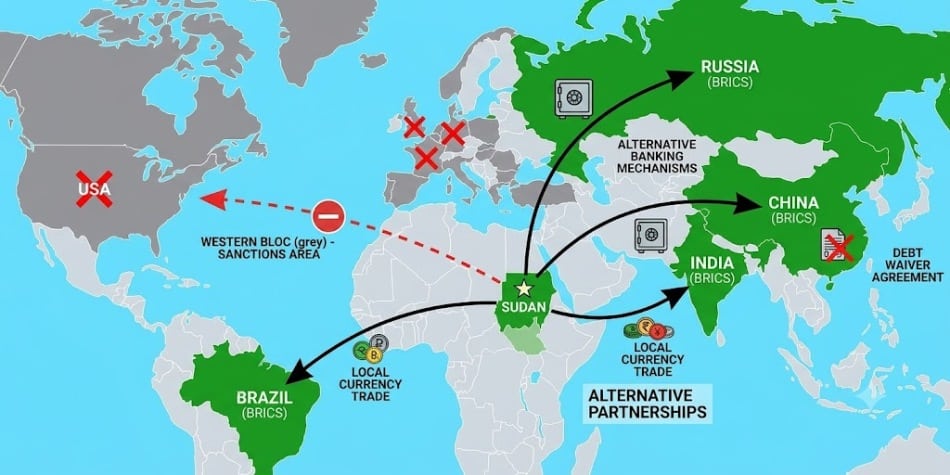
The alternative strategies include developing alternative banking mechanisms, using local currencies in trade, and building new alliances, such as looking toward the BRICS bloc, the sources said.
The new approach aims to diversify economic and trade partnerships to bypass Western sanctions by reducing reliance on the West and major currencies like the dollar. Countries such as Russia and Iran have relied on similar sanctions evasion and counter-coercion methods.
Sudanese economics professor Mohamed Imam said a recent agreement to waive $50 million in debt with China was a drop in the ocean compared to Sudan’s total debt, which exceeds $60 billion.
Imam noted that Sudan officially lost a historic opportunity to write off more than 80% of this debt through the Heavily Indebted Poor Countries initiative due to the political instability following the October 2021 military coup. The coup prompted international financial institutions to freeze all financial integration and economic normalization paths.
Western isolation has evolved during the war into a suffocating economic blockade imposed by global powers on the conflict parties and their commercial networks, Imam said. The restrictions have paralyzed the banking sector as international banks avoid risks. Concurrently, the conflict has stripped Sudan of vital exports like gold, gum arabic, and oilseeds, depriving the treasury of foreign currency.
Imam described the rapid collapse of the Sudanese pound as a symptom of a deeper crisis caused by institutional fragmentation and the presence of two competing authorities on the ground.
This administrative division has eliminated a unified economic vision, created double taxation and conflicting fiscal policies, and eroded the purchasing power of citizens’ savings and wages, he added.
Last week, Sudan and China officially signed a bilateral agreement to exempt a portion of Beijing’s nearly $50 million debt, along with a new package of financial and technical grants for reconstruction projects.
United Nations data indicates the current war has wiped billions of dollars off Sudan’s gross domestic product. UN reports estimate the war has set development in Sudan back by at least 30 years, collapsing social care networks and national agricultural projects, leaving the country heavily reliant on external aid.