
Sudanese military official joins Riyadh talks on Red Sea defence coalition
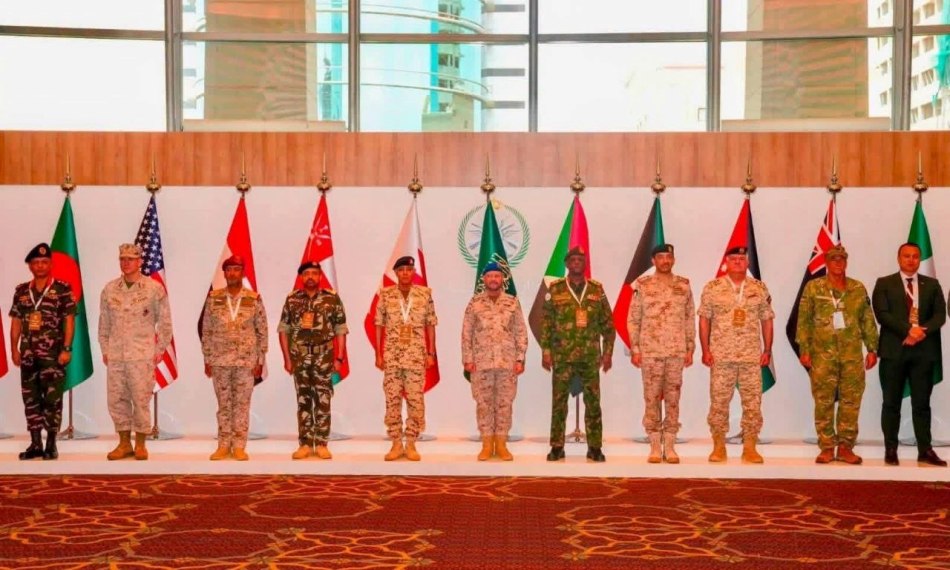
July 30, 2026 (RIYADH) – Lieutenant General Yasir al-Atta, Deputy Commander-in-Chief of the Sudanese Armed Forces, attended a high-level military summit in Riyadh focused on establishing a multinational coalition to safeguard maritime navigation in the Red Sea, Bab al-Mandab Strait, and the Gulf of Aden against growing regional threats.
While the Sudanese Armed Forces did not officially announce al-Atta’s participation, official photographs released by the Bahrain Defence Force confirmed his presence alongside chief of staff officials and senior military commanders from more than 40 nations, including the United States, Saudi Arabia, Kuwait, Jordan, Oman, Bahrain, Morocco, Yemen, Bangladesh, New Zealand, and the Maldives.
The coalition initiative, led and coordinated by Saudi Arabia in conjunction with Kuwait, aims to unite over 50 invited countries and international bodies to counter escalating attacks on international shipping lanes by Houthi insurgents operating out of Yemen.
The regional security climate has deteriorated sharply following a maritime blockade imposed by Houthi forces on Saudi-linked commercial shipping on July 20, which was accompanied by targeted missile and drone strikes on vessels transiting the Red Sea, prompting Saudi retaliatory airstrikes on the Yemeni port city of Hodeidah.
Chaired by Lieutenant General Khaled Al-Shuraian, Chief of the General Staff of the Kuwaiti Army, the inaugural meeting brought together defence chiefs and representatives from 43 countries alongside a delegation from the European Union to establish a collective response mechanism against maritime aggression.
Speaking at the session, Al-Shuraian underscored the strategic necessity of maintaining freedom of navigation through international waterways, urging member states to synchronize defence efforts and intelligence networks to neutralize threats facing critical supply lines.
The Saudi Ministry of Defence confirmed that the discussions addressed the persistent dangers posed to commercial tankers, energy cargo, and critical maritime infrastructure, noting that disruptions in the corridor threaten energy markets and the stability of global trade networks.
Participating delegations reviewed the coalition’s draft charter, organizational architecture, command-and-control structures, and operational frameworks designed to institute a permanent defence mechanism across the Red Sea corridor.
Under the proposed organizational framework, Saudi Arabia will serve as the founding authority and host the headquarters of the coalition, reflecting regional consensus on Riyadh’s central role in managing collective maritime security.
Military planners and technical teams from participating nations agreed to continue working sessions in the coming weeks to finalize the founding charter, establish command hierarchies, and outline operational protocols ahead of an official signing ceremony.
The Red Sea serves as one of the world’s most vital maritime arteries, accommodating between 10% and 15% of global maritime commerce and a major share of international container traffic and crude oil transport.
The initiative builds upon earlier regional defence agreements, including the January 2020 founding charter of the Council of Arab and African States Bordering the Red Sea and Gulf of Aden, which established baseline security cooperation between Sudan, Saudi Arabia, Egypt, Jordan, Djibouti, Somalia, Eritrea, and Yemen.
Unlike the 2020 arrangement, which relied primarily on intelligence sharing, diplomatic coordination, and national sovereignty over territorial waters without a unified command structure, the proposed coalition aims to deploy a multinational defence framework to protect international shipping lanes.