
How smuggled Sudanese gold is laundered through South Sudan to Dubai
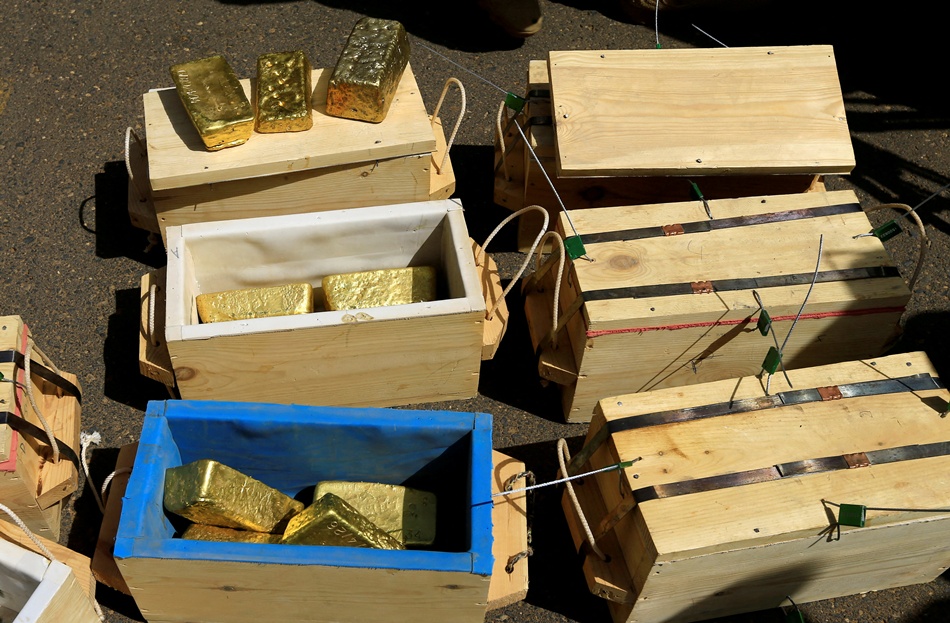
August 6, 2026 (JUBA) – In a narrow alleyway of the gold market in South Sudan’s capital, Juba, a merchant sitting under the condition of anonymity, requesting his initials be changed to F.A. for personal safety, recounts how shipments of smuggled precious metal from Sudan are transformed into legal exports bound for Dubai.
The trader told Sudan Tribune that the flow of Sudanese gold across land borders has not stopped. Truckloads and motorcycle shipments arrive continually through unmonitored corridors stretching from the mines of Darfur and South Kordofan.
The trader explained that gold arrives in Juba as raw, unrefined ingots. Middlemen and local merchants buy the metal in cash with U.S. dollars at prices significantly higher than the official rate offered by the Central Bank of Sudan.
To legitimize the metal, traders resmelt, recast, and consolidate the quantities once cash changes hands. Official paperwork is then issued falsely claiming the gold was mined locally in South Sudan’s Equatoria or Western Bahr el Ghazal states.
This documentation allows the gold to be re-exported by air via Juba International Airport to the UAE and international refineries without legal obstacles.
These testimonies highlight a structural shift in Sudanese gold supply chains. Illicit networks have evolved from direct smuggling to a complex process economists call value chain re-engineering and origin laundering.
By routing gold through neighbouring transit countries—primarily South Sudan—networks bypass international sanctions and alter the legal identity of the metal.
Production estimates
After seizing the Jebel Amer gold mine in 2017, Rapid Support Forces (RSF) commander Mohamed Hamdan Dagalo, known as Hemetti, directed profits to roughly 50 RSF-affiliated companies. In 2019, Hemetti offered approximately $1 billion to support economic stability in Sudan.
Trader F.A. said two flights from Juba to the UAE carried about 115 kilograms of smuggled Sudanese gold last March. Sudan Tribune could not independently verify this account.
Songo and Um Dafuq
Estimates from UN expert panels and research groups focusing on conflict economies indicate the Darfur region produces between 10 and 20 tonnes of gold annually. Production is spread across Jebel Amer, Songo, Um Dafuq (Hofrat al-Nahas), and North and West Darfur.
The Songo and Um Dafuq areas in South Darfur, currently under RSF control, rank among the region’s highest-yielding mining zones.
Thousands of miners work these sites, yielding several tonnes annually—estimated at 2 to 5 tonnes based on local capacity and market size. This revenue helps secure supply lines and logistical operations for the RSF.
Songo and Um Dafuq sit in the far southwest of South Darfur state within the Kafi Kingi area near Radom National Park, bordering the Central African Republic and South Sudan.
This tri-border area is difficult to monitor officially, making it a key hub for gold smuggling, cross-border trade, and supply operations.
Sources familiar with the area told Sudan Tribune that the RSF maintains control by securing mines, establishing checkpoints, and directly supervising gold markets and extraction sites.
The RSF collects fees and royalties from miners and traders in Songo and Um Dafuq in exchange for protection and movement rights. A significant portion of this gold is smuggled across the southwestern border.
Gold revenues from these sites, along with Jebel Amer and other Darfur mines, serve as the primary funding source for RSF military operations, fighter salaries, and weapons purchases.
Border vulnerabilities
A Sudanese security source told Sudan Tribune that fighting has severely exposed the nation’s borders. The spread of military confrontations forced security and border guard units to redeploy from key border posts with South Sudan and Chad to active frontlines.
This withdrawal created a security vacuum exploited by smuggling rings and transnational networks.
Sudan’s borders with Chad and South Sudan, spanning thousands of kilometres, have become open corridors for illicit gold. Armed networks escort shipments from mines in Darfur and Kordofan toward the Chadian towns of Adré and Abéché, or through Bahr el Ghazal and Equatoria toward Juba.
The source added that the loss of specialized oversight units and the breakdown of radar and customs monitoring systems during the war have hampered official tracking efforts.
Smugglers transport dozens of kilograms annually, securing new origin certificates in transit countries before shipping the metal to Dubai.
Customs expert Brig. Gen. (ret.) Fadlallah Mohamed Abdel Daim said Sudanese gold smuggling has evolved from border vulnerabilities into an organized origin-laundering industry, exploiting wartime instability and the absence of federal border control.
Abdel Daim noted that the gold trade relies heavily on certificates of origin and preferential customs treatment. Smugglers exploit weak customs enforcement in neighbouring states to resmelt raw Sudanese gold and change its markings, presenting shipments as local production.
He added that the failure of automated monitoring systems and cross-border customs tracking networks since the war began has crippled risk management. This allows tonnes of gold to pass under forged export documents to international exchanges and airports, bypassing oversight and state revenues.
UAE imperial expansion
One of the largest gold thefts in recent history occurred during the opening weeks of the Sudanese civil war in April 2023.
While fighting former allies in the Sudanese army, RSF forces seized the state-owned gold refinery in Khartoum and raided the central bank. At least 1.5 tonnes of gold bullion worth $100 million at the time was stolen, along with jewellery from commercial bank vaults, according to the Financial Times.
An eyewitness account, corroborated by three sources familiar with the event, indicated the RSF transported the gold across borders into Chad and South Sudan. The RSF denies involvement, and details of the raid remain disputed.
The destination for most of the gold was clear. From Juba International Airport, the gold was loaded onto flights to the UAE. An informed source said Emirati entities dispatched cargo flights, both civilian and military, to pick up the metal.
The UAE’s role underscores its position as an offshore financial capital for Africa and a dominant foreign power on the continent over the past decade.
Under President Sheikh Mohamed bin Zayed Al Nahyan, the UAE has expanded investments, influence, and military hardware across Africa to secure post-oil trade routes and resources.
Emirati operations span port management, green energy projects, and large-scale agriculture. The UAE has leased millions of hectares of farmland for food security and secured mining rights from the Democratic Republic of Congo to Guinea to back its defence and energy sectors.
However, this involvement comes with trade-offs. The Financial Times noted that the UAE’s commercial, industrial, and military presence can strengthen fragile states in some contexts, while destabilizing them in others—such as war-torn Sudan.
Smuggling routes
Shifting frontline control and the closure of major air and seaports have led smuggling networks to map alternative routes to launder Sudanese gold.
The Darfur–Bahr el Ghazal–Juba route serves as a main artery, moving gold from western mines to East African commercial hubs. Parallel activity occurs along the White Nile–Upper Nile route, leveraging river transit and local border trade.
A third route moves gold from Kordofan through Western Bahr el Ghazal to evade security checkpoints before ending in Juba.
Additional routes run east through the Blue Nile into Ethiopia, as well as separate channels leading into Eritrea.
Supply chain breakdown
These dynamics highlight the growing scale of illicit trade draining the Sudanese economy. While official exports have dropped sharply, informal and artisanal gold continues to move through illegal channels, driven by high global gold prices and broken regulatory networks.
Sudanese Minister of Finance and Economic Planning Gibril Ibrahim acknowledged the extent of the crisis, noting that large portions of annual production leak into smuggling channels, depriving the treasury of billions in potential revenue.
Ibrahim cited a sharp decline in state control over production chains compared to pre-war levels, when official bodies managed most exported volume. Recent revenue collection, he noted, reflects only a fraction of total national output.
He advocated ending informal mining in favour of regulated commercial operations to curb smuggling, noting that smuggled shipments often contain secondary precious minerals that match or exceed the value of the gold itself.