
Has the Quintet lost its way in Sudan?
Salih Ammar
westhorn2030@gmail.com
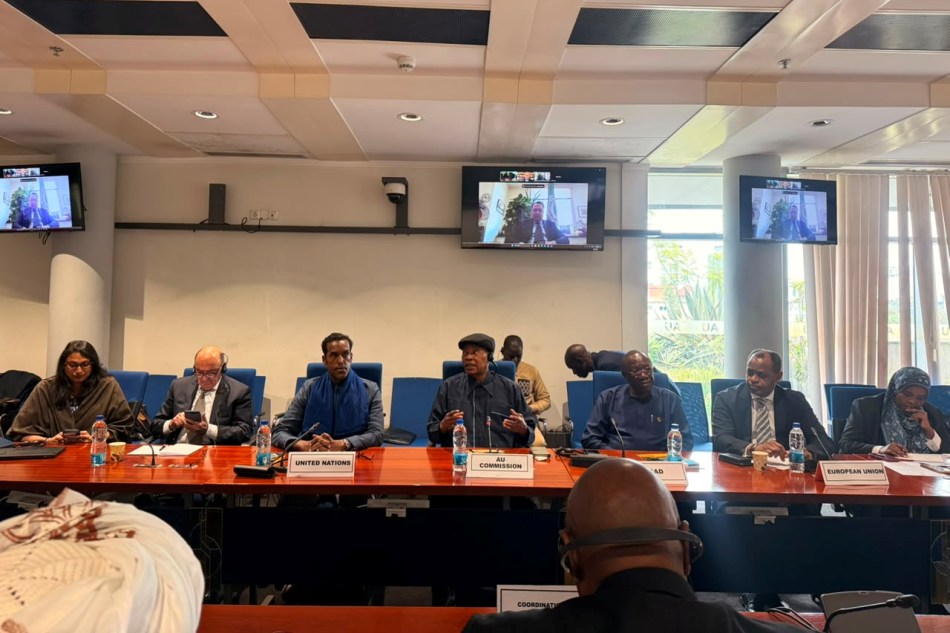
A broad debate is currently underway regarding the role of the Quintet mechanism and its capacity to facilitate the political process among Sudanese political actors. This debate is of immense importance to more than forty million Sudanese who are waiting for any glimmer of hope that could help bring an end to what is currently the deadliest war in the world.
The Quintet consists of five international and regional organizations concerned with Sudanese affairs: the United Nations, the African Union, the European Union, IGAD, and the League of Arab States. Its formation followed the well-known statement issued on September 12, 2025, by four countries: the United States, the United Arab Emirates, Egypt, and Saudi Arabia. That statement outlined a roadmap for resolving the crisis, emphasizing Sudan’s unity, the immediate cessation of hostilities, a humanitarian truce, and the exclusion of the Islamist movement, which had been designated as a terrorist organization.
The Quintet took its current form in November 2025, approximately two months after the Quartet’s statement. While the Quartet focused on issues such as a ceasefire, humanitarian access, and engagement with the two warring parties, the Sudanese Armed Forces and the Rapid Support Forces, the Quintet was tasked with bringing political actors together and advancing political dialogue.
However, since its inception, the Quintet has suffered from fundamental structural flaws that lie at the heart of its current challenges.
The first flaw is that it was not established through a formal United Nations resolution defining its mandate, responsibilities, internal relationships, and institutional structures, as was the case with missions such as UNAMID and UNITAMS. As a result, the nature of the relationships among its five components, and even the limits of its mission itself, have remained unclear. This ambiguity has created organizational gaps and allowed room for actions that sometimes lack adequate oversight and are shaped by the perspectives of individual organizations, or even by the individuals representing them.
The second flaw, which is directly linked to the first, is that the Quintet has never announced clear principles or a defined vision to guide its work, unlike the Quartet in its founding statement. Consequently, it has granted itself broad latitude to operate under general objectives such as achieving peace and fostering consensus among civilian forces. While these are undoubtedly important goals, they remain vague and abstract and are insufficient on their own to provide a clear political foundation for Sudanese parties to engage in dialogue.
This ambiguity led to a third flaw. In practice, the Quintet evolved into a body exercising broad authority, including determining the subjects of dialogue, selecting participants, setting schedules, and managing other key aspects of the process, all without prior agreement from the Sudanese parties themselves, despite its repeated assertion that the dialogue should be “Sudanese-led and Sudanese-owned.”
Because of these shortcomings, combined with the complexities of Sudan’s political landscape, efforts to bring political actors together failed to achieve meaningful progress over many months.
In June 2026, the first round of political consultations convened by the Quintet took place in Addis Ababa. However, it nearly collapsed within hours because of the way the Quintet handled the issue of political representation. It granted a group aligned with the Port Sudan authorities the status of a political bloc, giving it more seats than major blocs such as Somoud, Ta’sis, and the Democratic Bloc, and ranking it as the largest of the four blocs. Yet the Quintet provided no clear explanation regarding the nature of this bloc or the criteria behind its formation.
Despite this, the participating Sudanese forces demonstrated a significant degree of responsibility. Several actors, including Somoud, the Sudan Liberation Movement led by Abdel Wahid Mohamed Nur, the Ba’ath Party, the Umma Party (Mubarak Al-Fadil faction), civil society forces and personalities, and the Democratic Bloc, continued both direct and indirect discussions with one another. These efforts produced two proposals concerning the future of dialogue and its mechanisms, both of which were submitted to the Quintet on June 4, 2026.
It was expected that these understandings would form the basis for a new round of dialogue and political engagement. Instead, the Quintet completely ignored them and surprised the Sudanese parties with a fresh invitation to start again from scratch, as if nothing had happened. Participants were asked to travel to Addis Ababa within days, with no clear agenda, only to face the same questions once again: What is your vision for resolving the Sudanese crisis? What role should the Quintet play?
These questions had already been answered in documents submitted to the mechanism by participating actors.
The Quintet was therefore expected to_ develop a work programme or concrete proposals based on those submissions.
The result was a boycott by the majority of political and civilian forces of the consultations that the Quintet insisted on holding in Addis Ababa at the end of July 2026.
This brings us to the central question that now demands an answer: Who owns the Sudanese political process? Is it the Sudanese themselves, or the Quintet?
Sudanese political forces are increasingly calling on the Quintet to return to its natural role as a facilitator of dialogue rather than as an owner.
Its responsibility should be to help Sudanese actors reach consensus, not to assume the authority to define issues, participants, processes, and virtually everything else on their behalf.
If there is one step that could lead to the complete failure of the Quintet, it is its insistence on continuing to “invent” and impose a fourth bloc that has no real existence, coupled with its apparent leniency toward the participation of the Islamist movement led by Ali Karti.
At the same time, civilian forces are well aware that they are constantly subjected to campaigns that seek to discredit them in the eyes of public opinion by highlighting their disagreements and portraying them as detached from the suffering and concerns of ordinary Sudanese. The Islamist movement bears much of the responsibility for shaping this narrative, although both domestic and external actors sometimes contribute to it as well.
Nevertheless, disagreements among civilian forces are neither unusual nor inherently problematic. They are a natural feature of democratic political formations that seek to represent diversity and pluralism. Sudan’s situation, however, is more complicated because military actors and pro-war groups have been included within the category of civilian forces.
On the one hand, there are genuinely independent civilian groups that have consistently opposed the war, such as the Nairobi Declaration forces. On the other hand, there are groups categorized as civilian despite their close ties to the warring parties and the limitations imposed on their political independence. It is therefore unfair to hold independent civilian forces responsible for the positions or choices of actors associated with the conflict.
It is also important to note that, despite this complex reality, civilian forces led by Somoud managed to maintain dialogue with political actors linked to the warring parties and reach a reasonable level of understanding, a process that the Quintet ultimately failed to advance.
In conclusion, what Sudanese citizens urgently need is for the Quintet to reorganize itself and reassess its methods of operation. This should begin by reducing the influence of individuals or entities within the mechanism that are aligned with the visions of Sudan’s warring parties and their regional allies, while strengthening coordination with the Quartet and adhering to the principles it outlined. Only then can the Quintet become an effective mechanism for facilitating Sudanese dialogue and gain the acceptance of Sudan’s political actors.