
Sudanese pound sinks to record low as local gold prices surge
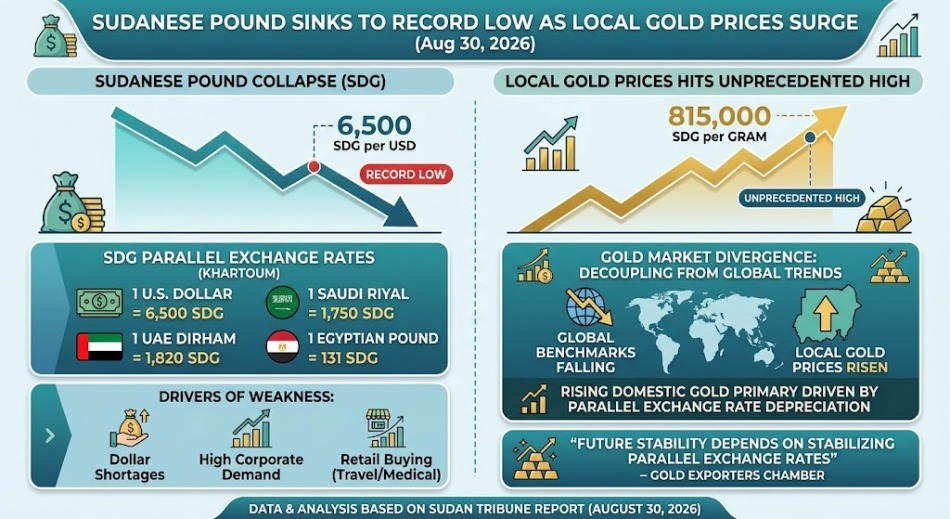
August 30, 2026 (KHARTOUM) – The Sudanese pound dropped to a record low of 6,500 per U.S. dollar on the parallel market on Sunday, driving domestic gold prices to unprecedented highs despite a downturn in global bullion benchmarks.
The currency’s sharp slide reflects deepening macroeconomic imbalances in war-torn Sudan, where a widening gap between official and black-market rates continues to fuel rapid inflation and currency devaluation.
Traders in Khartoum said the dollar traded at 6,500 pounds on Sunday, weakening from 6,400 pounds late last week.
Regionally, the Saudi riyal traded at 1,750 pounds, the UAE dirham at 1,820 pounds, and the Egyptian pound reached 131 pounds.
Traders attributed the renewed sell-off to acute dollar shortages and rising corporate demand from both public and private entities, as well as retail buying for overseas travel and medical expenses.
The currency depreciation pushed domestic raw gold to an all-time high of approximately 815,000 pounds per gram, decoupling from international markets where spot gold shed more than $200 an ounce.
Mutasim Mohamed Salih, secretary-general of the Gold Exporters Chamber, told Sudan Tribune that local bullion movements are being dictated primarily by parallel exchange rates rather than international pricing trends.
Because local gold is priced based on both international spot values and black-market exchange rates, the sharp drop in the pound has driven up the cost of purchasing raw bullion from mining areas and local markets, Salih said.
He noted that bullion dealers have repeatedly marked up domestic prices to hedge against the pound’s rapid depreciation, neutralizing the impact of falling global commodities markets.
Salih added that domestic gold prices would remain volatile until foreign exchange rates on the parallel market stabilize.