
Darfur gold flows fuel Sudan war economy through regional smuggling routes
August 31, 2026 (EL FASHER/NYALA) – In Sudan’s far west, where porous borders intersect with an absolute vacuum of state authority, desert tracks and dry riverbeds have turned into conduits for one of Africa’s largest illicit mineral trades.
Across Darfur’s gold deposits, stretching from the northern ranges to the southern borderlands, a parallel war economy thrives. It is underpinned by field pacts between the paramilitary Rapid Support Forces (RSF), which control vast swathes of the region, and networks linked to neighbouring governments receiving the contraband.
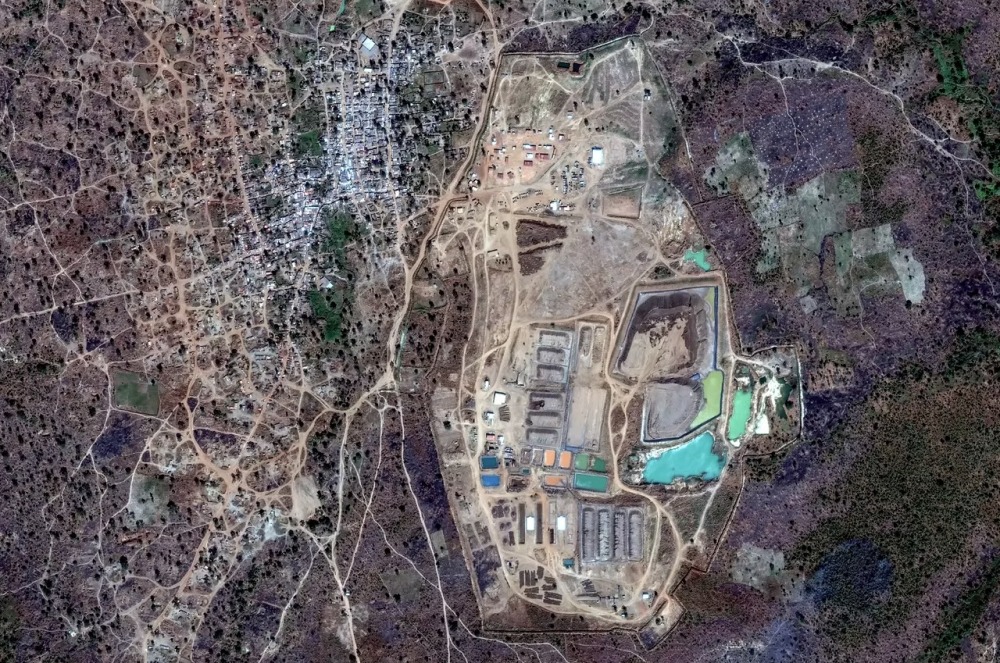
Darfur holds dozens of mining concessions, most of which have been converted into militarised, closed-access camps under RSF control, led by the Jebel Amer mine in North Darfur.
Jebel Amer is the region’s largest and most prominent artisanal extraction site, encompassing 12 exploration and mining blocks. For years, it was operated by Al-Junaid, a conglomerate tied to the family of RSF Commander Mohamed Hamdan Dagalo, before the paramilitary group expanded its physical control across the entire perimeter.
Further south, the high-output Radom and Songo mines in South Darfur sit near the border with the Central African Republic (CAR), offering direct logistical access across the frontier.
In northern Darfur, the Kutum and Kabkabiya deposits, rich in alluvial gold, serve as initial collection hubs before the ore is moved westward.
Strategic extraction hubs also include Um Dukhun and Hufrat al-Nahas in central and southwestern Darfur, near the tri-border junction of Sudan, Chad, and the CAR.
Old alliance
A weeks-long investigation by Sudan Tribune reveals a complex operational link between the RSF and Russia’s Wagner mercenary group that predated the outbreak of the April 2023 conflict, persisted intermittently, and later transitioned into corporate front structures.
The dual-track arrangement relies on securing extraction sites and running closed processing facilities using cyanide and mercury in exchange for logistical support, technical expertise, arms, and military hardware for RSF field units.
Multiple sources said supplies and consignments were routinely moved via unpaved airstrips in remote parts of Darfur and through Wagner-linked military outposts at the Birao base in northern CAR.
Smuggling corridors
The illicit network relies on several overland corridors to bypass official customs monitoring and national port infrastructure.
The primary route runs through the Um Dafuq–Birao border crossing. Gold from Radom, Songo, and Um Dukhun is transported in four-wheel-drive convoys escorted by armed RSF fighters to the Um Dafuq frontier, where it crosses into the CAR at Birao before continuing on to Bangui.
The investigation also identified the N’Djamena–Ennedi corridor, where gold is transported via desert tracks from North Darfur into Chad, then loaded onto commercial vehicles or private charter flights to obscure its trail.
The overland track from Chad’s capital, N’Djamena, to the Ennedi Plateau (Fada) in the northeast spans 1,000 to 1,200 kilometres and requires several days of travel across rugged terrain in four-wheel-drive vehicles.
Export destinations
Sudan Tribune interviewed drivers and logistics workers who transported gold shipments into the CAR and Chad in guarded convoys to mobile transit camps operated by unidentified Sudanese and foreign traders.
The investigation could not determine the exact coordinates of these sites, but drivers described them as highly mobile transit bases.
Equipped with modular shelters, water tankers, generators, solar panels, and Starlink satellite internet terminals, the encampments are designed to relocate swiftly along transit routes.
Flight tracking and source accounts indicate that once in the CAR, consignments of gold are flown to the United Arab Emirates, the primary trading and refining destination. Other parcels are routed directly through informal channels to Russia, generating hard-currency liquidity outside international sanctions regimes.
Scale of smuggling
Transport workers who spoke to Sudan Tribune estimated that 12 to 18 tonnes of gold pass annually through the Um Dafuq–Birao corridor alone.
Industry observers and monitoring groups estimate that between 35 and 45 tonnes of gold are smuggled out of Darfur each year.
Inside the mines
One driver, identifying himself as M.A., who hauled raw ore at Jebel Amer between 2022 and 2024, said convoys typically consisted of 6 to 10 heavily guarded four-wheel-drive vehicles and closed trucks.
M.A. said drivers signed contracts with a firm named Capital Tap and moved consignments packed in wooden and metal crates from storage facilities in Um Dukhun, Radom, and other extraction hubs.
Convoys moved almost exclusively after sunset toward the Um Dafuq border, M.A. said, noting that vehicles bypassed inspections and rotated armed escorts at pre-arranged desert checkpoints.
Another worker at the Songo site, S.B., who worked as a weighing and assessment supervisor through 2025, said refined gold was consolidated daily at secured compounds.
The gold was weighed, stamped with identification codes, and handed over to company representatives whom he believed were affiliated with Al-Junaid.
“I witnessed foreign specialists and technicians arriving with security passes to inspect the metal and take custody of regular shipments ranging from 80 to 120 kilograms at a time, which were immediately driven to the border,” S.B. said.
Laundering origins
The cross-border supply chain is managed through a joint military and commercial structure overseen by RSF field commanders in coordination with prominent Darfuri gold merchants and regional trafficking networks.
On the ground, raw gold from Jebel Amer, Songo, and Aghbash is gathered at desert staging points outside El Geneina and Um Dukhun.
Aghbash, a major RSF-controlled mining centre in the Radom locality of South Darfur, was hit by a Sudanese army airstrike in April that killed and wounded several mine workers.
Once across the border into the CAR, the gold is laundered through falsified documentation and new certificates of origin declaring it as locally mined CAR output, thereby enabling legal export.
Corporate entities linked to these transactions include Sigma Resources, Sigma Minerals, and Sigma Gold, which are 85 per cent owned by Abu Dhabi-based International Holding Company (IHC), with the CAR government holding a 15 per cent stake.
Industry reports indicate that the Sigma group sells bullion to Bangui Better Built (BBB), the CAR’s largest registered gold exporter, which exported more than 3 tonnes last year. BBB is controlled by Israeli businessman Efréz Efraimov.
The UAE, particularly the Dubai physical bullion market, serves as the final destination for most of the gold moved out of western Sudan via the CAR and Chadian corridors.
Consignments flown from N’Djamena and Bangui international airports with altered origin papers are delivered to refineries and trading houses, integrating seamlessly into the global gold supply chain.