
Disagreements hit Quintet group over planned Sudan visit
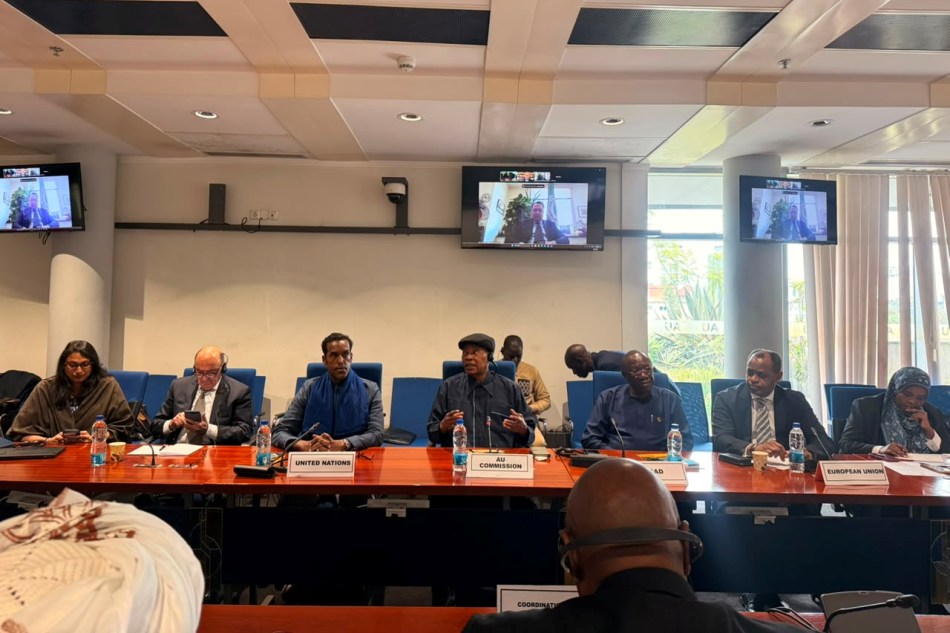
September 2, 2026 (ADDIS ABABA) – Sharp divisions have split the Quintet group over the Sudanese crisis, with several members boycotting a planned visit to Khartoum next week, an official involved in the mediation told Sudan Tribune.
The five-party group – comprising the United Nations, African Union, East African bloc IGAD, European Union, and the Arab League – was established to coordinate international and regional efforts to facilitate an intra-Sudanese dialogue and restore civilian rule.
The official said reservations grew over concerns that participating in a visit organized by one side of the conflict would compromise the group’s neutrality and undermine its standing with civilian forces.
Sudan’s army, led by General Abdel Fattah al-Burhan, has been locked in a devastating war with the paramilitary Rapid Support Forces since April 2023.
Civilian and political groups, led by the Somoud coalition, have also clashed with the Quintet group over the process, accusing mediators of trying to pre-engineer talks rather than acting as neutral facilitators.
The official said tensions boiled over during recent meetings between AU Commission officials and regional delegates following an AU statement welcoming Burhan’s call for an internal dialogue.
The statement sparked backlash domestically and regionally because the pan-African body suspended Sudan’s membership following a military coup led by Burhan in October 2021.
Mohamed Ibn Chambas, head of the AU High-Level Panel on Sudan, was not aware of the commission’s statement and did not take part in drafting it, the official said.
Arrangements for the Khartoum trip were coordinated privately by individual members and the head of the AU liaison office in Sudan, Mohamed Belaiche, without the consensus of all five parties, the official added.
The dispute follows preparatory consultations in Addis Ababa that failed to build a unified civilian platform after political and civil groups objected to the group’s methodology.
Anti-war coalitions, trade unions, and professional syndicates have rejected Burhan’s dialogue initiative, calling it an attempt to legitimize military rule.
They maintain they will not participate in any talks supervised by an active belligerent without a comprehensive ceasefire and credible, neutral mediation.