
Sudanese politician warns international community failing to address core conflict
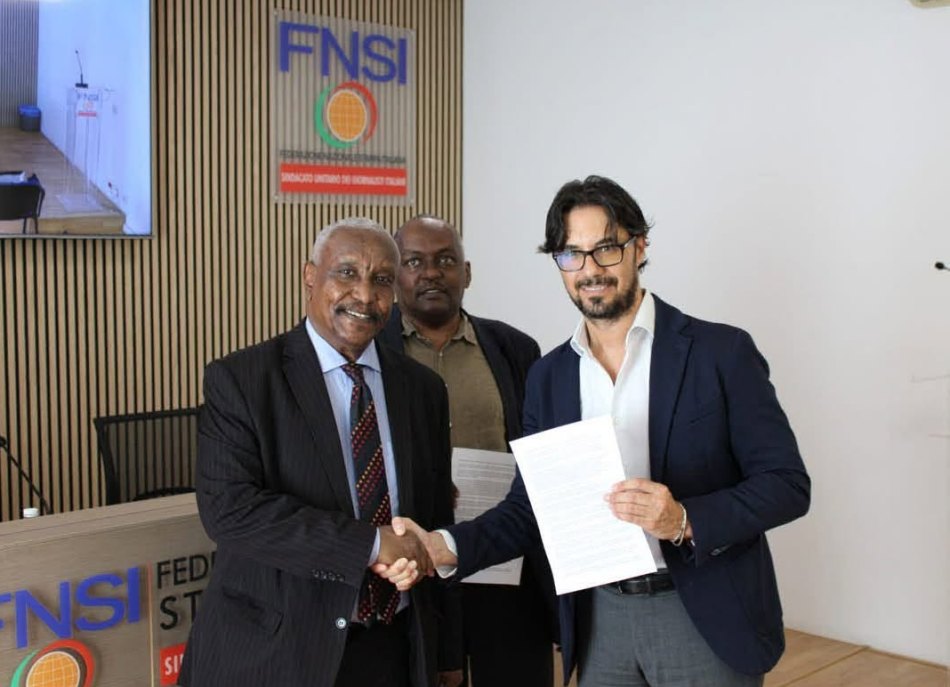
September 16, 2026 (ROME) – The head of the SPLM-Democratic Revolutionary Current, Yasir Arman, on Wednesday directed sharp criticism at international institutions over their handling of the situation in Sudan, accusing them of focusing on narrow issues rather than pressuring them to end the war.
Arman held meetings with officials at the United Nations Human Rights Council in Geneva on the sidelines of its 63rd session, which runs through next October. He met with representatives of international organizations and governments from among the council’s 47 member states, in addition to holding talks with the chair of the fact-finding mission, Mohamed Chande Othman.
Speaking to Sudan Tribune, Arman said: “The Sudan agenda was present at a high level in the Human Rights Council, but this alone is not enough, as the main focus was not placed on ending the war and securing a humanitarian ceasefire to address the humanitarian catastrophe.”
He explained that the issues raised at the council represent the consequences of the war, including displacement, sexual violence, and extending the arms embargo to cover all of Sudan, stressing that these issues “cannot be addressed except by ending the war.”
Arman also pointed to discussions about expanding the arms embargo to cover all of Sudan instead of Darfur, noting that the same measure was tested in Darfur for more than 20 years “without leading to the protection of civilians.”
“The broader and deeper issue is how to end the war and address the humanitarian catastrophe spreading across all of Sudan,” he added. “There are millions of displaced persons and refugees as a result of the war, the strategic infrastructure has been destroyed, and cultural memory has been wiped out through the looting of museums, the National Records Office, and many documents representing a shared Sudanese identity.”
Arman explained that he spoke with the chair of the fact-finding mission, Mohamed Chande Othman, and his team about the importance of utilizing the unprecedented mandate granted to the investigation committee, namely, addressing the root causes of the Sudanese crisis. “In order for this war to be the last war and to bring sustainable peace, the root causes of the war crises that began in 1955 must be addressed,” he said.
Warning over expanding crisis
Arman noted emerging trends in the Human Rights Council that treat the state and legitimacy as the primary issue while sidelining the civilian agenda, emphasizing that this prolongs the war.
He criticized the council’s failure to focus on resolving Sudan’s crisis definitively, citing regional alliances that he said stand with one warring side or the other.
He explained that during his meetings with international actors, he pointed out that the Sudanese crisis has taken a regional turn. He warned that this is harmful given the country’s location across vital geopolitical belts, such as the Red Sea, the Horn of Africa, and the Sahel, as well as its links to Africa, the Arab world, and the Mediterranean.
Arman, who arrived in Rome on Tuesday, plans to meet with Italian legislative and executive institutions before continuing his European tour.
He said that upon his arrival, he held a press conference at the headquarters of the National Federation of the Italian Press (FNSI), in which he called on the Holy See and the Italian government to address the humanitarian catastrophe in Sudan while working to achieve peace and democracy.
He said anti-war forces appreciate the role Italy can play in efforts to bring peace and democracy to Sudan.
Arman noted that the conflict carries geopolitical repercussions because of Sudan’s geographic position on the Red Sea, the Horn of Africa, the Sahel region, and its proximity to the Mediterranean.
He pointed out that the war has affected the lives of more than 25 million people, severely damaging major cities and strategic infrastructure, alongside vast areas producing agricultural crops and livestock.
“Today, Sudan faces the risk of imminent famine without serious attention from the region and the international community,” he added. “To date, the World Food Programme has received only half of the funding required to meet urgent food and nutrition needs.”
Arman stressed that Sudanese refugees in neighbouring countries will seek migration, especially toward European nations, if they “do not find the right to remain in their homeland.”
Fragile alliances
The head of the Democratic Revolutionary Current stressed their ongoing pursuit to build a substantial, organic alliance and a solid post-war front to rebuild and rehabilitate Sudan, tackle post-war tasks, and deepen democracy, development, and citizenship without discrimination.
“Fragile alliances lead to fragile solutions, and fragile solutions will reproduce the crisis,” he said. “Therefore, we stand against any fragile alliances and against any fragile visions.”
He added: “We clearly observe that the Quintet and its recent trip to Khartoum indicate and warn that these issues are not being taken seriously enough by the mediators. We call for a deeper dialogue with the Quintet on these issues and on how to achieve sustainable peace in Sudan.”
The Quintet group, which includes representatives of the United Nations, the African Union, IGAD, the European Union, and the Arab League, held extensive meetings in Khartoum last week with senior government officials, the dialogue committee, and political blocs to discuss ways to push toward a Sudanese-Sudanese dialogue that paves the way for a political process guaranteeing a return to democratic civilian rule.
Commenting on calls for internal dialogue, Arman said dialogue remains a central issue, emphasizing that they advocate for talks between the parties waging the war and civilian forces within the anti-war front. He renewed his warnings against the return of the Islamists, stating: “They will return with their wars, repression, totalitarianism, and tyranny, and they will repeat their past course by bringing the Sudanese state to the brink of collapse.”