
War, currency collapse leave Sudan on brink of famine as foreign investment bets falter
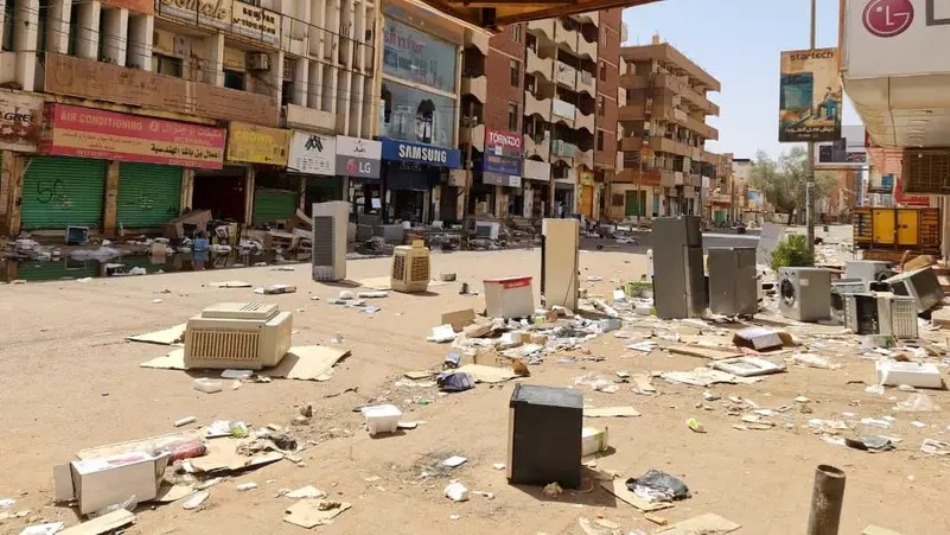
September 19, 2026 (KHARTOUM) – Sudan’s fragile humanitarian lifeline is near total breakdown as an intensifying war of attrition, runaway inflation, and a plummeting currency push millions toward catastrophic hunger.
Aid agencies and United Nations officials warn that acute funding shortfalls threaten to halt emergency food distributions by the end of September. The shortfall coincides with an economic tailspin that has erased household purchasing power nationwide.
The Sudanese pound slid to a historic low on the parallel market last week, briefly touching 9,500 against the U.S. dollar before steadying between 7,900 and 8,000.
The currency’s depreciation has crippled ordinary citizens’ ability to buy staples, even where goods remain available. At the same time, informal transit levies and military checkpoints have cut off commercial distribution routes between agricultural states and besieged urban centres.
Strategic and economic analysts say the crisis has outstripped domestic containment measures, leaving relief groups facing impossible choices.
“The armed conflict has entered a complex war of attrition that exceeds local capacities,” strategic analyst Mohamed al-Hadi told Sudan Tribune.
Al-Hadi pointed to waning donor engagement amid competing global emergencies, coupled with operational bottlenecks on the ground, which have sharply curtailed agency budgets.
The International Organization for Migration and the World Food Programme estimate that billions of dollars in emergency financing are needed to keep primary supply hubs open. Without immediate inflows, baseline food rations for displaced populations will be slashed further.
Fresh displacement from Kordofan and Blue Nile states has intensified pressure on makeshift camps, where seasonal rains and shifting weather patterns have worsened health conditions. Most remaining hospitals face severe deficits of basic drugs and clinical staff, spurring outbreaks of preventable seasonal diseases.
In an effort to generate non-aid revenue, government authorities in safer regions have promoted investment deals with foreign partners. Preliminary agreements signed with Spanish and Malaysian firms aim to overhaul renewable energy, water infrastructure, and Red Sea port logistics.
Officials argue the projects can reduce reliance on foreign relief and generate foreign exchange. Yet economists and risk analysts view large-scale capital deployment in an active war zone as largely aspirational.
“Attracting foreign direct investment in this environment is a high-risk proposition,” al-Hadi said. “Restoring vital utilities like power and water demands broad physical security and a functioning commercial banking sector—both crippled by war damage and currency depreciation.”
Political and strategic analyst Dr Mustafa Salah noted that publicizing foreign investment deals serves primarily to signal that state institutions remain viable.
“The state’s fiscal reality makes meeting counterpart cash commitments exceptionally difficult,” Salah told Sudan Tribune. “Without capital backing, these memorandums risk remaining ink on paper.”
On the battlefield, clashes between the Sudanese Armed Forces and the paramilitary Rapid Support Forces continue along key transit axes in the south and east. The combat has severed arterial roads, cutting off regional markets from port imports and central storage facilities.
Diplomatic efforts to stem the weapons trade have produced little impact. Salah said international arms embargoes lack on-the-ground monitoring, leaving cross-border munitions pipelines open.
With formal peace talks stalled and regional positions fragmented, ordinary families increasingly depend on informal mutual-aid networks and community kitchens to stave off starvation.
Without immediate debt relief, stabilized trade corridors, and an emergency injection of international humanitarian funding, analysts warn the ongoing economic collapse risks pushing Sudan past the point of recovery.