
Editor's Picks
Sudan death row inmates allege torture, secret trials in anti-RSF sweep
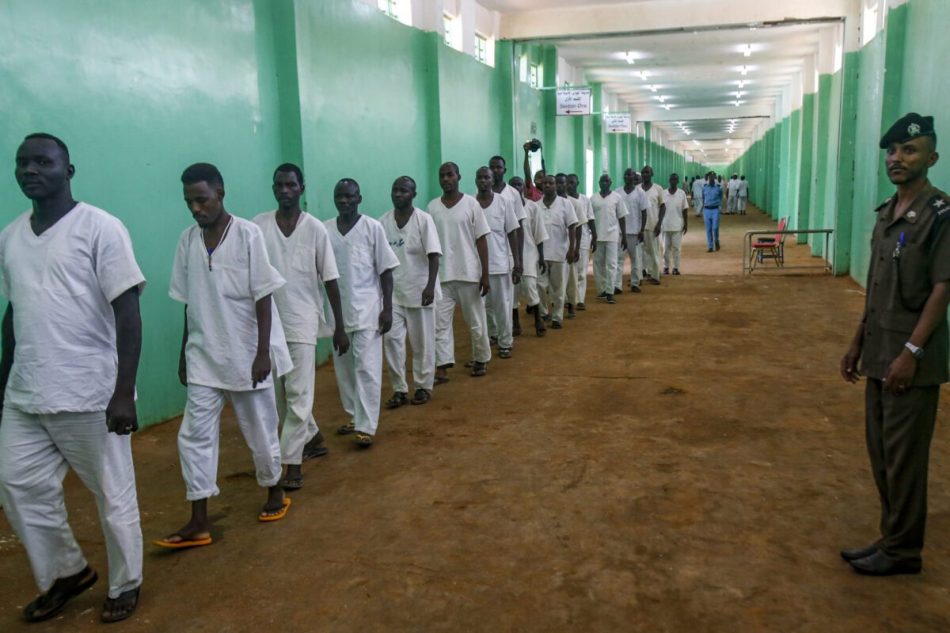
September 28, 2026 (KHARTOUM) – Two Sudanese men sentenced to death at al-Huda prison have accused authorities of torture, arbitrary detention, and coerced confessions after being convicted of collaborating with the paramilitary Rapid Support Forces (RSF).
The accounts, provided directly by one inmate and by the family of another, point to a pattern of procedural violations and secret detentions targeting civilians caught up in the military’s crackdown on suspected RSF associates.
Rights monitors and defence lawyers say hundreds of civilians have faced summary trials without legal representation since war erupted between the Sudanese Armed Forces (SAF) and the RSF in April 2023.
Most defendants face charges under Articles 50 and 51 of the Sudanese Criminal Act, which cover undermining the constitutional system and waging war against the state. Both carry the death penalty.
Military and judicial authorities did not immediately respond to requests for comment on the allegations.
Coerced confession
Mohamed Ahmed, a pseudonym used to protect his safety, said he was arrested on al-Wadi Street in Omdurman after visiting a relative’s workplace. An army soldier accused him of looting furniture before handing him over to an intelligence unit at a detention site on al-Ashreen Street.
Ahmed said the allegations quickly shifted to aiding the RSF. Over the next three days, interrogators subjected him to severe beatings and torture, leaving him with deep wounds that required 18 days of recovery before questioning resumed.
He was held for 45 days at the site, where interrogators beat him with blunt instruments and iron chains. He was later transferred to another intelligence facility in Khartoum’s al-Sahafa district, where interrogators offered to release him for a 10 billion Sudanese pound ransom that he could not afford.
Ahmed said he was taken directly before a judge without passing through a police station, before being transferred to al-Huda prison two days later. He said his formal confession was extracted under threats that he would be returned to interrogation cells if he deviated from the script given to him.
During the court proceedings, prosecution witnesses claimed to have seen him armed and wearing an RSF uniform, charges Ahmed denied. He said several witnesses were outside Khartoum during the period in question.
Ahmed said several detainees died under torture in the security cells. The claims regarding deaths and judicial misconduct could not be independently verified.
Death row conditions
Ahmed said the ward housing him at al-Huda prison holds about 1,200 inmates convicted under Articles 50 and 51, alongside a smaller number convicted of murder under Article 130.
He said he now faces execution based entirely on a statement extracted under physical abuse and intimidation.
Disappearance and secret trial
Saleh Abdallah, a pseudonym for a pharmacist from Soba West southeast of Khartoum, was arrested on March 26, 2025, by a military intelligence unit operating out of the al-Aylafoun base, according to his family.
His relatives said an air force officer residing in the same complex led the arresting unit following a personal dispute, alleging Abdullah had previously reported the officer to the RSF while the paramilitaries controlled the area.
Abdullah had lived abroad in Qatar during the 2018 uprising that toppled Omar al-Bashir and maintained no political affiliations, his family said, denying claims linking him to civilian activist groups.
During RSF control of Soba, Abdallah used his background in pharmacy and civilian ties with local residents to treat the sick, secure medicine for chronic diseases, and bury the dead, his relatives said.
Following his arrest, Abdallah was held incommunicado for a year without charge or access to his family or a lawyer, until informal reports placed him at al-Aylafoun.
In 2026, his family discovered he was on death row at al-Huda prison after a closed trial convicted him of collaborating with the RSF.
Systematic legal violations
Mohamed Salaheldin, an executive committee member of the Emergency Lawyers group, said cases involving alleged RSF ties routinely lack a credible legal basis and violate domestic criminal procedure.
Salaheldin said arrests are carried out arbitrarily by informal security units tied to the General Intelligence Service without arrest warrants from the public prosecution, rendering subsequent charges procedurally invalid.
Detainees are denied access to counsel or relatives, and their locations are concealed from judicial oversight, Salaheldin said, adding that procedural violations require dismissal under Sudanese law.
He noted that capital convictions legally require proof beyond a reasonable doubt, whereas courts are handing down death sentences based on tenuous circumstantial claims.
Salaheldin said the presence of civilians in areas formerly controlled by the RSF, or routine interactions required for daily survival, cannot legally constitute material evidence of collaboration.
He added that many cases originate from personal vendettas or denouncements by neighbours, accusing authorities of using state-security laws to control public space and silence civilians.