
Sudan’s hope – next humanitarian truce: the ceasefire is only half the negotiation
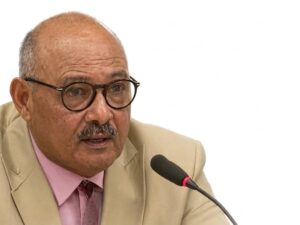
Fouad Hikmat,
Conflict resolution expert, former advisor to the EU Horn of Africa envoy
 Sudan’s next humanitarian truce might happen soon or later, but might endure only if it does more than pause the fighting: it must alter the political, military and economic calculations that have repeatedly caused ceasefires to collapse. A durable arrangement must protect civilians, prevent rearmament and territorial partition, regulate front lines, specific withdrawals, humanitarian access, external support, drones and economic lifelines, and establish a credible path toward an inclusive political settlement. Without these conditions, any cessation will merely slow Sudan’s ongoing slide toward fragmentation and give the fighting parties time to prepare for the next offensive operations.
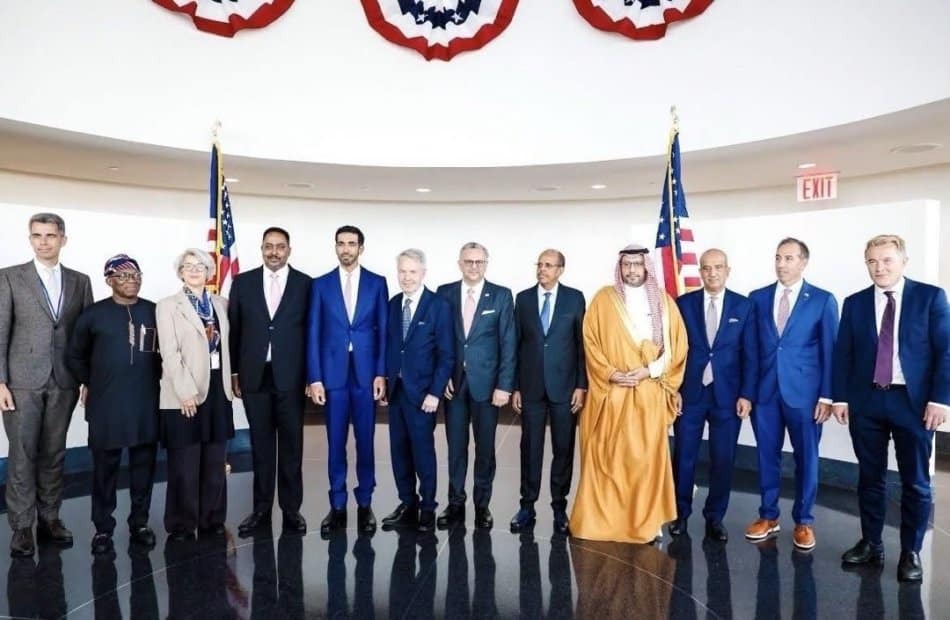
The emerging international framework offers a potential opening. The joint Quad–Quintet meeting on 24 September in New York brought together two principal diplomatic mechanisms on Sudan and called for closer coordination between humanitarian action, cessation-of-hostilities diplomacy and an inclusive civilian political process. This was much awaited of them, and now it gives the concerned Sudanese peoples a glimpse of hope. This convergence could produce a more integrated proposition—one that links immediate relief and military de-escalation to the political settlement that must follow.
But humanitarian truce proposals face evolving challenges. The first challenge is the military line of contact. SAF controls much of northern, central and eastern Sudan, while the RSF holds substantial territory in the west. Any truce that simply freezes these positions risks entrenching wartime fragmentation. The agreement must therefore make clear that a monitored military line has no implications for sovereignty, territorial ownership, or Sudan’s final political order.
The question of RSF withdrawal from cities is equally sensitive. Previous proposals failed partly because the parties disagreed over whether withdrawal should precede the truce, occur simultaneously, or be negotiated during a later permanent ceasefire. A more workable approach could distinguish between withdrawing from population centres and withdrawing from territory. The initial phase could place weapons-free major civilian cities and zones, and humanitarian corridors, under monitored arrangements.
Humanitarian access must also be treated as a central political issue. Competing claims by the Sudanese government’s Humanitarian Aid Commission and the RSF’s parallel humanitarian structures create administrative and political obstacles for relief organisations and for UNOCHA in particular. A viable truce should establish a single, transparent and independently monitored system for permissions, notifications, cross-border deliveries and cross-line humanitarian operations. Cooperation with authorities must not be interpreted as recognition of parallel institutions or as prejudging Sudan’s political settlement. The agreement should also guarantee the safety and movement of aid workers and impose consequences for interference with humanitarian assistance.
Economic interests could determine whether a truce holds. However, not all matters, such as gold, gum Arabic, etc., must be addressed now, but the movement of South Sudanese oil through Sudan’s pipeline system generates vital revenue for Juba and scarce foreign currency for Sudan’s competing authorities. Reported arrangements to divide transit revenues between the RSF and the Sudanese government remain publicly unconfirmed in detail, but the underlying issue is clear: oil infrastructure and revenues are potential sources of both cooperation and renewed conflict. Any serious truce must ensure pipeline protection, continued production and exports, access for technical personnel and transparent management of transit revenues.
External military support presents another obstacle. SAF is likely to distinguish weapons acquired by recognised state institutions from clandestine assistance to the RSF, while the RSF will resist restrictions on its resupply if SAF remains free to replenish its arsenal. A truce must, therefore, regulate not only attacks but also the external flows that sustain them. It must also clarify how Sudan’s sovereignty relates to restrictions on military activity during the cessation. Such restrictions, particularly on SAF, need to be agreed upon, and they would not be effective if imposed without UNSC consensus.
Drones have transformed the meaning of ceasefire monitoring. Traditional observation of front lines is insufficient when armed and reconnaissance drones, long-range strikes and attacks on infrastructure can continue behind agreed positions. The next agreement should regulate drone operations, attacks on airfields and command centres, the movement of heavy weapons and the acquisition of systems capable of conducting offensive operations. Otherwise, the parties could comply formally with territorial restrictions while continuing the war at a distance.
The same principle applies to redeployment within areas of control. A blanket prohibition on military movement would be politically unacceptable, particularly to SAF, but unrestricted movement could allow either side to prepare a new offensive. The agreement should prohibit military effects rather than all movement: reinforcement of offensive fronts, concentration of heavy weapons, creation of new attack positions, movement into demilitarised areas and redeployment intended to alter the balance during the truce.
(UN)OCHA would likely play a central role at the humanitarian–security interface of any new truce, particularly by coordinating humanitarian actors, negotiating and monitoring access, facilitating notification and deconfliction arrangements, and reporting on protection risks and obstruction of relief. Its role should, however, be carefully distinguished from that of an independent ceasefire-monitoring and verification mechanism.
OCHA can monitor humanitarian access and protection conditions, including whether aid convoys and personnel can move safely, crossings are functioning, and civilians can obtain assistance. It should not be responsible for verifying military compliance with provisions concerning lines of contact, troop movements, weapons, drones or external military support. Assigning such functions to OCHA could compromise its neutrality, operational access and ability to engage with SAF, RSF and local authorities.
The truce architecture should therefore establish two connected but separate functions: a humanitarian mechanism led or coordinated by OCHA, and an independent mechanism to monitor and verify military obligations. Given the absence of a peacekeeping force, the latter may need to rely on liaison teams, agreed reporting channels, technical information, third-party verification, joint investigations and direct communication with commanders.
The central design challenge is to provide OCHA with sufficient authority and political backing to secure humanitarian access without turning it into a substitute security or ceasefire-monitoring mission. A credible truce will require both effective humanitarian coordination and a distinct mechanism capable of addressing military violations.
Ultimately, the parties will accept a truce only if their strategic calculations change. Obligations alone will not be sufficient. Pressure may include targeted sanctions, financial restrictions, travel measures, action against military supply networks and stronger measures against external actors sustaining the war. Incentives could include improved and phased diplomatic engagement, legally appropriate sanctions relief, reconstruction assistance, security guarantees linked to compliance of temporary ceasefire that paves the way for a credible political process. Accountability, however, must remain separate from bargaining. The International Criminal Court’s Darfur jurisdiction derives from the UN Security Council’s 2005 referral and the extension of it should not be treated as a negotiable component of a diplomatic package.
The political process that follows the truce is therefore decisive. SAF will seek assurances that a cessation does not weaken state institutions operating from Khartoum. The RSF will want guarantees that halting military operations does not eliminate its leverage. Civilian forces will fear that an agreement between two armed parties could produce another military-dominated settlement.
The Quad–Quintet framework is significant because it places humanitarian relief, military de-escalation and civilian dialogue within a shared roadmap. At the same time, an internal national dialogue is developing inside Sudan. These processes should not be treated as mutually exclusive. Internal engagement could generate constituencies, questions and areas of agreement for a broader inclusive process. But if it becomes an alternative to the international track—or if the Quintet dismisses it entirely—Sudan could face two competing political processes alongside its two military zones.
The next humanitarian truce should therefore be judged not by its duration but by whether it addresses the causes of previous failures: the status of the front line, withdrawals from cities, humanitarian access, civilian protection, oil revenues, external arms and mercenary flows, drones, redeployment, monitoring and the political settlement that follows. Current efforts by the Personal Envoy of the UN Secretary-General to facilitate an exchange of prisoners of war, if they materialize, could provide an opening for more positive opportunities and help build confidence for broader humanitarian and political engagement. The Quad–Quintet convergence could then reinforce this opening by linking practical confidence-building measures to a more coherent diplomatic process.
The central objective must be to prevent a humanitarian pause from becoming either a mechanism for territorial partition or a temporary operational break before renewed war. The Quad–Quintet convergence creates an opportunity for a more coherent approach, but international coordination will matter only if it produces an arrangement that is implementable by the parties, protects civilians and prevents Sudan’s future from being reduced to a bargain between two-armed leaderships.
The real negotiation is not simply how to silence the guns temporarily. It is how to create a political and security equation in which continuing the war becomes less advantageous than keeping the guns silent.