
Sudan opposes UAE candidate Lana Nusseibeh for UN secretary-general role
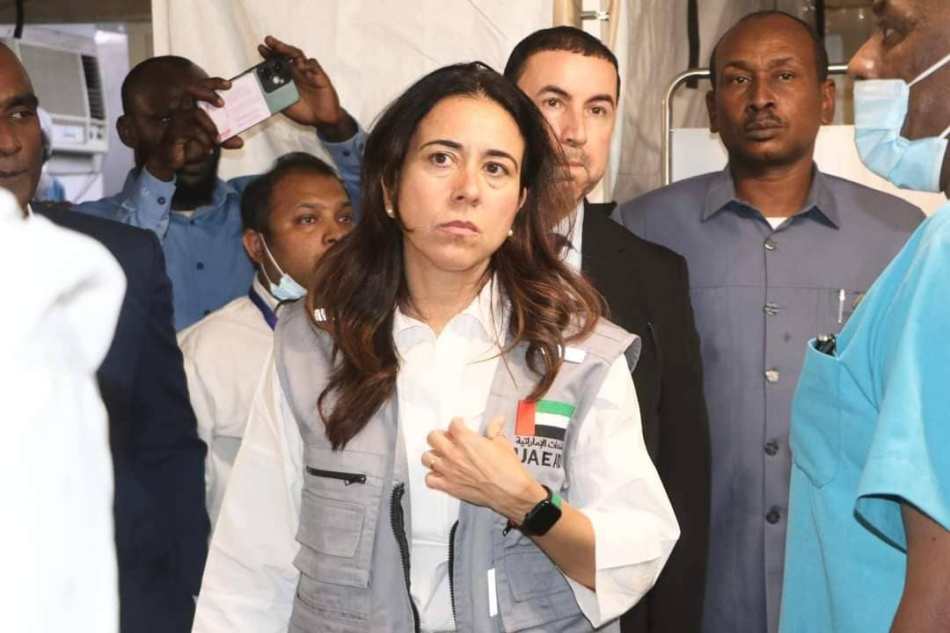
October 29, 2026 (UNITED NATUINS) – Sudan has joined voices opposing the nomination of the United Arab Emirates’ Lana Nusseibeh for United Nations Secretary-General, questioning her independence after she previously denied UN investigation findings.
The UAE nominated Nusseibeh, who served as the country’s UN envoy for many years before her appointment as a foreign ministry state minister, to lead the international organization.
Ammar Mohammed Mahmoud, minister plenipotentiary at Sudan’s permanent mission to the UN, participated in an interactive dialogue session held by the UN General Assembly to hear Nusseibeh’s vision.
During his intervention, Mahmoud questioned Nusseibeh’s willingness to prove her independence from her government by supporting an independent international investigation into accusations that the UAE supplied the paramilitary Rapid Support Forces (RSF) with weapons.
These weapons were used to commit crimes and atrocities against Sudanese civilians, Mahmoud added.
He stated that these crimes amount to genocide and include mass rape and sexual violence against Sudanese women and girls.
Mahmoud addressed the moral legitimacy of Nusseibeh assuming the role, questioning how Sudanese victims could trust the independence of a prominent figure linked to a government accused of supporting those responsible for crimes against them.
The UN Secretary-General must command the trust of victims of conflicts, not just governments, as moral credibility is a prerequisite for the organization’s success, he explained.
Nusseibeh has defended her country during UN Security Council deliberations regarding its alleged support for the RSF.
In 2024, she denied the findings of a UN investigation that accused the UAE of supplying the paramilitary group with weapons.
Mahmoud said he refrained from directly raising the UN investigation findings on the UAE’s role in arming the RSF after a representative from the Raoul Wallenberg Centre for Human Rights raised the same issue during the session.
The center’s representative questioned how to ensure the candidate would not continue to deny the findings of the international organization she aspires to lead, raising concerns about a conflict of interest.
Nusseibeh entered the race to succeed Antonio Guterres at the helm of the UN, marking the first time the UAE has nominated a citizen for the international post.
UAE President Sheikh Mohammed bin Zayed Al Nahyan announced Nusseibeh’s nomination in a letter sent this month to the presidencies of the General Assembly and the Security Council.
Guterres’ term ends on Dec. 31, 2026, with the new secretary-general taking office in early January 2027.
Securing the position requires consensus within the Security Council, where the United States, Russia, China, Britain, and France hold veto power, before the General Assembly approves the appointment.
Separately, a campaign opposing Nusseibeh’s nomination hosted an online seminar.
Former Human Rights Watch Executive Director Kenneth Roth said during the seminar that Nusseibeh was asked about the UAE’s role in arming the RSF and denied it regardless of the facts.
‘This is not what we need from a UN Secretary-General,’ Roth said, adding that her stance undermines the moral authority on human rights the role requires.
Sudan says it possesses evidence of the UAE’s continued supply of advanced weapons and political cover to the RSF and has classified it as an aggressor state, while Abu Dhabi has consistently denied Khartoum’s accusations.