
UAE court sentences Sudanese military officials over arms trafficking
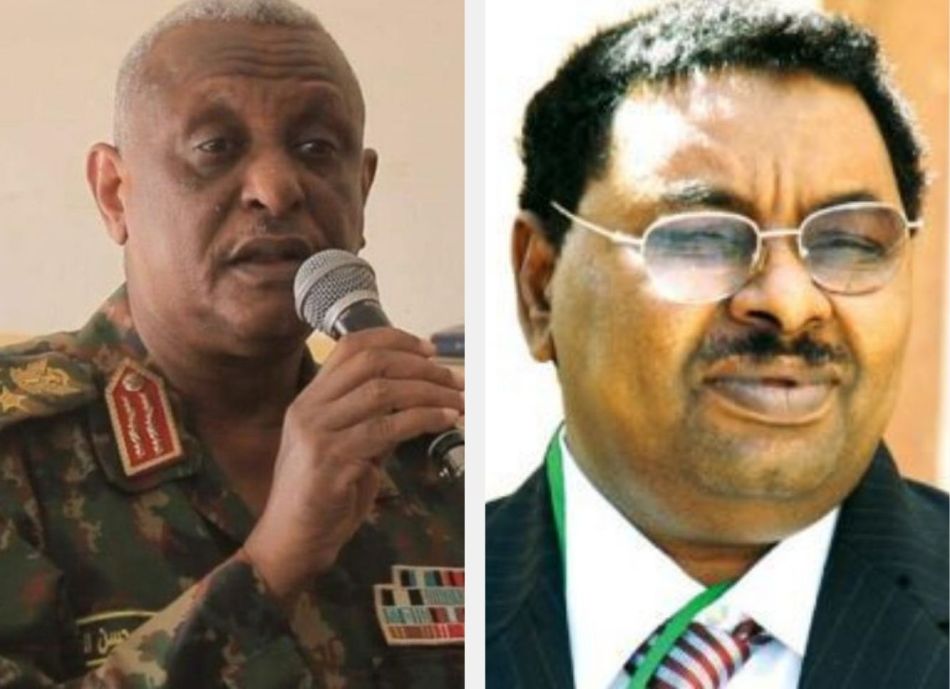
October 29, 2026 (ABU DHABI) – The Abu Dhabi Federal Court of Appeal on Thursday sentenced eight Sudanese nationals, including a senior army commander and a former intelligence chief, to life imprisonment for illicitly trafficking weapons and ammunition intended for the Sudanese military.
Among those convicted in absentia were Yasir Al-Atta, assistant commander-in-chief of the Sudanese Armed Forces (SAF); Salah Abdallah, former head of the Sudanese National Intelligence and Security Service, widely known as Salah Gosh; and Osman El-Zubeir, a top SAF financial officer.
The court found the men guilty of running a sophisticated illicit arms network that smuggled military hardware and laundered money to fuel the ongoing conflict in Sudan.
Sentences amid diplomatic tensions
The sweeping convictions follow an initial statement by the United Arab Emirates on April 30, 2025, which revealed that state security services had dismantled a cell attempting to illegally smuggle military equipment into the Sudanese Red Sea city of Port Sudan.
State news agency WAM reported that the court handed life sentences to Al-Atta, Gosh, and El-Zubeir, alongside co-conspirators Rashid Omar Abdel Qadir, Ahmed Abdallah, Ahmed Rabie, Mohamed Fath El-Beik, and Maher Abdel Jalil.
Authorities ordered the immediate confiscation of all seized ammunition, mobile phones, and encrypted communication devices utilized by the smuggling ring.
The court ruled that the convicted individuals would be permanently deported from the Gulf state after completing their custodial sentences.
Most of the convicted men did not appear in court, reflecting the deeply fractured diplomatic ties and ongoing hostilities between Khartoum and Abu Dhabi.
Sudanese government officials aligned with the SAF have repeatedly accused the UAE of providing critical military and logistical support to the rival Rapid Support Forces (RSF) during the protracted civil war.
Khartoum alleges that Emirati provisions include advanced combat drones utilized by the paramilitary RSF to target critical civilian infrastructure and power stations across Sudan.
Corporate sanctions and financial penalties
In addition to the life terms, the Abu Dhabi court handed down three-year prison sentences to a wider network of financial facilitators and logistical brokers.
Rashid Omar Abdel Qadir Ali, Salah Gosh, Ahmed Abdallah, Maher Abdel Jalil, Osman Babiker, Khalid Youssef Mukhtar, and Ahmed Khalafallah Abdallah each received three-year terms alongside massive financial penalties for associated crimes.
The court fined each individual 1 million dirhams for money laundering and ordered the seizure of an additional 1.54 million dirhams in illicit funds.
The court also imposed sweeping sanctions on several corporate entities operating in the UAE that provided civilian cover for the military operation.
The court permanently revoked the commercial licenses of Rashid Omar Brokerage, Portex Trade Limited, Abu Lara Electronics Trading, Yellow Sand Trading, Warda Al Masarrah Trading, and Sudamina in the Free Zone.
The court fined each implicated company one million dirhams for its role in laundering money to facilitate the illicit arms trade, and the state seized all associated corporate assets.
Anatomy of the smuggling network
Court documents cited by WAM detailed that the network illegally imported “Goryunov” machine-gun ammunition into the UAE without the legally required permits from the competent sovereign authority.
The munitions were systematically stockpiled in the Emirates in preparation for a clandestine airlift directly to Port Sudan.
Prosecutors highlighted Rashid Omar Abdel Qadir Ali as the primary architect of the logistical deals.
Through his brokerage firm, Omar managed the procurement of military hardware for the SAF and deliberately laundered payments through the UAE financial system to avoid detection.
The court found that Omar received approximately eight million dirhams in cash from Maher Abdel Jalil to partially fund one of the major weapons shipments.
Yasir Al-Atta was convicted of formally requesting military equipment and using his rank to secure landing permits at Port Sudan airport, despite knowing the transaction violated UAE sovereignty and international arms regulations.
Osman El-Zubeir managed the SAF’s financial obligations, audited the illicit shipments, and disbursed state funds to the network’s private suppliers.
El-Zubeir channelled these payments to Abdel Jalil using the informal “Hawala” money transfer system to bypass traditional international banking oversight and compliance checks.
Abdel Jalil served as the central financial broker, bridging the gap between SAF financiers and local suppliers while managing the flow of illicit capital across multiple shell companies.
Khalid Youssef Mukhtar, a former chief of staff to Salah Gosh at the intelligence service, was found guilty of receiving the intelligence chief’s financial commission for his role in authorizing the transactions.
Ahmed Rabie was convicted of using his bureaucratic influence to secure necessary approvals from the Sudanese military leadership for Omar’s front companies, acting strictly for personal financial gain.
Two-phase operation and international scrutiny
Abu Dhabi’s Public Prosecution office revealed that the broader smuggling operation consisted of two highly interconnected phases.
The initial deal was orchestrated outside the UAE to procure the military hardware, with funds subsequently washed through licensed Emirati companies using fictitious commercial invoices.
The second phase utilized more than $2 million generated from the initial transactions to execute an urgent procurement of additional Goryunov heavy ammunition.
Prosecutors proved that the first batch of this subsequent shipment was fraudulently smuggled into the UAE aboard a private jet before being staged for immediate transport to Sudan.
Mohamed Fath El-Beik, a former advisor to the Sudanese Minister of Finance, was convicted of integrating the network’s disparate arms.
El-Beik introduced Rashid Omar to key SAF contacts and falsely certified his brokerage as a legitimate military supplier, pocketing 146,000 dirhams for his advisory role.
Abdallah Khalafallah was implicated for attending operational meetings with Gosh, Omar, and Rabie, and for directly managing the financial flows through Portex Trade Limited.
His brother, Ahmed Khalafallah, received 1.85 million dirhams from the primary deal despite possessing no legal authorization to broker arms in the region.
The convictions occur against a backdrop of intense international scrutiny regarding foreign intervention and proxy warfare in the devastating Sudanese civil conflict.
The United Nations has previously published extensive findings implicating Abu Dhabi-based companies in supplying the rival RSF with military hardware and mercenary forces.
According to UN reports, these paramilitary forces allegedly utilized official UAE military facilities before their deployment to the frontlines in Sudan, allegations which Abu Dhabi has consistently denied and upon which it has not publicly acted.