
Amended Constitutional Declaration extends Sudan’s transition
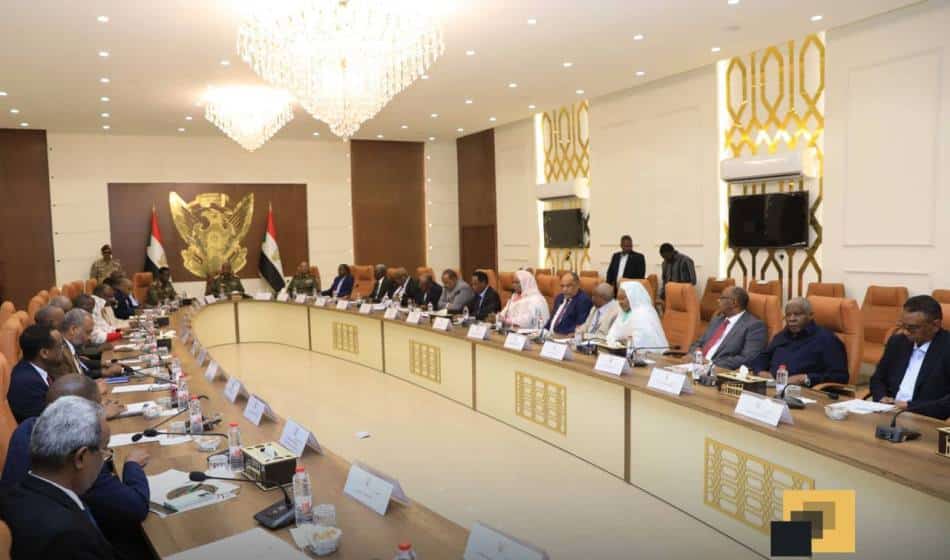
February 23, 2025 (PORT SUDAN) – Sudan’s Ministry of Justice on Sunday published an amended Constitutional Declaration that extends the transitional period by 39 months, eliminates the committee investigating the 2019 sit-in dispersal, and increases military representation on the Sovereign Council.
In 2019, the military component, comprising the army, the Rapid Support Forces (RSF), and the Forces for Freedom and Change (FFC), reached a constitutional agreement establishing a transitional period following President Omer al-Bashir’s ousting.
The amended fundamental law, reviewed by Sudan Tribune, extends the transitional period by 39 months from its publication in the official gazette “unless a national consensus is reached or new elections are held.”
The document removed clause 16 of Article 8, which stipulated the formation of an independent investigation committee into the violations of June 3, 2019, replacing it with “work to end the war and bring all those who committed crimes against the Sudanese people to justice in accordance with the law.”
On June 3, 2019, military forces forcibly dispersed a peaceful sit-in outside the army headquarters, during which atrocities such as mass killings, the dumping of bodies in the Nile, and rape were committed.
The amended declaration makes the principles of Islamic legislation, religious beliefs, popular consensus, and the values, customs, and traditions of the Sudanese people sources of legislation.
It also removes any mention of the Forces of Freedom and Change and the Rapid Support Forces.
Sovereign Council gains expanded authority
The amended constitutional document significantly expands the Sovereign Council’s powers, granting it greater control over key appointments and policy decisions.
The amendment removes clause 3 of Article 10, which states that the Legislative Council is the authority for legislation and oversight of the executive branch’s performance, replacing it with the “Transitional Legislative Authority.” This new body, composed of the Sovereign Council and the Council of Ministers, will have the right to legislate and oversee the executive branch until the formation of the Legislative Council.
Article 11 is also abolished and replaced with new clauses stipulating that the Sovereign Council is the head of state and symbol of its sovereignty. The council will consist of 11 members, including six appointed by the army and three nominated by the signatories of the peace agreement and will be headed by the army commander.
According to the 2019 Constitutional Declaration, the Sovereign Council consists of 11 members: five military members, five civilian members, and one civilian chosen by consensus.
The amendment grants the Sovereign Council expanded powers, including the appointment and dismissal of the prime minister on the recommendation of the Transitional Legislative Authority, as well as the appointment and dismissal of regional and state governors. It also empowers the Sovereign Council to appoint and dismiss the chief justice, their deputies, and members of the Constitutional Court after their nomination by the High Judicial Council until the formation of the Judicial Council.
Furthermore, the Sovereign Council gains the right to appoint and dismiss the army commander based on the nomination and recommendation of the Armed Forces Command, as well as to appoint and dismiss the director-general of the General Intelligence Service and their deputies. It can also appoint and dismiss the director-general of police and the Police Command based on the recommendation of the interior minister.
The amended text grants the Sovereign Council the authority to set and supervise the implementation of foreign policy, as well as the authority to issue temporary decrees with the force of law.
It stipulates that the army shall manage its defence industries and military institutions, as well as integrate any armed forces into the armed forces six months before the end of the transitional period. The armed groups that signed the peace agreement shall become political entities.
These amendments to the constitutional document were made days prior by the Sovereign Council and the Council of Ministers, paving the way for the formation of a new government to aid the army in completing war-related tasks.