
Sudanese journalists decry crackdown on press freedom
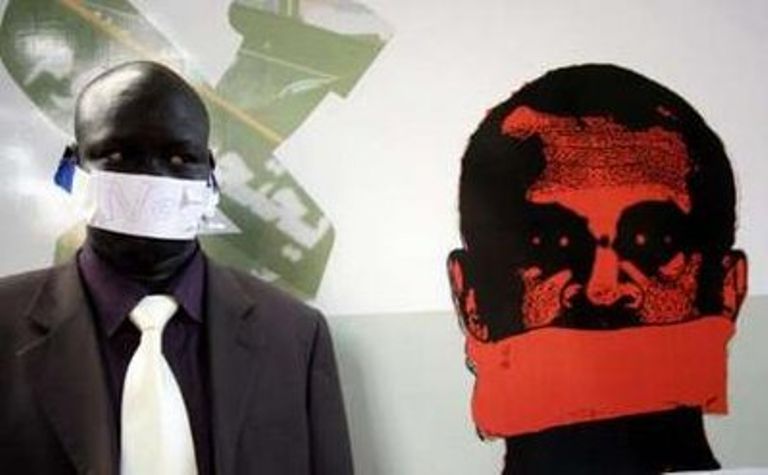
March 9, 2025 (PORT SUDAN) – Sudanese journalists in Port Sudan have criticized what they describe as a growing crackdown on press freedom and declining access to information following the government’s suspension of Saudi-owned Al-Sharq television.
Speaking at a press freedom symposium on Saturday, Khalid Owais, Al-Sharq’s Sudan bureau chief, said authorities had not provided the channel with a formal notice of closure despite requests. He said the station was informed of the decision by telephone.
Authorities at the Information Ministry suspended Al-Sharq’s operations on February 20 after it reported on proposed constitutional amendments. Owais noted that several other news outlets had published similar reports and emphasized the public’s right to be informed about constitutional changes before their passage.
The suspension followed a campaign against the channel after it aired a report on army advances in Khartoum that included a comment from the paramilitary Rapid Support Forces (RSF).
Foreign news channels have faced repeated campaigns against them during months of conflict. Authorities previously suspended Al-Arabiya and Al-Hadath in April 2024, citing license renewals.
Abdel Moneim Abu Idris, head of the Sudanese Journalists Syndicate, said the lack of official information and restrictions on access had fuelled the spread of rumours and misinformation on social media. He called for a relationship between the press and authorities based on law and mutual respect.
Lina Yacoub, head of Al-Arabiya’s Sudan office, said the decision to suspend Al-Sharq lacked a legal basis. She also criticized officials for making inappropriate comparisons of press freedom between Sudan and other countries.
Information Minister Khalid Aleisir defended his ministry’s actions, asserting that Sudan was experiencing a high level of press freedom while adhering to professional and objective reporting guidelines.
Journalists at the symposium said authorities were arbitrarily using the concept of “national security” without a clear definition. They called for a precise definition and agreement on what constitutes “national security” and for the press to be held accountable to that standard.