
Sudan war worsening South Sudan instability, UN envoy warns
JUBA (Reuters) – The conflict in neighbouring Sudan is worsening South Sudan’s security and economic woes, the head of the U.N. mission in South Sudan warned on Wednesday, citing a deteriorating situation that risks unravelling recent peace gains.
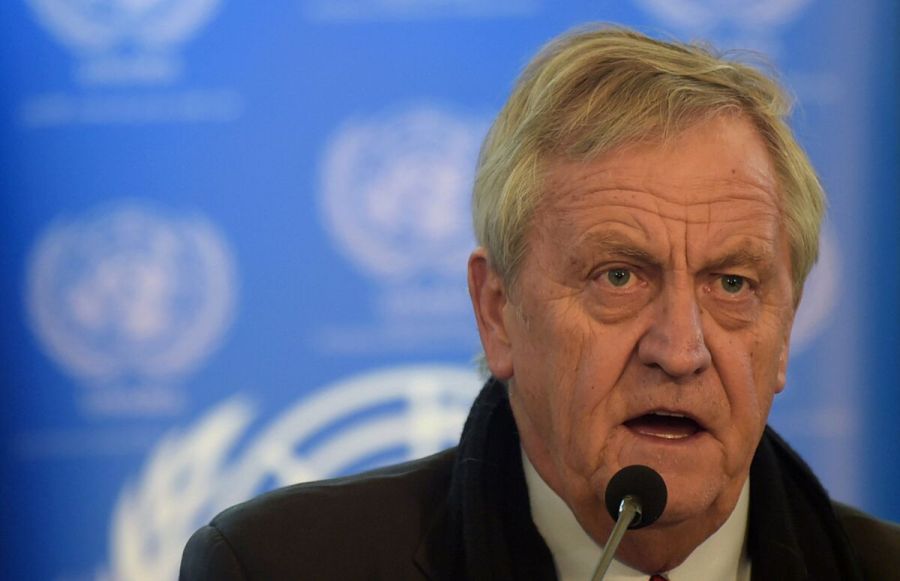
Nicholas Haysom, the U.N. Secretary-General’s Special Representative for South Sudan, briefed the U.N. Security Council on April 16, outlining the combined efforts of the United Nations, the African Union, the regional Intergovernmental Authority on Development (IGAD), and existing peace monitors.
His briefing followed a recent attack in the disputed Abyei region by armed groups. Local officials reported the attackers came from the direction of Heglig, a Sudanese oil town currently under Sudan Armed Forces control but facing pressure from the paramilitary Rapid Support Forces (RSF). South Sudan, oil companies, and local Sudanese leaders have reportedly urged the RSF not to attack Heglig due to potential damage to oil infrastructure.
The identity of the attackers in Abyei remains unclear.
“They came into Abyei from the direction of Heglig… They wore mixed military uniforms of the Sudan Armed Forces, the Rapid Support Forces, and the South Sudan People’s Defence Forces,” said Miakol Deng Kuol, a local administrative officer in Abyei. He added that the attackers spoke Arabic and other local languages, looted cattle, and retreated northwest, avoiding a direct return to Heglig or entering South Sudan proper. “It was difficult to know their true identities,” Kuol said.
In his statement to the Security Council, Haysom cautioned that the situation in South Sudan could escalate dramatically.
“We need look no further than across the northern border to Sudan for a stark reminder of how quickly a country can descend into catastrophic conflict,” Haysom said. “The region cannot afford another crisis… I must underscore the critical role of neighbouring states, as guarantors of the Agreement, in restoring peace and stability in South Sudan.”
He noted a “sharp deterioration in the political and security situation” since his last briefing. “All our efforts are now focused on preventing a relapse into widespread conflict and refocusing attention on the implementation of the Revitalized Peace Agreement,” Haysom stated.
Haysom described South Sudan’s humanitarian outlook as one of the worst since its independence, driven by subnational violence, the Sudan conflict’s spillover effects, economic collapse, extreme weather, and declining international aid.
He said about 9.3 million people, or three-quarters of the population, require aid, and 7.7 million face acute food insecurity. A cholera outbreak persists, with 47,000 reported cases and 877 deaths amid an overwhelmed health system. Humanitarian agencies are also struggling to support 1.1 million South Sudanese returnees and refugees fleeing Sudan’s war, facing significant funding cuts.
“There are no quick fixes to this crisis,” Haysom stressed, calling for “strategic alignment between peacebuilding, humanitarian, and development efforts – particularly around food security, climate resilience, basic services, and governance.”