
Obituary: Gen. Albino Akol Akol, Anyanya Veteran, Former Governor and Minister
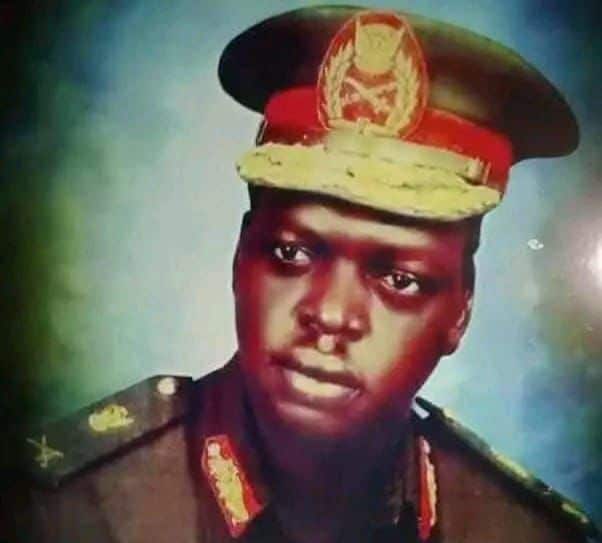
Obituary: General Albino Akol Akol, PSC (RTD), was a Distinguished Anyanya I officer, Sudan Armed Forces Officer, and the Chairman of the Secret Cell
April 22, 2025
*By Tong Deng Anei
General Albino Akol Akol, PSC (RTD), was born in Maduany village in the Ajuet section, Mariam Payam, Aweil West County of Northern Bahr el Ghazal State, South Sudan. Like other South Sudanese leaders who have faced challenges accessing adequate healthcare services in South Sudan, Gen. Albino Akol died in a hospital in Nairobi, Kenya, on Saturday, April 19, 2025. The family of the late General Akol, the people of Northern Bahr el Ghazal State, and South Sudan in general mourn his passing, which occurred during the Easter festivities.
Background of General Albino Akol Akol
General Albino Akol Akol was a distinguished Anyanya I officer. Through the 1972 Addis Ababa Peace Agreement, he was absorbed into the Sudan Armed Forces (SAF). He quickly rose to high ranks in the military and held important positions in the governments of Sudan and South Sudan.
The young Albino Akol left Rumbek Secondary School in the early 1960s and joined the armed Anyanya I liberation struggle. Before joining the movement, the young Albino Akol Akol, among other students, was arrested in Aweil for protesting against the regime of President Gen. Ibrahim Abboud. Abboud’s regime had replaced Sunday, observed in Southern Sudan as the Lord’s Day of worship, with Friday, which was observed in Northern Sudan as the Islamic day for Congregation and is considered the holiest day of the week in Islam.
Through his service in Anyanya I, he quickly rose in the ranks of the liberation movement. For example, he was among those young Anyanya I officers selected for military training in Israel, Egypt, and Britain. After being absorbed into the SAF, he earned the prestigious Passed Staff College (PSC) qualification, equivalent to a master’s degree in military science. Gen. Albino Akol is remembered as the Sudanese soldier who made the notable decision to visit the grave of William Deng Nhial in Tonj Town and fire a gun salute in honor of the late William Deng Nhial. His action was not welcomed by the government of Sudan, and he was almost arrested because William Deng Nhial, the chairman of the Sudan African National Union (SANU), was considered an enemy by the Khartoum regime.
General Albino Akol, The Chairman of the Underground Cells
By then, conditions had deteriorated in South Sudan. Anyanya I officers in the military, South Sudanese political figures, and prominent students (including those in universities in Southern Sudan, Khartoum, and Egypt) convened to deliberate on the way forward. They formed secret cells to wage an armed liberation struggle for South Sudan.
Brigadier Albino Akol Akol was elected as chairman of the secret cell based on his seniority in the army. Colonel Paterno Atar Aboi PSC from the Torit area, another capable officer of Anyanya I who had excelled through SAF military college, was elected as Secretary General. All the Anyanya I officers—famous among them Dr. John Garang, Kerubino Kuanyi Bol, William Nyuon Bany, Salva Kiir Mayardit, and Arok Thon Arok, who later founded the SPLM/A—were members of the army underground cell under the leadership of Gen. Albino Akol Akol.
Their plan at the time was to position influential army officers throughout strategic South Sudan towns and, by August 18, 1983, announce a unilateral declaration of South Sudan independence (UDI) without firing a single bullet against the regime in Khartoum. Under that arrangement, Gen. Albino Akol Akol would have automatically assumed the presidency of South Sudan.
However, history took a different turn as the situation grew tense. On May 16, 1983, Major Kerubino Kuany Bol rebelled in Bor town, altering their plan. Captain William Nyuon joined Kerubino, and so did Colonel Dr. John Garang, Captain Salva Kiir Mayardit, Major Arok Thon Arok, and many others who founded the formidable SPLM/A for the liberation of Sudan. Colonel Paterno followed later, in late 1984, to join the people’s liberation movement but was killed on his way between Juba and Torit. Gen. Albino Akol, as the highest-ranking officer of the cell, never joined his brothers in the bush, but his contributions to the liberation of South Sudan are recognized.
The general later took the governorship of Bahr el Ghazal and, according to some accounts, aided his brothers in the bush by hindering some of the Khartoum regime’s plans targeting the SPLM/A liberation movement.
Public Service
In addition to his public service in the military as explained above, Gen. Albino Akol served in the government of Sudan as well as the government of South Sudan in the following capacities: He was Military Governor of the Bahr el Ghazal region with Headquarters in Wau during the transition period under Gen. Abdel Rahman Swar al-Dahab (President and Chairman of the Military Sovereign Council) from 1985 to 1986. He also served as a Member of Parliament, National Minister of Transport, Minister of Physical Infrastructure in the Coordinating Council for Southern Sudan, and Minister of Petroleum and Industry.
Family Background
General Albino Akol came from the prominent family of Tong Atak of the Ajuet section, Aweil West County. Gen. Akol was married to Mary Ayat Ungech and had other wives; he leaves behind a large family. He was the father of Hon. Lily Albino Akol (Deputy Minister of Agriculture and Food Security and a lecturer at the University of Juba, who previously served as Deputy Minister of Information and Communication and Deputy Minister of Agriculture, Forestry and Tourism), Dr. Agel Albino Akol, Dr. Rita Albino Akol, Tong Albino Akol, and several other children.
*Tong Deng Anei is a former State Minister of Health for the government of Northern Bahr el Ghazal State, South Sudan. He is a Food Security specialist. Anei previously worked for the United States Agency for International Development (USAID), the United Nations, and various government bodies, providing policy direction and implementing humanitarian assistance programs.