
Khartoum North’s returning residents haunted by city’s makeshift graves
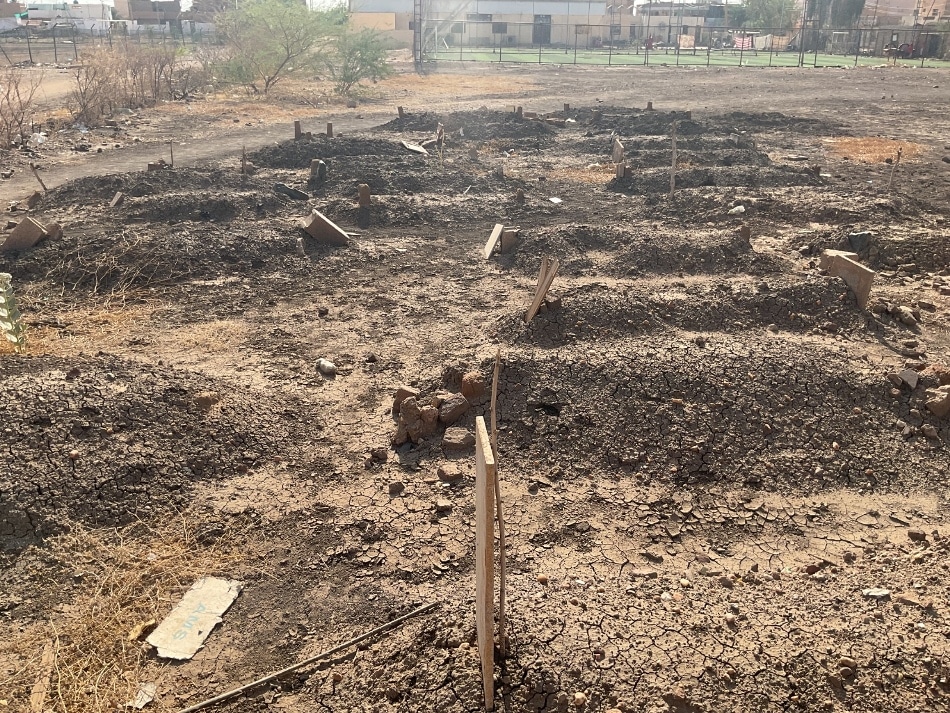
July 7, 2025 (KHARTOUM) – When Huida Mohamed returned to the Sudanese capital, she had one mission: to find her father’s grave. For days, she searched the rubble-strewn neighbourhoods of Khartoum North “Bahri”, but found no trace.
Her father, who died from a worsening health condition in late 2023, was one of thousands who perished in a city sealed off by war. He was buried, like many others, wherever space could be found.
“After a painstaking search… I found nothing,” said Mohamed, who has since returned to Saudi Arabia. “I couldn’t find his grave.”
Her search is a story shared by countless families in Khartoum, where more than two years of brutal conflict have left a hidden, deeply personal legacy: a city dotted with makeshift graves in parks, backyards, and even inside the skeletal remains of homes.
The war between the Sudanese army and the paramilitary Rapid Support Forces (RSF) not only caused vast infrastructure damage but also shattered burial rites. During the RSF’s control of much of the capital until March, residents say they were often prevented from reaching official cemeteries.
This has left a grim task for the authorities now trying to restore normalcy. Last Thursday, the local security committee in Bahri, ordered a comprehensive survey of human remains scattered across its neighbourhoods.
The scale of the problem is vast. Previous investigations indicated the existence of some 117 new, unofficial burial sites across the capital.
“There are hundreds of graves in the city outside the known cemeteries,” said Hazem Ali, a Bahri resident. In some cases, families were forced to bury loved ones inside their own houses.
Identifying the dead presents a major forensic challenge. Many bodies have decomposed to skeletal remains, requiring DNA testing, activists said.
The head of the Forensic Medicine Authority, Hisham Zain al-Abidin, said in a statement that his organization had buried 3,800 bodies during the war.
For those returning, the sight of these graves is a constant, traumatic reminder of the conflict’s toll.
“The capital has witnessed widespread destruction and shocking scenes of graves and ruin, leaving deep psychological scars,” said psychiatrist Um Ayman Adel.
She described children suffering from anxiety, nightmares, and behavioural changes. “Psychological and social support has become an urgent necessity,” she added, to help residents “restore a sense of security and balance.”
The trauma has been too much for some. One woman from the East Nile area, who asked not to be identified for safety reasons, said she saw graves under trees and in public squares upon her return.
She said some of her neighbours left again just days after coming back.
“They couldn’t bear the presence of graves inside their homes or on the streets right outside,” she said.