
Stop the bleeding first, debate the borders later
Khartoum and Nyala, or Halayeb and Shalateen:
Heart and Entrails or Hair and Nails?
By Professor Mekki Medani El Shibly
Executive Director, Cognisance Centre for Strategic Studies
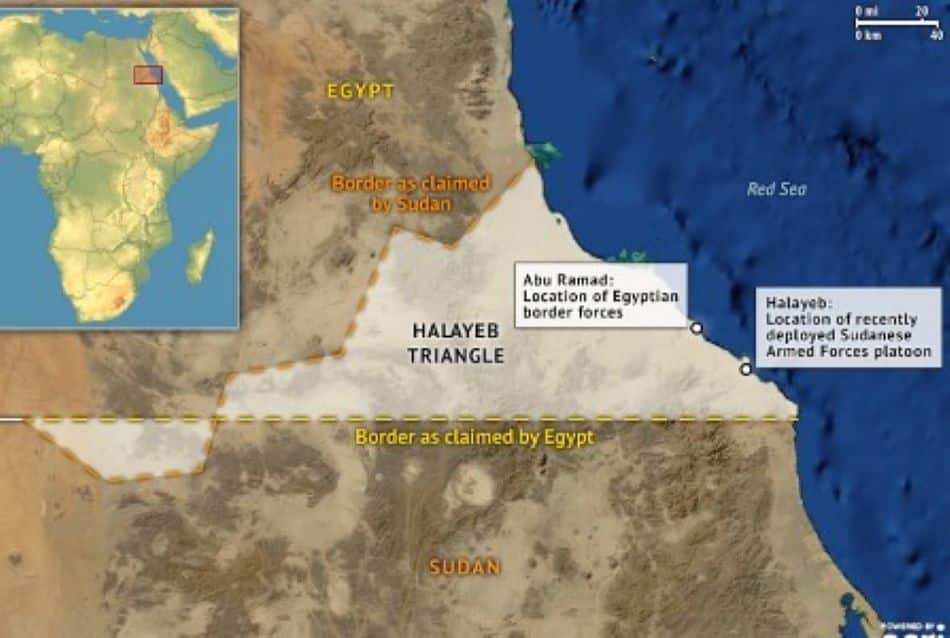
Sudan is bleeding to death. Its heart, Khartoum, Nyala, Darfur, Kordofan, is being ripped apart by a brutal war now well in its third year. Millions are displaced, cities are falling, and the state itself is evaporating. Yet in the midst of this existential crisis, some voices are busy shouting about Halayeb and Shalateen, border territories disputed with Egypt since the 1950s.
Let’s be blunt: no nation losing its heart should waste time arguing over its hair and nails.
The False Semblance of Heroism
Calls to “reclaim Halayeb and Shalateen” may earn thumps-up on social media, but they do little to prevent Sudan’s collapse. Even worse, they could shift limited political focus away from the urgent need to stop the war and avoid the looming ‘zero state’ scenario. This act is not a sign of national dignity, but a false semblance of heroism.
Postponing debate over border disputes is not surrender. Rights can and should be preserved. But timing matters. You don’t wage a border battle while your country burns from within.
The Civilian Paradox
The bitter irony is that many of those stoking anti-Egypt sentiment present themselves as the “civilian democratic alternative” to military rule. In practice, however, their rhetoric pushes Cairo into the arms of the generals. Egypt, calculating its own interests, has tied its security to Sudan’s military, even though that alliance is riddled with contradictions, not least the army’s deep Islamist influence.
If Sudanese civilians truly want to persuade Egypt, they must replace empty chest-thumping with political prudence. Egypt’s strategic interests will not be secured by clinging to a compromised military elite. They can only be safeguarded through Sudan’s transition to civilian democracy, which would offer Cairo the stability and predictability it needs, and align with the interests of its regional allies, including the UAE and Saudi Arabia, as well as the United States and Europe.
Egypt’s True “Reverse Veto” and False “Condominium” Rule
Whether Sudanese like it or not, Egypt wields what I call a “reverse veto.” It cannot impose peace on Sudan, but it can obstruct it, just as it did by undermining recent diplomatic efforts in London and Washington. To deny this reality is folly. Reducing Egypt’s role to slogans and insults only strengthens Sudan’s warlords, who thrive on perpetual conflict.
This is not to absolve Egypt of history. But let us be clear: the so-called Anglo-Egyptian “condominium” was British rule in all but name. For 57 years, every governor-general of Sudan was British. Egypt itself was under British occupation even longer than Sudan. Shared wounds, whether from colonial rule or the failed revolutions of the Mahdiyya and Urabi, should be reminders of common struggle, not excuses for perpetual enmity.
No Borders Without a State
Borders are meaningless without a state to defend them. Today, Sudan is imploding: institutions destroyed, cities in flames, millions starving. Arguing over boundary lines now is like lamenting the color of the paint while the house burns down.
Lessons From Elsewhere
Consider the United States: three centuries of European colonialism left its indigenous people slaughtered and lands stolen. Yet Americans did not remain prisoners of grievance. They staged a revolution, built a federation, and within two centuries became the world’s most powerful state, then helped rebuild Europe through the Marshall Plan. The lesson is simple: nations rise not by clinging to past injustices but by building their present and future.
Egypt is Responsible Too
If Sudanese are urged to treat Egypt with political realism, Cairo too must show that its interests do not conflict with Sudanese hopes for peace and democracy. Millions of Sudanese have fled to Egypt. They deserve dignity, protection, and humanitarian support. Egypt’s open alignment with civilian transition and protection of civilians would rebuild trust between the two nations and demonstrate that mutual interests can only be secured by prioritising Sudanese lives.
Stop the Bleeding First
Sudan’s priority today is not Halayeb, Shalateen, or old colonial grievances. It is survival. It is stopping the war, healing the heart of the nation, and uniting civilian forces around a shared national project. It is engaging with Egypt, Saudi Arabia, and the international community in the language of mutual interest, not mutual hatred.
If Sudan loses its heart, no one will care about reclaiming hair or nails.
melshibly@hotmail.com