
A fragile offer: Decoding the Quad’s plan for Sudan
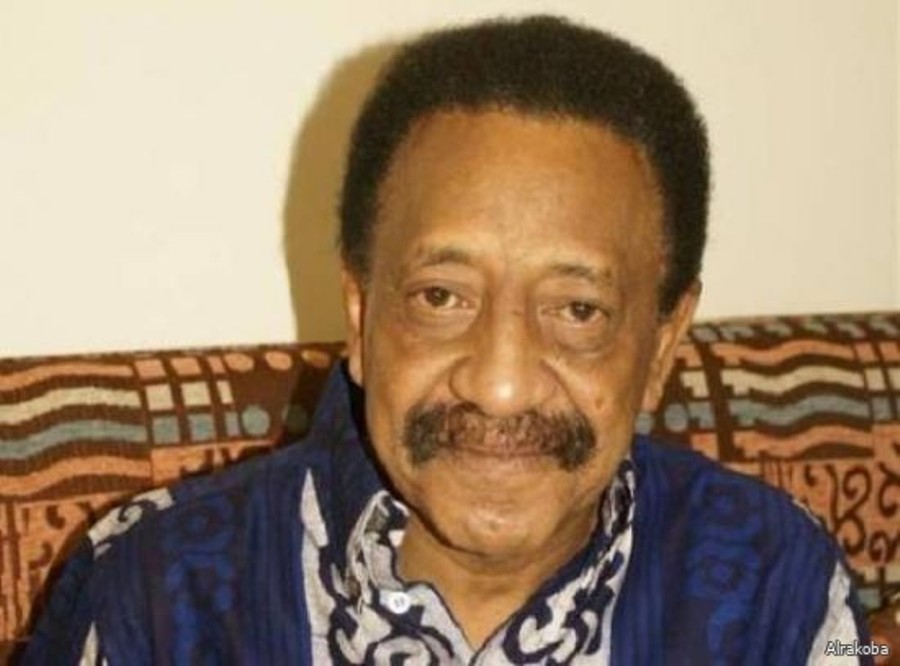
By Al-Wathiq Kameir
kameir@yahoo.com
On September 12, 2025, a joint statement was issued by the Quad group of nations (the United States, the Kingdom of Saudi Arabia, the Arab Republic of Egypt, and the United Arab Emirates). This statement has dominated the rapidly unfolding events in Sudan over the past few days. It has been dissected by columnists and met with either praise or condemnation from political leaders, each according to their political stance, especially concerning the proposed “roadmap” to end the war. Even casual social gatherings have not been immune to heated debates about the initiative’s chances of success or failure.
I have closely followed the diverse reactions to the statement and its roadmap across all media, noting the frequent exaggeration and hype. Rather than dissecting every opinion or the statement’s internal contradictions, my aim here is to offer a brief contribution that clarifies its core issues.
Broadly speaking, the Quad’s statement has undoubtedly intensified political polarization and deepened divisions among Sudan’s political and social forces on three key issues: the position on the Rapid Support Forces (RSF), the position on the Islamists, and the position toward the regional and international communities. The question now is: how can the Quad proceed with implementing its proposed roadmap: a three-month humanitarian truce, followed by a permanent ceasefire, leading to a comprehensive and transparent nine-month transitional process?
In my view, reading the reactions of pro-army forces, particularly the Islamists, it seems the time is not yet ripe even for a temporary ceasefire, especially as the siege of El-Fasher continues. These forces believe the Quad’s statement was deliberately timed to coincide with the army’s recent victories and advances, particularly on the Kordofan front. It is well known that a permanent ceasefire depends on a balance of power on the ground, reaching a stalemate that compels an end to the fighting. Furthermore, it is troubling that the U.S. sanctions imposed on Gibril Ibrahim and the “al-Baraa bin Malik Brigade” are akin to pouring oil on the fire, which will only complicate and worsen the conflict rather than help resolve it.
Meanwhile, most opposition forces have simply weaponized the Quad’s statement in their political rivalry with Islamist groups and their allies, rather than forming a balanced assessment of the proposal. This is unfortunate, as the Sudanese people themselves have a rich legacy of experience in dealing with international involvement in their country’s crises. I have repeatedly stressed that relying on the international community without building a coherent national vision is a gamble with no guaranteed outcome. The Quad, the Tripartite Mechanism, and the Troika all failed to reach a viable political settlement, which contributed to the escalating crisis that culminated in the outbreak of war on April 15, 2023.
While welcoming the effort, the statement registered several major reservations. It rejected foreign interference in Sudanese affairs and condemned the participation of the UAE, accusing it of being unfit for mediation due to its direct support for the RSF militia. It also criticized the U.S. for losing credibility by overlooking the flow of American weapons to the militia through its allies, and flatly refused to negotiate with the RSF. The government believes the timing is inappropriate as long as the military situation remains unresolved.
A realistic reading of the scene confirms that while the Quad opposes any secessionist tendencies from the “Tasis” alliance, it also understands that the RSF will play an active role in ceasefire negotiations to protect some of its interests. I do not see these two positions as contradictory. The proposed ceasefire aims to facilitate humanitarian aid, which is consistent with the government’s position on the seven-day truce in El-Fasher proposed by the UN Secretary-General and accepted by the President of the Sovereign Council on June 27, 2025.
As for the U.S. sanctions on Dr Gibril Ibrahim, the Minister of Finance, and the al-Baraa bin Malik Brigade, which coincided with the Quad’s statement, they are understandable from the perspective of American interests. It appears Sudan’s relationship with Iran is the direct cause, although the announcement carried dual messages regarding both the relationship with Iran and the interests of the Sudanese Islamic Movement (whose definition and features remain ambiguous).
Perhaps the penultimate paragraph of the Quad statement is the most worthy of attention, as it opens a window for discussion among Sudanese political factions to reach a degree of understanding to end the war:
“In this regard, the Ministers support the efforts of Saudi Arabia and the United States through the Jeddah Process to achieve a permanent ceasefire in Sudan, as well as Egypt’s efforts related to the Forum of Sudanese Civil and Political Forces, the first round of which was held in Cairo in July 2024.”
In my opinion, the outcomes of the Quad’s consultations and its roadmap should be treated as an “offer,” not a coercive “demand.” Ultimately, the decision to accept or reject it lies with the government of Sudan and the Rapid Support Forces. Ironically, after finishing this draft, I followed the remarks of the Senior Advisor to the U.S. President during a joint press conference with the Chairperson of the African Union Commission (Addis Ababa, September 18, 2025). Mr. Massad Boulos affirmed that the Quad does not impose solutions but serves as a platform supporting other initiatives, not replacing them, chief among them the African Union. He added that the final decision rests with the Sudanese people themselves. This statement reinforces the conviction that the Quad, in essence, has no authority to impose its proposed roadmap.
It is also important to note that the Quad lacks internal cohesion among its members, whose relations are marred by various disagreements, both in their approaches to the Sudanese crisis and their positions on the warring parties. This divergence weakens their collective stance and makes their offer fragile, lacking effective implementation mechanisms. These disagreements have delayed Quad meetings more than once. Furthermore, the U.S. administration itself lacks a clear strategy for Sudan, reflecting the reality that Sudan is not a real priority for the Trump administration, except in the context of geopolitical competition with Russia and China in the Red Sea, the Horn of Africa, and the continent at large.
Therefore, Sudanese of all stripes must approach these initiatives with caution and objectivity, without shying away from positive engagement with any effort that genuinely contributes to ending the war, provided it is not a gateway for imposing an external will aimed at shifting the internal balance of power.
I will conclude on a pragmatic note: if the Sudanese government believes the military option is still yielding more favorable results than a negotiated settlement, it must inform the U.S. administration and the Quad that their offer does not meet the current requirements and conflicts with the state’s supreme interests. However, if the military option becomes untenable, the Quad’s proposal, despite its shortcomings, might be a viable option to engage with, at least temporarily.