
UN says RSF blocking vital aid to besieged El Fasher
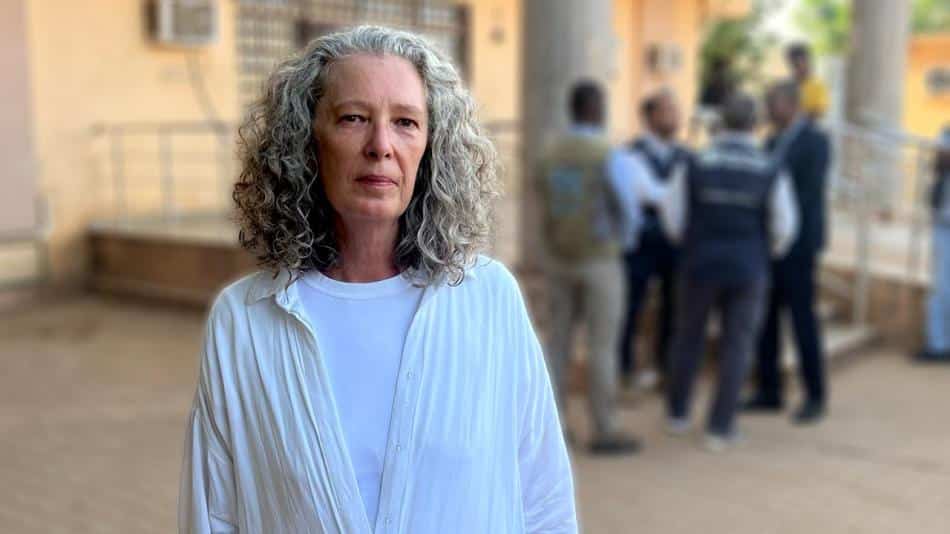
September 22, 2025 (KHARTOUM) – The United Nations’ top humanitarian official in Sudan, Denise Brown, stated that the Rapid Support Forces (RSF) are preventing the delivery of essential aid to the besieged city of El Fasher in North Darfur by refusing to provide security guarantees for aid workers.
Ms. Brown of Canada was officially appointed by UN Secretary-General António Guterres to serve as both the UN Resident and Humanitarian Coordinator, a post she assumed on September 1 with the approval of the Sudanese government.
In an interview with Sudan Tribune, Brown laid the responsibility for the impasse squarely on the paramilitary group.
“The UN Secretary General at least six weeks ago called for a ceasefire. Let the humanitarian community go in,” she urged. “SAF (Sudanese Armed Forces) has agreed, RSF has not agreed. So that is the difficulty we are facing right now.”
Brown warned that without security guarantees, it is “very difficult for humanitarian aid workers to go in,” noting that aid workers have already been killed during the conflict. “I’m afraid there is no good news [on El Fasher] and this continues to be a big problem for us,” she added.
While access to El Fasher remains blocked, Brown acknowledged a significant positive development on the eastern border. Aid trucks are successfully crossing from Chad at the Adre crossing “without any hindrance.” She described this route as a “big boost to our operation here, bringing in those supplies.”
A shift to systemic support
Speaking just ten days after arriving in Sudan, Brown emphasized the need for a strategic shift from providing direct assistance to individuals to repairing the country’s failing systems. She linked the devastating outbreaks of cholera, dengue, and typhoid fever directly to the collapse of water, sewage, and sanitation infrastructure.
“We absolutely, where possible, have to make that shift from humanitarian, which is about assisting a person and their family, to working on the systems,” Brown said. “If that is not done, then people will die and continue to die from the outbreaks.”
To facilitate this, the UN has proposed sending a technical team to work directly with Sudanese ministries in Khartoum to identify and address these priority areas collaboratively.
Massive funding gap
A severe lack of funding threatens to imperil the entire humanitarian effort. According to Brown, the UN’s humanitarian response plan for Sudan, which targets 30 million people, has only received 25% of the necessary funds.
“If you tell me that there’s a gap, I’ll say yes, I know there’s a gap,” she stated. “We need the funding to fill that gap. We are very far from where we need to be.”
Paradoxically, she noted that the Sudan response plan is the “best funded in the entire world” compared to other global crises, a fact that highlights the sheer scale of the need. Still, her message to the international community was stark and simple: “It’s not enough.”
As one of her core commitments, Brown pledged to advocate forcefully on the global stage for more resources.
“One of my commitments is to speak as loudly as possible, to make some noise globally about what has happened here to the people of the Sudan,” she affirmed. “That money needs to come. That money needs to come.”