
Sudan seeks to lift membership suspension at African Union summit
February 11, 2026 (ADDIS ABABA) – Sudan intends to submit a formal request to the African Union Peace and Security Council on Thursday to end the suspension of its membership, Sudanese diplomatic sources told Sudan Tribune on Wednesday.
The African Union (AU) suspended Sudan on Oct. 27, 2021, days after a military coup ousted the government of Prime Minister Abdalla Hamdok. The pan-African body conditioned the lifting of the suspension on the effective restoration of a civilian-led transitional authority.
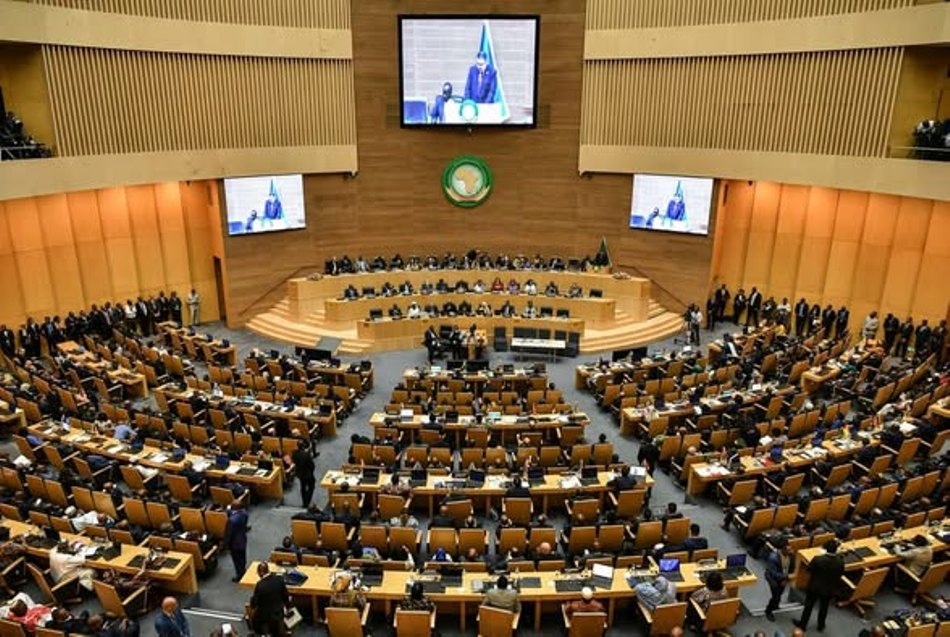
The 48th Ordinary Session of the AU Executive Council, which includes foreign ministers from across the continent, opened in the Ethiopian capital on Wednesday. The session serves as a precursor to the 39th African Union Summit of Heads of State and Government, scheduled for Feb. 14-15.
Diplomatic maneuvers and regional security
Sudanese Foreign Minister Mohieddin Salem arrived in Addis Ababa to oversee the request. Upon arrival, Salem engaged in high-level meetings with influential officials, including U.N. Special Envoy Ramtane Lamamra.
The summit is expected to address various security, political, and economic challenges facing the continent, while the Africa-Italy Summit is set for February 13.
This year’s gathering is held under the theme: “Ensuring sustainable water availability and safe sanitation systems to achieve Agenda 2063.” This marks a shift for the water file from a traditional service framework to a matter of comprehensive continental security, seen as a pillar for stability and development.
Despite the focus on water, peace and security issues continue to dominate the agenda. Conflicts and the expansion of militant organizations in the Sahel and Horn of Africa remain prominent, alongside the consequences of unconstitutional changes of government.
Institutional reform and global influence
During the opening session of the Executive Council, AU Commission Chairperson Mahmoud Ali Youssef emphasized the need to accelerate institutional reform and strengthen the link between peace and development.
Youssef stated that the 2024–2028 reform plan is progressing in areas of peace and security architecture, sustainable financing, and institutional strengthening. He also noted the return of Gabon and Guinea to constitutional order, while warning of continued instability and terrorism in parts of the continent.
Regarding water security, Youssef called for protecting this shared resource as a driver of cooperation, particularly given the challenges of climate change.
Angola officially concluded its chairmanship of the Executive Council. Angolan Foreign Minister Tete Antonio stressed the importance of structural reforms and continental integration. Antonio said the council is a fundamental pillar of the AU’s credibility, ensuring policy consistency and coordinating common positions for the Assembly of Heads of State and Government.
Ethiopian Foreign Minister Gedion Timotheos told the council that while the continent has faced mixed developments over the past year, the most notable achievement was a unified African position on U.N. Security Council reform and climate justice. He noted that the first G20 summit on African soil, held in Pretoria, reflected the continent’s growing international presence.
Timotheos warned that challenges remain due to unconstitutional government changes and geopolitical shifts. He stressed that treating Africa as an arena for external competition requires genuine continental unity and a strong African Union capable of safeguarding sovereignty and protecting shared interests.