
The silence of El Fasher: A child’s 1,200-km flight from Darfur’s ghosts
Sudan Media Forum
March 14, 2026, AL-AFFAD, Northern state (Sudan Tribune) – For more than a month after she reached the relative safety of a desert camp in northern Sudan, eight-year-old Mishka did not utter a single word.
The trauma of her escape from El Fasher, the besieged capital of North Darfur, had locked her voice behind a wall of silence. She had watched her mother and two brothers die in the shelling of her home; later, she narrowly escaped being crushed under the wheels of military vehicles as she fled the city.
Mishka is one of thousands of children caught in the middle of a brutal war between the Sudanese army and the paramilitary Rapid Support Forces (RSF) that has systematically dismantled life in Darfur.
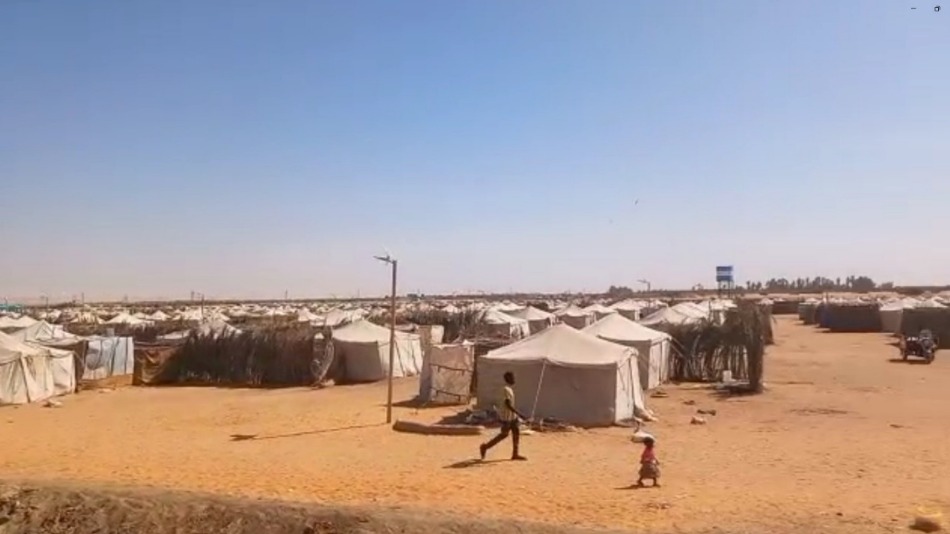
Her father, Muhieddine, now sits with her in a cramped tent in the Al-Affad displacement camp, some 1,200 kilometres (745 miles) from the ruins of their former life. He recalls the moment in early 2025 when the first shell struck their house, killing his wife and later necessitating the amputation of his eldest son’s leg.
As the RSF tightened its siege on El Fasher before seizing total control in October 2025, the family sought refuge in the fortified halls of Omdurman Islamic University. Even there, safety was an illusion. A drone strike hit the building, killing two more of Muhieddine’s children.
The horror reached its peak during the final exodus from the city. Muhieddine describes a landscape of carnage where RSF soldiers filmed themselves on mobile phones as they executed civilians and drove combat vehicles over the bodies of the fleeing.
“I tried to save Mishka from being crushed,” Muhieddine said, showing the scar on his back where a bullet remains lodged from the escape. “I carried her and my injured son through a hail of gunfire. We survived by a miracle.”
The psychological toll on survivors in Al-Affad is immense. Medical workers at the camp, which now hosts nearly 26,000 people, say they are overwhelmed by cases of severe depression, night terrors, and children who have retreated into catatonia.
Dr Mohamed Ismail, working with a Red Crescent clinic in the camp, treats a steady stream of women and children who have survived sexual violence and the loss of entire families. He estimates that at least 2,000 people in this single camp require long-term psychiatric care that the current humanitarian infrastructure cannot provide.
In another corner of the camp, 73-year-old Khadija clutches a prayer bead, her eyes fixed on the sand. She lost three sons during the fall of El Fasher. One died in the bombardment; the other two were snatched by soldiers as they tried to leave.
She only learned of their fate when her daughter found a video online showing the two men in detention. One has since died of hunger and cholera in an RSF-run cell. The other has not been seen since.
“The stories of Mishka and Khadija are just the tip of the iceberg,” said Rami Abdel Rahim, the director of the Al-Affad camp. He noted that the influx of tens of thousands of people into the Ad Dabbah locality has pushed local health and food supplies to a breaking point.
For Mishka, the silence has finally begun to break, though it has been replaced by screams in the night. Her father says she is doing better than before, but in a camp filled with 25,000 others who have lost everything, the road to recovery is as long and treacherous as the journey that brought them here.
This report, prepared by Sudan Tribune, is published by the Sudan Media Forum outlets and its member media organizations. The Al-Affad camp in the Northern state serves as a reminder of the ongoing tragedy following the fall of El Fasher to the Rapid Support Forces (RSF). The camp gathers more than 25,000 displaced people, including many women and children, who continue to face increasingly dire humanitarian conditions.