
Fires destroy hundreds of shelters in Darfur displacement camps
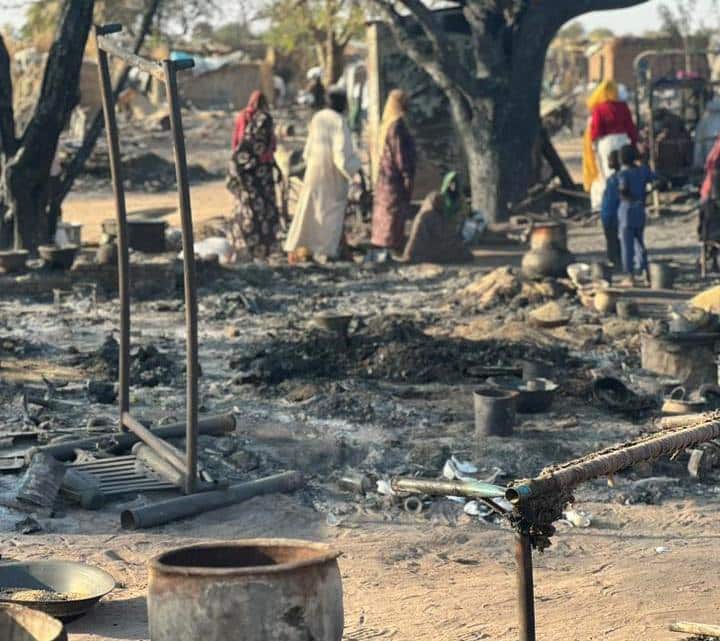
March 25, 2006( TAWILA, North Darfur) – Humanitarian conditions in Darfur’s displacement camps have deteriorated following a series of fires that destroyed more than 881 shelters and left many families homeless, a regional group said on Wednesday.
The General Coordination for Displaced Persons and Refugees in Darfur said the fires in the Tawila area and other parts of North Darfur were caused by a combination of high temperatures, severe overcrowding, and the use of flammable building materials.
Adam Rejal, a spokesperson for the coordination group, told Sudan Tribune that the displaced are living in a state of instability as the war continues to escalate and fears grow.
Rejal described the situation in the camps as “miserable and harsh,” noting that the conflict has led to the closure of border crossings. This has resulted in sharp shortages of consumer goods and a dramatic spike in prices.
He said the frequent closure of the Adre crossing, a vital route for humanitarian aid and goods, has intensified the suffering of those in the camps who are already facing extremely difficult circumstances.
Road closures are further hindering the delivery of essential aid, Regal added. He warned that the situation is nearing a complete collapse and emphasized that halting the war must be the top priority.
The spokesperson called for an immediate humanitarian state of emergency and urgent intervention, pointing to a decline in international attention to the crisis in Sudan.
Rejal also warned of increasing malnutrition and a lack of life-saving medicines, stating that health and humanitarian risks are expected to grow in the coming days as the conflict persists.