
Sudan’s Berlin “humanitarian” Meeting: Peace Effort or Fueling the Flame ?
By: Trayo A. Ali

Since the outbreak of war in Sudan on April 15, 2023, international actors have engaged in various efforts aimed at de-escalation and opening pathways toward peace—at least, this has been the stated objective of these moves. Within this framework, two main tracks have taken shape: a military/security track led by the Quad, and a political track overseen by the Quintet.
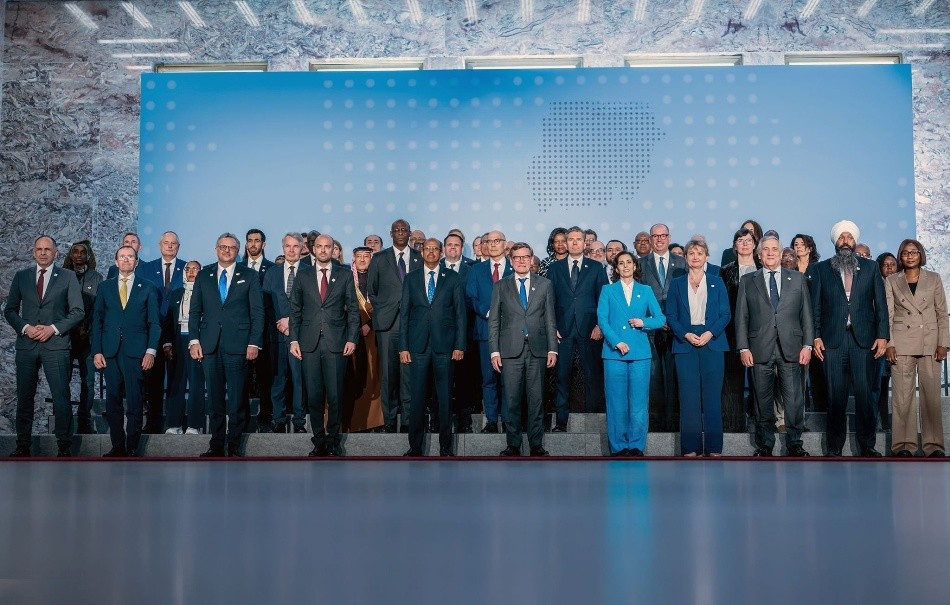
The Berlin meeting, scheduled for April 15, 2026, is presented—at least on the surface—as an attempt to bridge the gap between the security and political tracks, with a focus on the humanitarian dimensions of the crisis. The meeting in Berlin (Germany) follows earlier attempts in Paris (2024) and in London (2025), both of which failed for well-known reasons, foremost among them the inability to ensure proper selection and/or the lack of representation of Sudanese “political forces”.
However, early indications suggest that the Berlin meeting is proceeding along the same old path, repeating the same mistakes. This raises a legitimate question: why have the organizers failed to conduct a serious and critical assessment of previous efforts in order to avoid repeating past failures? And why insist on reproducing the same flawed approaches despite their evident shortcomings?
In this context, it appears that the issue goes beyond mere oversight or misjudgment, raising a more troubling possibility: are we facing a recurring pattern that reflects a deliberate approach to managing the crisis in a manner whose outcome is known to be a failure? This is especially pertinent given that avoiding such mistakes would not have been impossible had there been genuine political will.
If the declared objective of the meeting is to discuss ending the war and to pursue a humanitarian ceasefire through a joint statement, alongside efforts to launch a Sudanese-owned political process, then the way this conference is being prepared—its agenda, the nature of its invitees, and the composition of its participants—raises a number of fundamental questions regarding both its credibility and its consistency of the international initiators.
● Question One:
Given the seemingly agreed division of roles between the security track led by the Quad (the United States, Saudi Arabia, Egypt, and the UAE) and the political track led by the Quintet (the African Union, the United Nations, the European Union, the League of Arab States, and IGAD), does, what is taking place in Berlin constitute a blurring of roles that risks confusing the process and undermining the effectiveness of initiatives—much like what occurred in the Paris (April 15, 2024) and London (April 15, 2025) meetings?
● Question Two:
Does the exclusion of the direct parties to the conflict, and their replacement with representations from “civil society,” reflect a realistic approach? Or does it reduce the entire process to a formal exercise that increases ambiguity and undermines the chances of reaching practical solutions?
● Question Three:
At a time when Sudanese discussions are moving toward broadening participation under the term “political forces,” does the insistence on limiting representation to “civil society” indicate an exclusionary tendency that may sideline key actors and weaken the relevance of any potential outcomes?
● Question Four:
To what extent are the conference organizers aware of the limitation of the invitees of any detailed knowledge regarding the humanitarian crisis and its complexities—particularly in terms of accurate data, reliable figures, the scale of violations, and the extent of human suffering on the ground?
● Question Five:
Would it not be more effective to direct such efforts and resources toward helping and building a more cohesive and influential civil bloc—as advocated by Mr. Yasser Arman—rather than relying on fragmented representations lacking the political and organizational weight needed to make an meaningful impact?
● Question Six:
Does this initiative represent an attempt to recycle old approaches within a new framework, potentially deepening divisions within the Sudanese political body politic rather than addressing them?
● Question Seven:
Does this trajectory reflect a form of “negative” or unproductive international intervention, at a time when internal calls are increasingly emphasizing that solutions must originate from within Sudan—especially given the absence of a fundamental prerequisite for any political process: a ceasefire?
● Question Eight:
In the spirit of the question “What is to be done?”, a central question arises: what comes after “Berlin”?
Will the drift within this cycle of “negative international intervention” continue, or is it possible to break this loop and redesign a more viable “roadmap” based on a realistic framework that clearly defines the roles, capacities, and weight of the various actors—thereby putting the horse before the cart and opening genuine opportunities for peace?
● Finally, in light of the above scheme of things, it appears that the Berlin meeting—despite its humanitarian framing and conciliatory rhetoric, the risks becoming yet another
move lacking political realism and methodological coherence. The absence of coordination between tracks, the problem of representation, the persistence of exclusionary and selective approaches, and the continued disregard for the essential condition
of a ceasefire all threaten to turn the Berlin conference from a potential opportunity for de-escalation into a mechanism for reproducing the crisis in new forms. Ultimately, the success of any international effort will depend on its ability to engage seriously with the complexities of the Sudanese rather than bypassing them or replacing them with superficial frameworks.