
Western nations, global bodies back Sudan civilian dialogue preparations
June 8, 2026 (KHARTOUM) – The United States, Western nations, and continental blocs on Monday backed consultations by the five-party mechanism aimed at launching a Sudanese dialogue in the coming weeks to prepare for a civilian government.
The joint statement of support was issued by the United States, the United Kingdom, Belgium, France, Germany, Greece, Italy, and Norway. It was also backed by the United Nations, the African Union, the European Union, the Intergovernmental Authority on Development (IGAD), and the Arab League.
The international partners welcomed the outcomes of the April Berlin Conference, including the “Berlin Principles for Sudan” and the “Joint Call to End the War and Advance a Sudanese-Owned Political Process.”
“We stand united in our belief that there can be no military solution to this crisis, and that a sustainable resolution must be rooted in an inclusive, civilian-led political process that reflects the aspirations of the Sudanese people,” the group said in the joint statement.
They emphasized that the civilian track must be advanced as a central pillar in efforts to end the war and lay the groundwork for a democratic transition process. They stated this process must be “free of control or undue influence by any one party and that is independent of extremist groups.”
The statement expressed support for a swift, time-bound civilian track leading to a civilian-led transition, with the intention to continue reviewing and assessing progress and implementation of agreed benchmarks.
“Appropriate measures will be considered by the international community against those who seek to undermine the civilian transition process,” the statement warned. It reaffirmed that Sudan’s future governance is for the Sudanese people to decide through an independent, inclusive, and transparent civilian-led transition process.
To this end, the group backed the Quintet mechanism’s urgent preparations to commence a comprehensive and inclusive Sudanese civilian-led dialogue process in the coming weeks.
They noted that this process should bring together a broad spectrum of actors, including civil society, women’s groups, youth, and stakeholders representing Sudan’s geographic and social diversity, and be conducted transparently, credibly, and free from coercion.
The international backers expressed readiness to support efforts to ensure the dialogue is structured to be reasonably concluded in a timely manner, ideally within six months.
They added that the outcome should establish a clear pathway for a transition to an independent, civilian-led government, grounded in legitimacy, accountability, and respect for human rights.
“We underscore that the establishment of such an independent civilian-led government is indispensable to ensuring a durable end to the conflict,” the statement said.
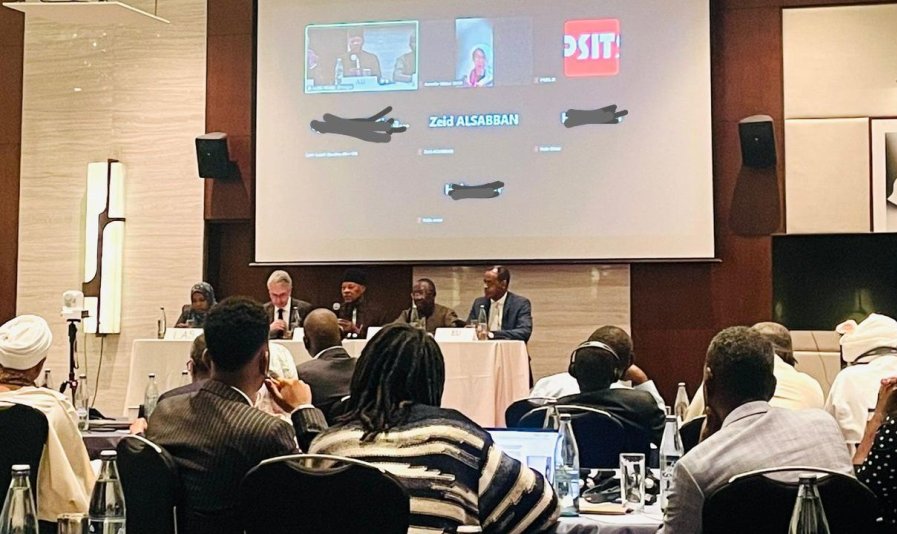
The move comes days after coalitions, including armed groups, reached preliminary understandings on the political process during exploratory meetings in Ethiopia, facilitated by the Quintet mechanism from June 3-5.
While the exploratory consultations broke new ground among political blocs, disputes still persist over the participation of the Islamic Movement and its political fronts, as well as the Ta’asees coalition led by the Rapid Support Forces.
The Western nations and continental blocs renewed their shared and unwavering commitment to the people of Sudan, to a peaceful, democratic, and stable future, and to the sovereignty, unity, and territorial integrity of the country.
They expressed deep concern over the devastating humanitarian consequences of the ongoing conflict, where millions face displacement, acute food insecurity, and limited access to basic services, while attacks on civilians and infrastructure persist.
They emphasized that the protection of civilians must remain central, and reaffirmed the urgent need for a humanitarian truce leading to a permanent ceasefire.
An estimated 33.7 million people, including 17.3 million children, need humanitarian assistance this year. Experts warn that 825,000 children suffer from severe acute malnutrition, while 3.4 million children are exposed to deadly diseases.