
SPLM-N revolutionary current boycotts Sudan political talks over ‘fragile solutions’
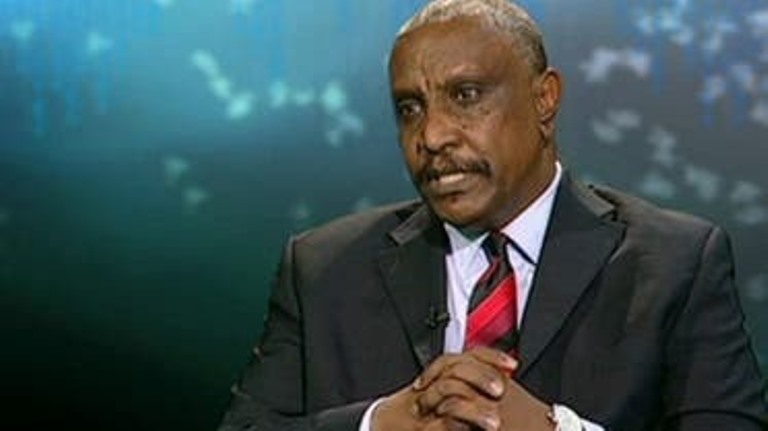
June 15, 2026 (KHARTOUM) – The Sudan People’s Liberation Movement-North (SPLM-N) Revolutionary Democratic Current announced on Monday its boycott of upcoming political talks, conditioning its return on anti-war forces regaining the initiative and restructuring the dialogue agenda with international mediators.
The decision follows exploratory meetings held in Ethiopia during the first week of June. Facilitated by a five-party mechanism consisting of the African Union, IGAD, the United Nations, the Arab League, and the European Union, those talks yielded initial understandings among several political blocs and armed factions to form a preparatory committee.
“The leadership office has decided not to participate in the current political process and its accompanying meetings,” the movement said in a statement following an emergency meeting. It urged anti-war factions to reclaim the initiative and agree with the five-party mechanism on a process that “serves our people and steers us away from the path of fragile solutions.”
The movement called for an urgent meeting of the “Sumoud” alliance and recommended a broader conference to develop its declaration of principles into a weighty, anti-war civilian bloc. On May 23, the Sumoud alliance and the Sudan Liberation Movement led by Abdel Wahid Mohamed Nour adopted a declaration demanding that any political process address the root causes of Sudan’s conflicts rather than serving as a superficial settlement between warring parties.
The SPLM-N faction criticized the recent Addis Ababa consultations, warning that the process risked diluting the influence of genuine anti-war forces. It also expressed frustration with mediators for ignoring a roadmap introduced in September by a four-nation mechanism comprising the United States, Egypt, Saudi Arabia, and the United Arab Emirates. That roadmap called for a humanitarian truce leading to a permanent ceasefire before launching political talks.
The statement emphasized that addressing the humanitarian crisis and securing a truce must serve as the baseline for any dialogue. “It is ethically and politically unacceptable to engage in a political process that does nothing face-to-face with cities being destroyed and millions of their inhabitants displaced,” the movement said.
The group also criticized the five-party mechanism’s handling of the anti-war delegation, claiming mediators dismissed their leverage during the talks.
Furthermore, the Revolutionary Democratic Current warned that the current framework lacks explicit commitments from the warring generals to abide by its outcomes. It claimed that recent international discussions in Turkey, Qatar, Egypt, and Malaysia risked clearing a path for Sudanese Islamists to return to governance through swift, unstable settlements.
“Sustainable solutions require holding them accountable, not rewarding them or allowing the continued hijacking of the state,” the statement said, adding that the current process flawed pierces together anti-war groups, pro-war factions, and authoritarian elements on equal footing.
While the exploratory sessions in Addis Ababa managed to soften some political positions, deep divisions remain unresolved over the inclusion of the Islamic Movement and the paramilitary-backed “Tasis” alliance.