
Port Sudan resumes transhipment operations as international cargo ship docks
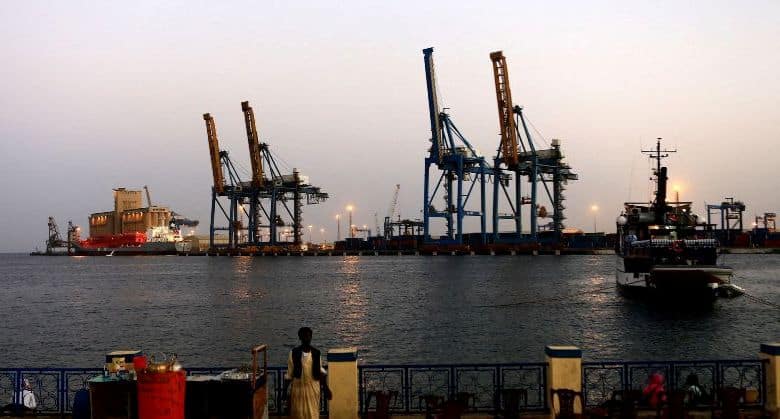
June 16, 2026 (PORT SUDAN) — The Red Sea port of Port Sudan has resumed cargo transhipment operations after a prolonged suspension, marking a pivotal step toward revitalising the terminal’s role as a regional maritime hub despite the country’s ongoing conflict.
Transhipment involves unloading goods from one vessel and loading them onto another within a port’s customs area before they continue to their final international destination.
The state-run Sea Ports Corporation said in a statement on Tuesday that the container ship Euphoria, operated by local shipping agent Polaris, docked at the South Port terminal to launch the resumed service. Authority officials described the arrival as a breakthrough that reflects growing international confidence in Sudanese port operations.
“The return of this trade segment is a clear indicator of the port’s stability and operational efficiency,” Jilani Mohamed Jilani, General Manager of the Sea Ports Corporation, said.
Jilani added that storing and re-exporting international cargo through Port Sudan to regional destinations, including Jeddah in Saudi Arabia and Lattakia in Syria, highlights the port’s capacity to capture transit trade using national expertise.
Abdullah Hussein, Director of the South Port container terminal, said the arriving vessel unloaded 140 containers, or 136 twenty-foot equivalent units (TEUs), describing the operation as a significant achievement given the extraordinary challenges facing Sudan.
Hussein stated that the container terminal is well-positioned to capitalise on shifting regional trade dynamics, adding that the port authority plans to introduce targeted financial incentives and benefits to attract additional global shipping lines.
He noted that container handling rates have risen consistently due to continuous, uninterrupted shift rotations and improved coordination among terminal departments.
Despite the operational restart, Port Sudan continues to face structural bottlenecks and capacity constraints. The port’s current total berth length is 1,478 metres, with a storage area of 1.48 million square metres.
Maritime experts note that these dimensions are limited compared to major global hubs, leading to longer vessel waiting times and reduced handling capacity for larger container carriers. In recent years, these infrastructure deficits severely curtailed transhipment volumes and limited the entry of mega-ships.