
Why equal citizenship is the missing link in building a stable Sudan( 2-3)
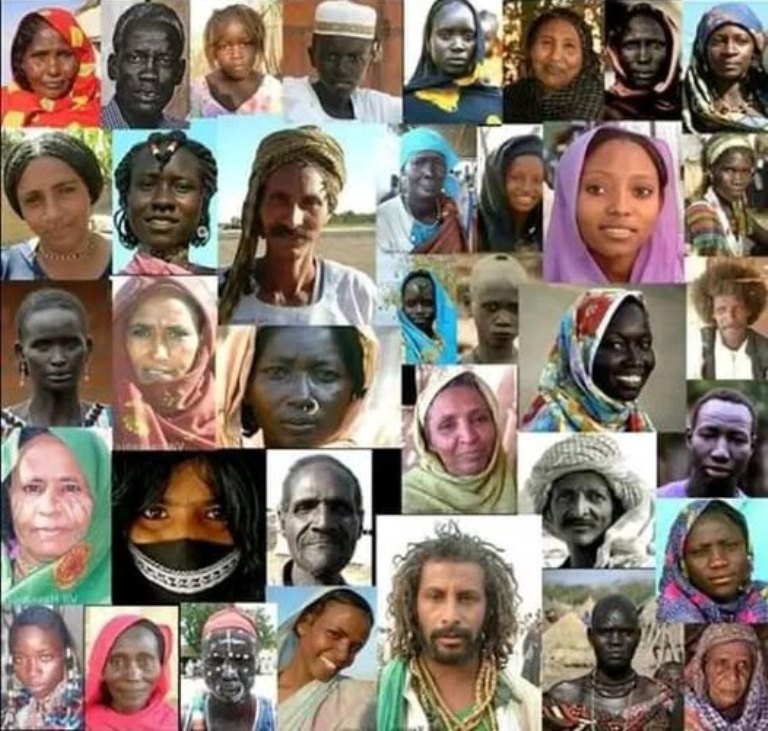
Ethnic diversity and ideological conflict are two catalysts that directly contribute to political instability in Sudan.
By Hussien Arko Menawi.
 The negative role of each factor is undeniable, whether in the current war or in wars that have taken place in recent decades. Ethnicity and ideology are the testing ground for uncovering the reality of the conflict in Sudan. Their impact on conflict proved that whenever ideology or ethnicity intervenes in issues related to power and state administration, the identity crisis escalates to the level of wars. For example, the armed power struggle in the periphery was fueled by local communities, while ideological parties were behind most military coups since independence. Thus, Divided ethnicity and ideology- based politics have become the most effective determining factors of political unrest in our governance systems and this is why Sudan for a long time has been characterized by fragility, insecurity, and disunion. In our politics, the equation of identity-related crisis is simply interpreted as the reason the governance system in Sudan is always unstable. Simply put, military coups are planned and carried out by ideological parties, while ethnicities are the tools used to manage conflict on the periphery. Throughout the crises that Sudan has experienced, all successive regimes have failed to address identity-related crises. Since independence, there has been no serious government, nor have there been national strategies to build a nation based on equal citizenship. To solve the chronic crisis of citizenship in Sudan is certainly a long and gradual process. Before they take any step, the decision- makers must keep in mind that Sudan’s crisis cannot be solved overnight, but rather the answer is closely linked to the time factor, i.e. before the diverse community of Sudan reaches a fully homogenized nation, there must occur a gradual process of change in society.
Looking at the current social reality in Sudan, we notice that individuals are significantly closer to their tribe than to the state. The loyalty of individuals to their tribe is very strong, in part because they feel more protected by their tribe than by the state. Therefore, this fact created varying degrees of citizenship in Sudan.
Based on available statistics on the number of tribes in Sudan, the figure exceeds 300. This figure stands as the primary centre of individual loyalty across most regions of the country. When a state exists amid such a staggering number of competing loyalties, the conflict is likely to escalate significantly in proportion to the number of ethnic groups. In societies characterized by multiple loyalties and identities, suspicions often arise regarding an individual’s loyalty to the state; in such cases, the very degree of citizenship itself becomes a subject of doubt.
At many critical junctures, citizenship manifests through unequal criteria.
In many cases, citizenship may extend only to legal status, while for others, actual participation in power-sharing is minimal. And more critically, in many circumstances,
a sense of belonging and loyalty is absent within the diverse Sudan. Practically, it has been proved that in many cases, individual rights or, rather, citizenship rights do not extend beyond legal recognition, while citizenship at the level of engagement in the political process and sharing power within the state apparatus is almost negligible, and that is why the sense of citizenship and loyalty significantly varies among the Sudanese.
There are three examples of identity-based conflict. The first is the conflict based on ideological identity. The identity conflict based on ideology is found clearly in programmes adopted by civilian political forces. Such programmes focus on controlling power through the idea of total societal assimilation by means of a specific ideology. It is an approach closer to imposing an identity by force; e.g. during the NCP regime, the society was explicitly divided into pro-Islamists and their opponents. For some political parties, forceful policies are the most appropriate means of achieving social assimilation. The closest example for this conflict is the political slogans raised by the communists, Islamists and Arab Nationalists. The second type of identity conflict takes the form of a socio-political dimension within the context of ethnic diversity. To contain the crisis of identity conflict, this example, by contrast, aims for inclusion rather than exclusion. i.e unity from diversity or, in other words, inclusivity on the basis of equal sharing of power and wealth, and fair representation of cultures. The conflict between the South and the North before the secession is a useful model for the socio-political dimension. The third type is the most dangerous. It aims for demographic change, land occupation, and total control of power on the basis of ethnicity. The current slogan of the Rapid Support Forces, or what is known as the “state of Al-Atawa,” is the most fitting example. Unlike other regions, Darfur was a testing ground for warfare which aimed at demographic change. During the NCP regime, Arab militias known as Janjaweed, supported by the central government, implemented this model to the point of genocide. The conflict over ethnic identities in Darfur created chaos on all levels—political, ethnic, and geographical. It was stark and widespread; almost the entire region turned into displaced camps, and thousands of villages were reduced to ash. Nevertheless, in certain circumstances, the role of ethnicity in a conflict is invisible because politics turns the scene into an opaque screen through deceptive media. All the armed conflicts in Sudan have manifested themselves in a political disguise and slogans that are largely attractive and deceptive, but in reality, the conflict is fueled by ethnic identity or ideology. The two examples that best illustrate this situation are the previous Southern War and the current war of 15 April 2023. During the conflict in South Sudan, the political slogans were the dominant title for the conflict, but in all cases, the war was fueled by the two contested racial identities, Africanism and Arabism. The war of April 15, 2023, was more obvious. The political arena, before and shortly after the outbreak of the war on 15 April, was dominated by slogans calling for the army to withdraw from the political scene and for the establishment of a civilian government free of military participation. And then the slogan has been developed into a new idea by coining the term “ state of foundation” versus the “1956 state”. However, one facet of the war, according to the political discourse adopted by the SRF, has clearly portrayed it as a two-dimensional conflict. Since the eruption of the war, the (RSF) which is a coalition of Arab nomadic tribes known as Al-Atawa kept sending dual messages, one about a radical change of the 1956 state and most likely a discourse for media purposes developed later at the official level, and the other message is very earlier, unequivocally speaking about the state of Atawa, which is the dominant discourse among the grassroots. On the eve of the fall of the NCP government, in a video recording, the activist Al-Dawu Bishara revealed a conversation between him and the second-in-command of the RSF, Mr Abdul Rahim Doglo. Bishara said the conversation lasted for two hours or more, during which Abdul Rahim did not utter a single word about any vision for a national state, but rather spoke at length about a tribal state called Atawa. But on a media level, their case is different. They consistently play the tune of the 1956 state and insist that the war is against the “1956 state”, sometimes they call it the Jallaba state. So, the unfolded mystery in the war of April 15th is that ethnic identity has become the top concern on the political agenda. As a matter of fact, the accurate wording for the RSF case ( war of 15 April) is that: ethnic engineering, land occupation and total exclusion from political role. This case is not applicable to the other conflicts throughout history. After all, identity-based conflict in Sudan is a challenge that occupies a significant place among all security issues. It is not a claim just for political purposes, but a tangible reality that has caused widespread instability and destruction among Sudanese societies.
The identity crisis has existed in multiple forms. A few writers have addressed the issue of identity in Sudan. Dr Baqir Afif is one of those who addressed the issue in his book “Faces behind the war: Identity and Civil Conflicts in Sudan. Dr Francis Deng has spoken most about this knotty challenge. He is a southern Sudanese writer and one of the few elites in Sudan who has addressed the issue of identity. He has written more than one book on this subject, the most famous of which are The Conflict of Visions and The Dynamics of Identity. At any rate, the conflict of identities in its multiple versions before April 15, 2023 took place at a political level within the limits of controlling power but not ethnic engineering or land occupation. In some instances, the conflict took on a particularly severe character, amounting to war crimes and genocide, especially during the National Congress regime. The current war of April 2023 has clearly proven to be a war of survival. It is an act of demographic engineering targeting the existence of ethnic entities, as the military operations have gone beyond military confrontation to a war of genocide and ethnic cleansing.
Generally speaking, we can distinguish subtle differences in the roles of the actors in the Sudanese conflict since independence with a focus on the current war. Regarding crimes classified as identity-based warfare, it is essential to note the similarities between the crimes committed during the NCP regime and the atrocities currently being perpetrated by the Rapid Support Forces. In general, both committed war crimes and genocide but generalization does not provide an accurate definition of each role because they took place in different contexts.
The two examples of the NCP Regime and the current role of the (RSF) each provide a picture of identity conflict with different motives. Focusing on similarities and differences, we can certainly say that, under the al-Bashir regime, specific elements belonging to a particular ethnicity, led by the organization of RSF, directly committed crimes of genocide and ethnic cleansing against the indigenous people of Darfur. The perpetrators (RSF), the National Congress government used to sponsor them, just as the United Arab Emirates sponsors them now. Today, the same RSF is repeating the same crimes. The subtle difference is that the militia today is not the same as before; it is unharnessed and actively working to introduce a radical change in Sudan by establishing a new state at the expense of indigenous populations. During the NCP Regime, the war was about protecting the oligarchy that had seized power, but not a radical replacement of the entire population. The NCP Regime was ruling the country on the basis of political hegemony (ideology-fed) identity, not racial hegemony (racial identity).
The evidence on the ground proves that the current war, to a great extent, is not identical to the previous one led by the NCP Regime. Today, the war is led by an ethnic group that has gathered from the diaspora across international borders, seeking to control Sudan and rule in the name of the Arab-Atawa coalition.