
South Sudan needs right and safe elections!
By James Okuk, PhD
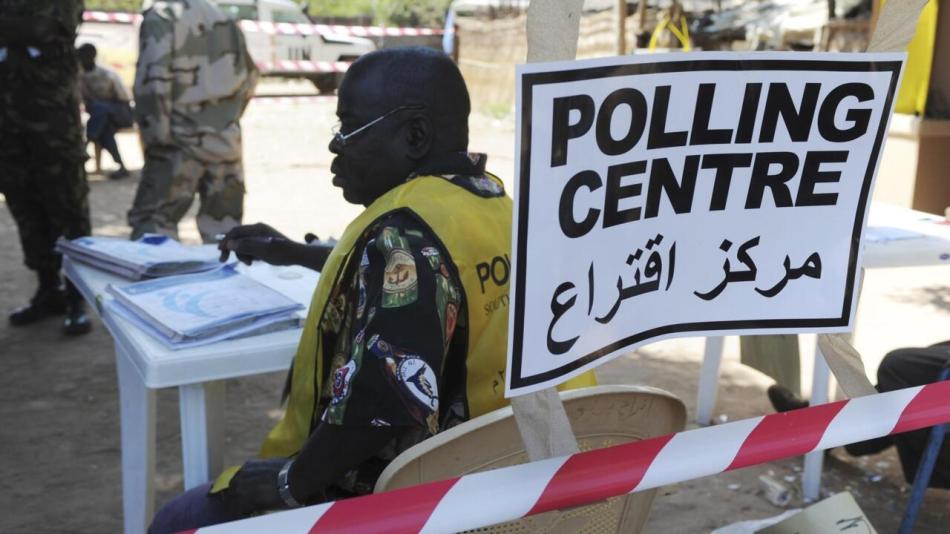
This article is not written to oppose elections in South Sudan or wait for perfection but to highlight clearly what should be done in concrete terms beyond bluffing. The article emphasizes the point that the aim of the elections is not to end the transitional period per se because this can be done by any other means. The main purpose is to give back power to the people so that they choose their political leaders through legalized, inclusive, diversified, free, fair and credible votes in a peaceful atmosphere of dialogue and co-existence. Manipulating this opportunity will bring reverse result.
That was why the political consensus prioritized the promulgation of permanent Federal Constitution of South Sudan (FCSS) to repeal the 2018 Revitalized Agreement on the Resolution of the Conflict in the Republic of South Sudan (R-ARCSS), followed by amendment of electoral laws at all levels of the government before the general elections is conducted. This repeal will also dissolve the 2020 Revitalized Transitional Government of National Unity (RTGoNU) and task a Caretaker Government to prepare level ground for elections and handover of power to winners.
The article acknowledges that the context for preparing, organizing, conducting and declaring the results of the long-awaited elections as well as installing the newly elected government is significantly different from that of 2010 general elections where uncertainties, disinformation, misinformation, hate speech and violence were minimal across Southern Sudan. The previous elections were managed from Khartoum in the old Sudan with sufficient funding and technical support from the international community and the region. This opportunity is not there now!
Key indicators for assessing the viability of the announced general elections for 22 December 2026 should be observed keenly, free from wishful thinking, public deception, and personal delusion. The success of elections is determined by the intensity of preparedness and the timely, concrete actions taken to translate the talks and directives into reality. This will require enforceable legal and regulatory frameworks to be in place earlier to guide the phases of the election cycle. The electoral administration and management should also be demonstrated, from planning and budgeting to the recruitment of sufficient staff to perform the tedious technical work professionally and competently. Election security measures should be put in place early to prevent or mitigate threats. The announced results should broadly reflect the will of the electorate.
The general elections should lay a firm foundation and good precedent for exceptional rooting and germination of federal constitutional democracy because this has been a popular historical demand by the people of South Sudan. That is why maximum effort must be exerted to ensure a properly legalized conduct of right and safe elections without tradeoffs or gerrymandering.
- Who Want Elections in South Sudan?
Opinion surveys that have been conducted since 2012 have confirmed beyond reasonable doubt that the ordinary people of South Sudan are the very ones who want elections so that they could choose their deserved political leaders satisfactorily. Majority of South Sudanese have been suffering from the ills of the recycled transitional governments that are not accountable to the people but to the leaders of peace agreements. They are fed up with the unjustifiable excuses about the largely unimplemented 2018 R-ARCSS despite multiple extensions of the timelines.
With the eruption of the SPLM-generated civil war in 2013, the principal politicians in the country have never been focusing on elections but power-sharing deals that have always put the elections at the backbenches of politics. This situation has blocked the opportunity for the first general elections in the Republic of South Sudan since 2015. The fear of what the people can do with the weight of their democratic votes more than the liberation guns was hatched during the chance accorded to them in the referendum for self-determination in 2011. They didn’t hesitate to terminate overwhelmingly the unattractive unity with the old marginalizing Sudan. Similar people’s votes can terminate the R-ARCSS and send home the underperforming politicians.
The other essential category who wants elections in South Sudan are the disadvantaged political parties who do not enjoy power privileges through the RTGoNU under the extended R-ARCSS. These parties tend to presume that elections are panacea to their bad luck in the recycling appointments and revocations that have been normalized frequently at all levels of peace agreement governments――national, states, administrative areas and counties.
There are also independent candidates who may be popular and capable of winning elections but are kept waiting in vain to defeat those who are clinging to the benefits of adhering to the R-ARCSS even when its spirit and letter are diluted intentionally or ignorantly. Most of these populists are the fallout or defecting members of political parties and civil society.
Though managing such candidates was a bit loose in the past elections in the Sudan, Section 57 of Political Parties Act (PPA), 2012, as amended in 2022, has tightened and risen the bar in South Sudan. The independent candidate is required by law not to have been a member of political party at least three (3) months before the set date for receipt of nominations of contestants by National Elections Commission (NEC). This condition will disqualify many of them.
The disappointed, frustrated and unhappy external actors in the regional and overseas who are not benefiting from the RTGoNU as expected, are also looking forward for leadership change through general elections in South Sudan. They feel that their massive support to South Sudan has been betrayed by the few elites who are recycling themselves in power and, thus, elections could be a silent method for punishment of such politicians. Nevertheless, their dilemma is magnified by the possible consequences of ‘’unclean elections” whose results may not be in their favor.
The politicians in the RTGoNU who have been enjoying the privileges of power games through R-ARCSS framework are also becoming desperate for sham elections because their manipulation skills have been spoiled by the resolve of parties, stakeholders, regional guarantors and international community that there will not be further extension of validity of the R-ARCSS beyond February 2027. What will be the basis of legitimacy of their present government by that time if elections are not conducted in December 2026? This is uncomfortable nightmare!
The end of the transitional period in accordance with the R-ARCSS design is only determined by the general elections and not any other arrangement. The general elections are also pre-conditioned because they should be conducted based on permanent federal constitutional order and amended laws at all levels of the elected government to avoid contradictions against the supreme law.
In case the anticipated general elections did not take place, the principle of “no legal vacuum” will always apply. That means the transitional period of the R-ARCSS will not end until this is replaced procedurally by alternative arrangement reached through inclusive political consensus. This is what happened with the 2005 Comprehensive Peace Agreement (CPA) and 2005 Interim Constitution of Southern Sudan (ICSS) when they were repealed by the 2011 Transitional Constitution of the Republic of South Sudan (TCRSS). It was also witnessed when the 2015 Agreement on the Resolution of the Conflict in the Republic of South Sudan (ARCSS) was incorporated into the TCRSS to establish a new legalized political dispensation. Even when the principal parties went back to war in July 2016, the ARCSS was not allowed to collapse but replaced by the 2018 R-ARCSS whose provisions were incorporated into the amended TCRSS in 2020.
The right and safer way of repealing the R-ARCSS is to complete the permanent federal constitutional making as soon as possible given the fact that 70% of the work has been completed. The drafting committee should be constituted to produce the blueprint for validation by the inclusive and diversified constitutional conference. Thereafter, the Chairperson of National Constitutional Review Commission (NCRC) will be in a better position of legitimate confidence to present the permanent Federal Constitutional Bill to the Constituent Assembly, the transformed Reconstituted Transitional National Legislature so that this is promulgated to repeal the R-ARCSS and guide the general elections as regulated by the duly amended electoral laws.
The viability of long-awaited general elections in South Sudan lies with integrity, credibility, legitimacy and acceptability of the process and end-results. This is the established best democratic practice to cherish through electoral cycle―before, during and after―together with inclusive political consensus and updated legal frameworks, independent and competent non-partisan electoral administration, operational capacity and sufficient funding, planning capability and effective implementation, staff training and civic education, accurate registration of voters and nomination of contesters, respected disputes resolutions and strong judicial verdicts, fair campaigns and facilitated competitive equal opportunities, impartial observations and committed agents, cooling down and enfranchisement, trusted polling and tallying venues, honest review and confirmation of counted results, security preparedness assurances and safety, smooth handover of government to elected winners and enforcement of public sovereignty, and post-elections management.
- Political Consensus Indicator for Elections
The R-ARCSS is the agreed supreme political consensus for South Sudan, backed by the neighboring countries, the region and international community. This peace deal is not only about power sharing in Chapter One. It has other seven chapters and annexes with lessons learnt from history, institutions, leadership and external dynamics. The R-ARCSS provides for:
- Conventionalization of security and defense sector to safeguard the democratic constitutional order and territorial integrity of South Sudan (Chapter II).
- Prioritization of government responsibility on humanitarian assistance to the affected citizens, especially the returnees from IDPs’ and refugees’ camps (Chapter III).
- Advancement of diversified economy through honest public financial management and institutional reforms to enhance inclusive devolution of resources (Chapter IV).
- Strengthening accountability through truthful reconciliation, punitive hybrid courts, reparative compensation, reformed justice system with independent constitutional court, and national healing programs with help of religious authorities (Chapter I & V).
- Writing people-centered federal constitution to cement social contract with proven realistic population census legitimized by accurate demographic data and reviewing the existing legislations to guide public responsibilities accordingly (Preamble, Chapter I & VI).
- Impartial monitoring, verification, analyses, evaluation and reporting on the status of progress of R-ARCSS with recommendations for remedial actions (Chapter VII).
- Political and legislative procedures of R-ARCSS amendments when needed (Chapter VIII).
The R-ARCSS has presented a comprehensive roadmap and agenda for stopping the nasty war, restoring the lost peace, reforming the weakened public institution and systems, building the conflict-trodden new country and establishing constitutional federalism. These milestones are mandatory for conducting free, transparent, open, fair, genuine, credible, inclusive, and peaceful elections to bring an end to the R-ARCSS and kick-start the normalization of South Sudanese democratic journey. That is why the political consensus has sequenced the tasks of the parties and the RTGoNU during the transitional period in a manner that doesn’t put elections at the top of list of priorities for country’s recovery from the recurrent shocks of wars.
The assessment of the current situation and credible reports published by the Reconstituted Joint Monitoring and Evaluation Commission (R-JMEC), the United Nations Missions in South Sudan (UNMISS), Independent Thinks Tanks, Reputable International Organizations, Civil Society Organizations, and Independent Observers, indicate that most of the areas of political consensus within R-ARCSS framework are still a work-in-progress if not stalled or sabotaged. Power-sharing formulae and representation percentages in Chapter One have been altered or diluted by swapping and arrests of principal partners of peace deal due to mismanagement of their military wings.
The mix-up in the sequence of R-ARCSS implementation has created a serious dilemma that should be resolved wisely to avoid confusion and complications. Choosing to end the transitional period chaotically by gambling with shambolic elections is not going to produce desirable good news for South Sudan, the region and the world at large. Continuing with the RTGoNU that does not deliver satisfactorily on its mandate, will also not change the situation because of contradictory blunders against the supremacy of R-ARCSS as incorporated into the TCRSS.
Even if the initiated interparty dialogue in Juba reached a political consensus on proceeding with the termination by dissolving the RTGoNU on 22 September 2026 and sending the politicians home to prepare themselves for the unprepared general elections on 22 December 2026 with serious constitutional and legal gaps, still the dilemma would not have been resolved. Bad elections will not change the troubling situation of South Sudan. In fact, some of the politicians and their supporters would jump into the wagons of holdout groups to proliferate pressure and violence. This may move the neighboring countries, the African regional blocs and international community to contemplate swift and short-term stabilization military mission coupled with search for political settlement and re-legitimization of a new interim period using same architecture of liberal peace. They will ensure that the R-ARCSS is merged with the new deal.
The termination of the R-ARCSS political consensus cannot be decided unilaterally without adhering to the sequence of what should be done first before the other. Otherwise, going ahead with controversial elections in contravention with the law will not be different from unthoughtful constitutional coup against power of signatory parties over the RTGoNU. This may invite external sanctions and provoke internal unrest as already signaled as an early warning by the UN Security Council, the UN Human Rights Commission, the AU Peace and Security Council, the US Government, among others, in their public statements and private conversations.
Instead of an uncalculated rush for troublesome elections, the recommended honest advice from penholders of South Sudan is geared towards inclusive political dialogue for an alternative solution, which should be evaluative in its approach so that relapses during the implementation period of the new pathway are avoided. This had almost materialized with the Tumaini (Hope) Initiative in Nairobi if the RTGoNU didn’t hit a nail of pause on the initialized protocols in February 2025 to halt the finalization into a merger peace deal that would have retained the gains from R-ARCSS and bridged the missing link of collective leadership with uncompromising accountability.
- Legal Guidance Indicator for Elections
Right and safe elections should uncompromisingly be guided by people-centered constitution and valid legislative frameworks, fair operational policies and impartial regulations, and mandatory code of ethical administrative conduct. That is why R-ARCSS has put it clearly and categorically that the below supreme texts must be adhered to before elections terminate transitional period.
“Cognizant that a federal system of government is a popular demand of the people of the Republic of South Sudan and the need for the RTGoNU to reflect this demand by way of devolution of more powers and resources to lower levels of government;” (R-ARCSS, Preamble).
“The Parties reaffirm their commitment to the ARCSS that a federal and democratic system of governance that reflects the character of the Republic of South Sudan and ensures unity in diversity be enacted during the permanent constitution making process.” (R-ARCSS, Article 1.4.11).
“Within two (2) months of the adoption of the Permanent Constitution, the National Elections Act 2012, shall be amended to conform to the terms of the Permanent Constitution.” (R-ARCSS, Article 1.20.5).
The recently amended TCRSS, 2011 as amended in 2020; the Political Parties Act (PPA), 2012 as amended in 2022; the National Elections Act (NEA), 2012 as amended in 2023; the existing Local Government Act (LGA), 2009; the amended laws of police, prisons, security and defense forces; and other related subsidiary legislations, are all incomplete in their current form and content to be validly referenced for elections until they are harmonized with the R-ARCSS and the awaited permanent Federal Constitution of the Republic of South Sudan (FCRSS) respectively.
“This Revitalised Agreement shall be fully incorporated into the Transitional Constitution of the Republic of South Sudan, 2011 (TCRSS as amended). Notwithstanding this process of incorporation, in the event that the provisions of the TCRSS, 2011 (as amended) conflicts with the terms of this Agreement, the terms of this Agreement shall prevail.” [R-ARCSS, Article 8.2].
“This Revitalised Agreement shall take precedence over any national legislation, any existing agreement to the contrary, and in the event that the provisions of a national legislation or previous agreement conflict with the terms of this Agreement, the provisions of this Agreement shall prevail.” (R-ARCSS, Article 8.3).
Chapter Five of the current NEA, 2012, as amended in 2023, is also contradictory to the spirit and letter of the R-ARCSS. This makes the decentralization mechanisms mentioned therein superfluous to be applied to local government elections, which are supposed to be conducted based on federal system with more devolutions of powers and resources.
The announcement made in Juba on 22 June 2026 by the NEC’s Chairperson that general elections will commence on 22 December 2026 is premature and nullifiable as far as R-ARCSS supremacy is untampered with. He might have not realized that constitutional and statutory guidance for organizing general elections in South Sudan hss not yet promulgated because the R-ARCSS has conditioned it that only the FCRSS guiding elections, including specification of type, structure, levels, mandate, powers, responsibilities, tasks and term limits of the awaited elected government.
The following legal provisions are also not currently useful to be cited for elections until second amendment of the NEA is effected in accordance with the R-ARCSS and the TCRSS.
“Sixty (60) days prior to the end of the Transitional Period, the National Elections Commission (NEC) shall organize elections in accordance with the provisions of the Permanent Constitution adopted pursuant to this Agreement, and shall ensure that the outcome is broadly reflective of the will of the electorate.” (R-ARCSS, Article 1.20.5).
“Whenever an election is to be held, the Commission shall determine and announce the date in accordance with the Constitution and publish in the Official Gazette or two newspapers with nationwide circulation and on the Commission website and mass media, a notice of the holding of the election at least six months before the date of the election.” [NEA, Section 16(1)].
Using the outdated electoral geographical constituencies of 2010 when Southern Sudan was still part of the Republic of the Sudan is legally flawed. The geographical locations and coordinates of South Sudan might have remained the same for more than a decade now, though some areas are seriously affected by floods and droughts. Changes of such magnitude cannot be ignored in addition to the massive displacements and migration of the citizens.
That means the number of resident eligible voters as they were in 2008 census, and the voters register as it was in 2009, are no longer relevant and useful. Many people died while others got born and have reached voting age of 18. That is why a fresh census is needed to provide the accuracy of real people in each new constituency so that those who are qualified to be registered as voters could be counted by the NEC therein for the elections. This will also make an audit of the Electoral Register possible before final publication in the gazette, newspapers or the website of the NEC.
“The voters register shall be published within six (6) months prior to the holding of elections.” (R-ARCSS, Article 1.20.10).
“The Commission may, at least six months before a general election, conduct an audit of the Register of Voters using the voter register for the purpose of – (a) verifying the accuracy of the Voters Register; (b) recommending mechanisms for enhancing the accuracy of the Register.”(NEA, Section 37A).
“The Commission shall calculate the national dividend by dividing the total population of South Sudan by the figure which represents fifty percent (50%) of the members of the National Assembly to be elected through geographical constituencies.” [NEA, Section 40(1)].
From the official reports and the current reality, there has not been any sign of voter registration around the corner for an auditable voter register to be availed for verification by the people of South Sudan and external observers. Hence, it will be very interesting to see how elections are going to be possible without voters. The population of South Sudan is not known accurately too because no census has been conducted for the new Republic so far.
Having elections without a known population but relying on outdated demographic data of eighteen (18) years ago in another country called Sudan, is a very strange political experiment that has never been tried anywhere. This has already invited an early warning by Khartoum on including Abyei Special Administrative Area in the elections of South Sudan before the sovereign locational status of the belongingness of Nine Ngok Chieftaincies is determined finally.
Elections that are contrary to the spirit and letter of R-ARCSS will face the verdict of illegitimacy. The R-JMEC, the Intergovernmental Authority on Development (IGAD), the African Union (AU), the United Nations (UN), the European Union (EU), and other rule-based organisations and countries may not welcome the outcome of such elections. This will be an unpleasant setback for the declared winners, though overwhelmingly joyful to the losers and holdout opposition.
The decision that was taken by the RTGoNU to delink permanent constitution-making and national population census from elections is clearly in conflict with the R-ARCSS, and therefore, the amendment that was passed by the Reconstituted National Transitional Legislature (R-NTL) is null and void. The R-TNL is only permitted to ratify what has been agreed for amendment by the signatory parties to the R-ARCSS and consented to by the R-JMEC after validation by the Council of Ministers through collegial consensus or two-thirds majority votes. Amending any article of the R-ARCSS is not within the mandate of the current transitional parliament.
“This Revitalised Agreement may be amended by the Parties, with at least two-thirds of the members of the Council of Ministers of the RTGoNU, and, at least two-thirds of the voting members of the Revitalised Joint Monitoring and Evaluation Commission consenting to the amendment, followed by ratification by the Transitional National Legislature, according to the constitutional amendment procedures set out in the TCRSS, 2011 (as amended).” (R-ARCSS, Article 8.4).
Therefore, it is prudent to complete election preparedness from all angles to create an enabling environment and dispel panic about losing the legitimacy to govern. Let the FCRSS be in place first to stabilize the heartbeat of South Sudanese nation-state building, followed by promulgation of specific constitutions of the constituent federal states or regions at sub-national levels of government. This will defuse the confusion and uncertainties and send the strongest signal that the new Republic is taking off finally as a formidable rule-based democracy with great hope for the prosperity of its people on the blessed land of great abundance.
- Management Capacity Indicator for Elections
The electoral management capacity and capability are assessed through the following main pillars.
- Planning: Setting clear objectives, forecasting future trends, preparing the budget and building actionable steps for making elections a reality beyond aspiration.
- Organizing: Assigning roles, arranging workflows, and allocating resources or equipment for elections.
- Leading: Communicating the way forward clearly, motivating team members to do their best of performance within the planned time, and building a culture of integrity in delivering good elections.
- Controlling: Tracking the progress, mitigating the risks, filling the gaps, and noting the lessons of from the beginning of the cycle to the end.
These fundamentals of management are demanded more for handling the complicated general elections with multiple ballot boxes for electing the President of the Republic, National Legislative Assembly Members, Council of States Members, Governors of States, Members of States Assemblies, Administrative Areas Chiefs, Administrative Areas Members of Assemblies, Counties Commissioners, Counties Councilors, City and Municipalities Mayors, City and Municipalities Councilors, and Urban and Rural Councilors. Not only these, but the confusion about the proportionality of the party list and women’s list in the voting patterns requires a lot of awareness and civic education for both the voters and contesting political parties.
It is easier to announce the date of general elections but difficult to manage and administer the mandated processes, outputs and outcomes in a genuine manner without independent leadership, administrative competence, and operational ability. General elections require heavy-duty capacity and capability to strategically and tactically handle each phase―pre-elections, elections and post-elections periods―with a high level of credibility, openness, transparency, impartiality, professionalism and accountability (NEA, Sections 6 and 7). That is why the provisions below were agreed by the parties and tasked to the RTGoNU to implement without fail.
“Reconstitute a competent and independent National Elections Commission (NEC) to conduct free, fair and credible elections before the end of the Transitional Period and ensure that the outcome reflects the will of the electorate.” (R-ARCSS, Article 1.2.13).
“The RTGoNU, shall urgently address challenges of reconstruction, repatriation, resettlement, rehabilitation and reintegration of IDPs and returnees as critical factors affecting peacebuilding and elections.” (R-ARCSS, Article 1.20.7).
“Conduct a National Population and Housing Census before the end of the Transitional Period;” (R-ARCSS, Article 1.2.14).
“Devolve more powers and resources to the State and Local Government levels (R-ARCSS, Article 1.2.15).
Institutional independence, professional competence, technical capacity, sufficient sovereign funding, ethical conduct, and uncompromised accountability are the minimum standards required for the NEC to successfully manage and administer the general elections. Cross-checking these values with the status and profile of the current NEC, it could be detected that there are many gaps and problems. Legal procedures as provided in the NEA were not followed closely or might have been intentionally bypassed when the Chairperson, Deputy Chairperson, Chief Electoral Officer and Six (6) Commissioners of the NEC were appointed.
Before their appointments the President of the Republic, the First Vice President and the four Vice Presidents should consult and agree to constitute a selection committee comprising of nominees of parties to R-ARCSS and stakeholders. This committee advertises the positions and invites applicants to present their CVs and proof of qualifications. It shortlists the suitable candidates, interviews them, and then presents the list of winners to the President so that they are forwarded to the Transitional Legislative Assembly (TNLA) for vetting and approval before their appointments by the Republican Decree and oath-taking. The benchmarks for their approval are integrity, competence, independence, non-partisan and impartiality in addition of at least ten (10) years of work experience in administrative or managerial positions. The legal texts read:
“The Commission shall be composed of nine members to be appointed by the President in accordance with Article 197A of the Constitution, upon confirmation by a vote of not less than two thirds of the members of the Transitional National Legislative Assembly.” [NEA, Section 11(1)].
“The term of office of members of the Commission shall be six years renewable once upon satisfactory performance by the President with approval of two-thirds of members of the Transitional legislative Assembly; provided that the conditions for eligibility as set forth under this section shall continue to be complied with.” [NEA, Section 11(4)].
The same legal procedure applies for positions of Chairperson, Deputy Chairperson and Seven (7) part-time members of the Political Parties Council (PPC). The legal text reads:
“The Chairperson, Deputy Chairperson and members of the Council shall be approved by resolution adopted by a two-third majority of the members of the Transitional National Legislative Assembly, and following approval shall be appointed by the President.” [PPA, Section 13(6)].
Bypassing the procedures for appointment of leadership bodies of the NEC and the PPC is a serious legal matter that should be rectified by getting back to what the law has engraved regarding the securitization, qualifications, competence, integrity, impartiality, independence, and non-partisan affiliation. Otherwise, if they continue operating outside the law whatever they say or do would be considered illegal because they are not authorized yet to organize the elections.
In the same way the NEC rushed to announce the date for general elections, the PPC also committed an additional administrative error by bullying the registration of thirty-nine (39) political parties with the deadline of 30th June 2026 for them to be permitted to participate in the general elections on 22 December 2026. The PPC used this legal text:
“No association of persons or organization shall operate or function as a political party unless it has been registered in accordance with the provisions of this Act.” [PPA, Section 7(1)].
The reality on the ground tells that these political parties were registered without strictly cross-checking the legalized criteria in Section 7(3)(a)(d) of the PPA. The officials of the PPC didn’t travel to states and administrative areas to verify whether at least five hundred (500) eligible voters from two-thirds of these geographical locations had appended their membership signatures to the respective political parties before fully registering them. In fact, no eligible voters are known in South Sudan yet because the NEC has not conducted voter registration or issued voter cards. The PPC didn’t even bother to verify whether 35% women are ensured in the leadership lineup of these registered political parties.
The demarcation of electoral constituencies is a huge task for the NEC and should be guided by federal constitution, constitutions of the federal states or regions and local government laws. Voters registration, auditing of the voters register, nomination of eligible parties and independent candidates together with secondment requirements, inspections of the nomination, disputes resolution and courts injunction, withdrawals and replacement of the disqualified or dead candidates, publication of the final list, collaboration with observers and agents, controlling the media and information channels, adherence to electoral regulations and women inclusion, and management of electoral resources, are all daunting tasks for the NEC and the PPC.
Such huge electoral management needs massive staffing, with recruitment or secondment done in accordance with the tedious public service laws and regulations, starting with the Secretary-General and staff of the NEC at the national level, and moving downstream with the 5-Member High Committee and Returning Officers at the sub-national level, together with their assistants and support staff.
General elections involve very hectic and expensive procurement of electoral materials, intensive logistics for delivering materials from outside the country to designated internal destinations in remote locations with difficult terrain and landscapes, and frequent trips to the constituencies, from voter registration and audits through the delivery of the polling results. The church leaders have also protested against conducting elections during Christmas and New Year festivities.
The extensive challenges of poor transportation infrastructure, scanty telecommunication accessibility and weak networks, proliferated guns in the hands of tribal communities and loosed troops that have deserted their control-bases, and war-traumatized population that has not yet healed from the horrors and memories of past and present losses, are all unique difficulties in the current reality of South Sudan when it comes to elections.
Furthermore, there are concerns about transparency, accountability and honesty in handling election finances, much of which is supposed to be spent on costly massive procurements outside the country and the logistics of transportation into the countryside with very poor or absence of facilitating infrastructure, particularly roads and risky network. The Chairperson of Political Parties Council (PPC) has raised a red flag on lack of transparency and collaboration from the NEC.
The United Nations Security Council (UNSC) has already adopted Resolution 2820 (2026), revising the mandate of the United Nations Mission in South Sudan (UNMISS) by removing specific support for elections unless the R-ARCSS prerequisites are first met. The Troika (US, UK and Norway), the European Union (EU), and other members of the rule-based democratic international community, have also declared their positions and warnings against the wrong move by the SPLM and its satellite parties to gamble with insufficiently prepared general elections that will eliminate viciously the RTGoNU and commitments that are enshrined in the R-ARCSS.
During its 39th Ordinary Submit in Addis Ababa in February 2026, the African Union (AU) through the High-Level Ad Hoc Committee for South Sudan (C5 Plus) represented by Heads of State and Government of 5 sub-regions―South Africa (Chair), Rwanda, Nigeria, Chad and Algeria―issued a joint a Declaration affirming solidarity with the RTGoNU as it continue to pursue the path of R-ARCSS implementation. They initiated an African high-level, inclusive, mediated national dialogue, reconciliation, and healing for South Sudan before venturing into elections.
Similar commitment was expressed by AU Peace and Security Council (PSC) in the communiqué that was issued on 26 August 2026 in the aftermath of its 1364 in Addis Ababa. The PSC will again hold a session in October 2026 on electoral preparedness, informed by detailed reports from the AU Commission, the AU High Representative for the Horn of Africa and the Red Sea, the AU C5 Plus, and the AU Elections Assessment Mission to South Sudan.
Comparatively, the Government of Southern Sudan (GoSS) by then was so lucky to receive tremendous external support for the success of 2010 general elections under the supremacy of 2005 Comprehensive Peace Agreement (CPA). This rare advantage is not there now for the declared December 2026 elections while self-reliant is not viable in the situation of weak and paralyzed institutions that the country has been grappling with, a situation exacerbated by sanctions, pressure and isolation.
- Security Safeguard Indicator for Elections
There was a strong reason why the R-ARCSS provided that RTGoNU and elections be secured jointly by well-trained professional and nationalistic unified forces under a single chain of command. The legal texts on this critical requirement read:
“Notwithstanding any agreement to the contrary, the Transitional Period of (36) thirty-six months shall start on completion of redeployment of necessary unified forces, or on the expiry of eight (8) months, whichever takes place first.” (R-ARCSS, Article 2.3.1).
“Throughout the Transitional Period, training of personnel selected for the military, police, security and other services shall continue. Programme of DDR shall continue for ineligible personnel.” (R-ARCSS, Article 2.3.2).
“During the Transitional Period, all collected heavy and medium range weapons and ammunition shall be disposed of as shall be determined by the JDB.” (R-ARCSS, Article 2.3.3).
“Building of the national army, police, national security service and other organised forces shall be completed before the end of the Transitional Period.” (R-ARCSS, Article 2.3.4).
“By the end of the Transitional Period the national army and other organized forces shall be redeployed throughout the Republic of South Sudan pursuant to the plan laid down by the Strategic Defense and Security Review Board (SDSRB).” (R-ARCSS, Article 2.3.5).
Unfortunately, the security arrangement and architecture as agreed by the parties in Chapter Two of the R-ARCSS did not bear fruit, starting from the pre-transitional period prior to the formation of the RTGoNU in February 2020, and continuing to the of the transition if elections take place. This lapse is haunting the integrity and trust in forming joint operations for securing the electoral premises, infrastructure, materials, information, transportation, logistics, officials, technocrats, observers, agents, boundary delimitation, civic education, voter education, voter registration, party registration, candidate nomination, campaign period, polling operations, tallying and counting, dispute resolution and the official announcement of results. The situation is exacerbated by unruly armed youth and chaotic tribal militias who are all over in the countryside operating as outlaws.
Impartial and non-partisan professional security is urgently needed in South Sudan now because elections usually heighten tensions among contestants and their supporters. That is why security threats usually lead to the cancellation or postponement of elections, despite incurring huge costs. During registration, campaigning, polling, and counting exercises, special legal provisions may come into force, creating a ‘weapon exclusion zone’ around these sites. The people who are legally permitted to carry arms within these zones are the authorized security personnel.
Electoral and security officials may require political parties to register the date, time, and place of their campaign rallies to prevent clashes. However, if such a situation is not handled with clarity and swiftness in communication, it might be deemed restrictive of freedom of association and assembly in participating in elections.
Security ‘Rules of Engagement’ (RoE) or ‘Use of Force Policy’ (UoF) should be applied appropriately to certain types of threats but ensuring that security personnel are not ‘baited’ into actions that may later be politicized or complicate ‘Cooling-Off Period’. They should have a Code of Conduct and swift Investigation Taskforce to deter and deal with wrong behaviors.
The reports of security situation in South Sudan as presented by the Ceasefire and Transitional Security Arrangements Monitoring and Verification Mechanism (CTSAMVM) have not been assuring to guarantee an inclusive safety of elections. The permanent ceasefire agreement as signed in Khartoum Declaration of 27th June 2018 has not been observed meticulously to enable the completion of transitional security arrangements, voluntary repatriation, resettlement, rehabilitation and reintegration of returnees from refugees’ camps in the neighboring countries and the displaced persons internally. Non-South Sudanese armed groups are still operating at large inside South Sudan. Their presence poses concerns about territorial integrity of elections security in a fluid political environment of no-consensus and exclusion of heavy-weight politicians.
Other credible reports on the ground have raised alarms of increased violence if elections are rushed under the prevailing circumstances where key preparations remain incomplete and civic space squeezed for allowing voters, political parties, independent candidates, observers, agents, journalists and civil society groups to participate without fear or intimidation. Some counties at sub-national levels have also been declared hostile to the government, which is mandated to organize and secure the process and end-result of elections.
That is why the completion of implementation of security arrangements chapter in the R-ARCSS remains crucial because this will generate trust from professionalism, impartiality, non-partisan, transparency, effectiveness, efficiency, accountability and credibility that come with the conventional unified forces in all sectors of security organs.
It is noticeable that one of the conditions that make some prominent politicians very insecure about the full implementation of the R-ARCSS before elections is the ineligibility for participation in the government in case the Hybrid Court for South Sudan (HCSS) got hold of them.
“Individuals indicted or convicted by the HCSS shall not be eligible for participation in the RTGoNU, or in its successor government(s) for a period of time determined by law, or, if already participating in the RTGoNU, or in its successor government(s), they shall lose their position in government. If proven innocent, individuals indicted shall be entitled for compensation as shall be determined by law. (R-ARCSS, Article 5.5.1).
- Conclusion and Way Forward
As long as the parties to the R-ARCSS are not ready to stage a constitutional coup against their peace deal and the transitional coalition government, the established constitutional order that was imposed in 2020 will remain valid. There will always be a government to enforce law and order until replaced by another government. There will not be vacuums, and the country will not be doomed or vanished, because its people are well-known for their citizenry resilience and hopefulness with amazing determined to move on with life despite the challenges.
The R-ARCSS has no definitive expiry date except by way of general (not partial) elections conducted under the umpire of people-centered federal constitution, the supreme social contract. The date of 22 February 2027 can only become an expiry date for the R-ARCSS if right and safe elections take place on 22 December 2026. This is where full authority of the RTGoNU will not be needed from 22 September 2026. However, without certainty and confirmation beyond reasonable doubt that elections will take place as announced, the R-ARCSS will remain valid to overrule any wrong move and the RTGoNU will continue to discharge its duties until such a time when an alternative political arrangement that has been agreed through an inclusive dialogue mediated regionally with buy-in from external penholders of South Sudan. Using the TCRSS, 2011, as re-amended in 2026 for the purpose of elections on 22 December 2026, will not defuse the controversial situation of contradiction to the R-ARCSS. It is ill-advised futile attempt. The first elections in the Republic of South Sudan will not be tenable without FCRSS and real Census.
What is urgent now is inclusive and frank dialogue for nationalistic consensus-building, legal and civic education for enforcing the rule of law, prudent public financial management for enabling timely service delivery, accessible inclusive infrastructural development, diversified economic facilitation for citizenry livelihoods, high-level shuttle diplomacy and timely peace-building actions to preserve the gains from R-ARCSS without confinement to power-sharing politics. Silencing the guns, shunning the deadly violence, and inculcating culture of peace through amicable co-existence, enhanced collective leadership and strengthened institutions.
Delaying the elections is not an existential threat for South Sudan, the region or the world at large. Elections can wait a bit though not forever because the catalytic cause of wars is the absence of a respected people-centered permanent constitution. Such heartbeat of the Republic should not be delinked or pushed ahead for gambling by unknown government in future that will not be obliged to commit to implementation of important aspects of the R-ARCSS as listed above.
The Republic of South Sudan was midwifed to grow, crawl and learn to walk alongside the established rule-based countries and with a just federal constitution that set firm democratic foundation for genuine nation-state building. This is what will attract tangible regional and international support and cooperation, similar with the case of the CPA and the referendum. Let the preparations for first and good general elections in South Sudan continue uninterrupted so that the required electoral readiness become feasibly adequate to endorse. Though the emotions about the upcoming general elections are high, there should be restraints so that this valuable exercise is done rightly and safely for the benefits of the people rather than fulfilling the selfish interests of the manipulating few political elites.
Comparative studies have laid out evidence-based precedents that bad elections are a worse choice than no-elections. Wrong elections will always invite more problems and complications, a risk whose control and mitigation might prove difficult to fathom internally and externally. Justice and fairness won’t be there. Though the painstaking joke has it that ‘only fools or gods can predict confidently what might happen in the internal affairs of South Sudan at any moment, the pressing reality reveals that December 2026 is so close even for a pre-rigged election. Therefore, let the intense focus be geared on doing what is right instead of wasting time baffling for political correctness that will end with disgusts. Put the permanent constitution in place first and count the people of South Sudan accurately so that it is known who are eligible to vote.
As the local songs with simplified wisdom emphasize that South Sudan is for all South Sudanese, and that there is nowhere they will run to, let there be inclusivity and happy participation by all the people across the country but only for right general elections. There will never be perfect elections but there are undesirable bad elections that will not be acceptable apart from bringing regrettable consequences that would have been avoided had such grave gambling been defused.
—————————————————
James Okuk holds a PhD in Political Philosophy from University of Nairobi (Batch 2009), He is the author of the seminal book titled Peace of South Sudan and Revitalization: Historicity, Institutions, Leadership and External Dynamics, published by CUEA Press in 2019, as well as many articles and commentaries on governance. His e-mail address is okukjimy@gmail.com