
Sudan says surrender of ICC suspects requires post-transition legal framework
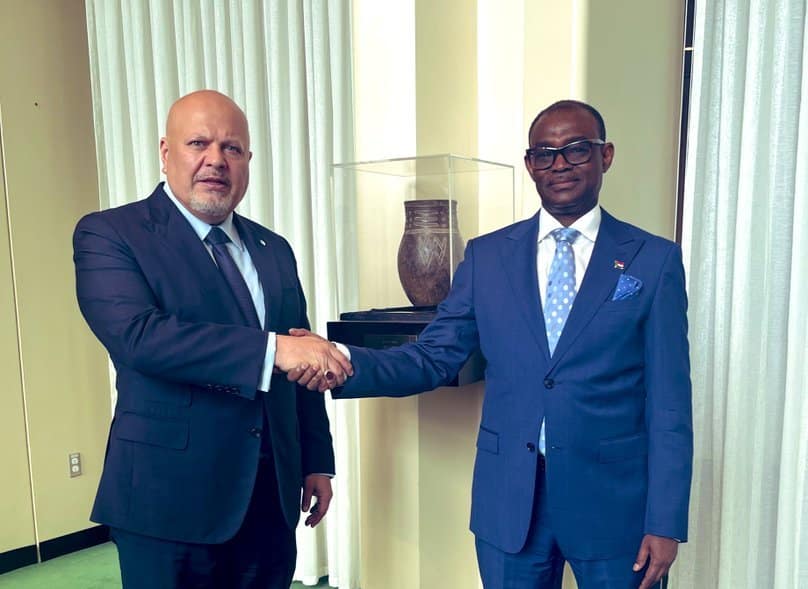
January 28, 2025 (UNITED NATIONS) – Sudan told the U.N. Security Council on Monday that it will only hand over individuals indicted by the International Criminal Court (ICC) once a permanent legal framework is in place following the country’s current political transition.
The ICC has charged ousted President Omar al-Bashir, his former aides Ahmed Haroun and Abdel Rahim Mohammed Hussein, and former rebel leader Abdullah Banda with war crimes and crimes against humanity related to the Darfur conflict.
Sudan’s U.N. envoy, Al-Harith Idris, said while Sudan is cooperating with the ICC, surrendering suspects requires a “permanent legal context,” not a temporary one as exists under the current political transition.
Idris said Sudan has signed a memorandum of understanding with the ICC to facilitate domestic investigations and the transfer of suspects. However, he stressed that enshrining cooperation provisions in national law is part of a broader legal reform process linked to transitional justice, which remains ongoing.
“Comprehensive cooperation necessitates the completion of the ratification process of the Rome Statute,” Idris said, referring to the treaty that established the ICC. He added that the government treats the court like any other international organization or diplomatic mission.
Idris emphasized that Sudan can refuse to assist with requests that compromise national security and can lift confidentiality obligations to facilitate cooperation, which “takes time.”
Obstacles to cooperation
Idris said criminal investigations require a robust legal framework to verify facts, protect the rights of the accused, and ensure transparency. He argued that Sudan’s current transitional legal system does not meet these requirements.
He noted that Sudan’s attorney general, who heads the national committee investigating crimes and coordinating with the ICC, visited The Hague in December to discuss cooperation. Idris said the committee is also interviewing witnesses in several Sudanese states and other countries.
Sudan has invited the ICC prosecutor to visit in February.
Despite challenges posed by the ongoing conflict, including restrictions on movement, attacks on civilian infrastructure, and the destruction of documents, Idris said Sudan has responded to some of the ICC’s 48 requests for information.
He said records related to flights landing at El Fasher airport in 2003 were destroyed and that the ICC should cease requests for this information. Similarly, he said a request for communications data since the start of the recent conflict cannot be fulfilled due to damage to communication infrastructure.
Idris blamed the Rapid Support Forces (RSF) for the destruction of government, security, and military documents in Darfur and for attacks on courts.
Accountability efforts
Idris highlighted Sudan’s domestic mechanisms for investigating atrocities, including a committee focused on RSF violations, a human rights commission monitoring unit, and a new reporting app.
He called for accountability for perpetrators of conflict-related sexual violence, attributing 95% of these crimes to the RSF.
Idris said nearly 26,500 children have been killed, injured, displaced, or recruited as a result of the conflict, while 216,000 women have been impacted by violence.
He said over 5,000 civilians have been killed and 8,000 injured in El Geneina, West Darfur, in what he described as genocide and war crimes.
Idris accused the RSF of forcibly disappearing 5,000 people, looting 26 banks, attacking 31 prisons, and employing mercenaries from 13 countries.
He said over 38,000 legal cases have been filed against RSF members and their collaborators, with 1,329 individuals arrested and 1,218 referred to courts, which have issued rulings in 423 cases.